
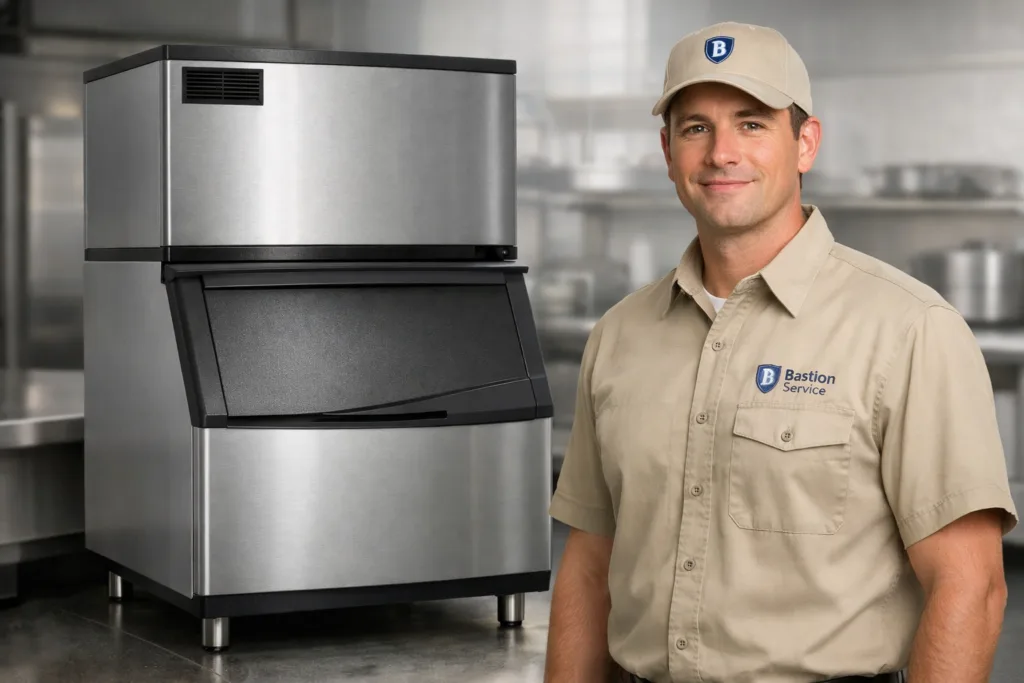




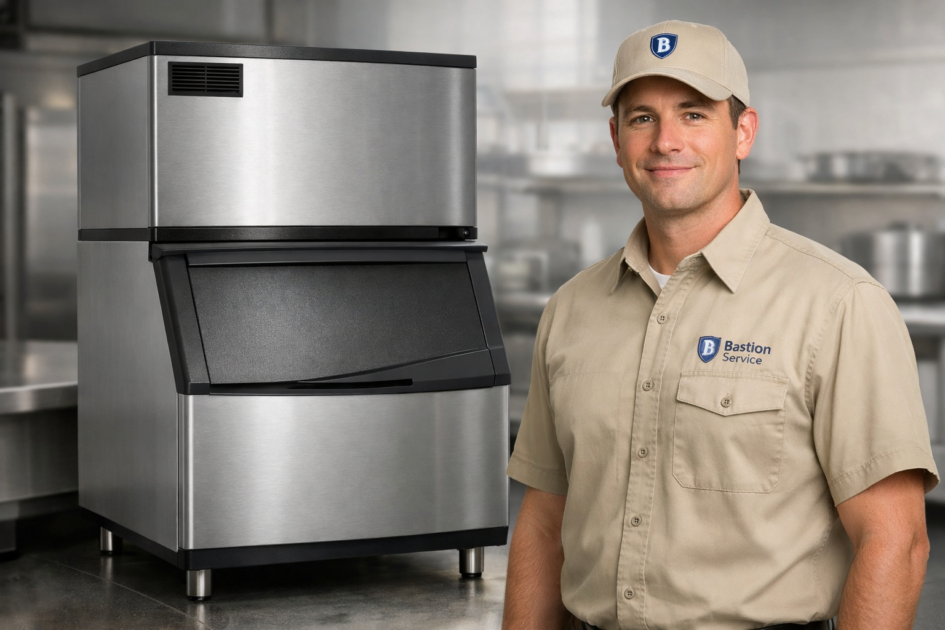
Commercial ice machines tend to show smaller warning signs before they fail outright. A unit may keep running while output drops, harvests slow down, cubes come out thin or hollow, or the bin never fills the way it normally does. For restaurants, offices, hospitality properties, and facility teams in Playa Vista, those changes usually mean the machine needs diagnosis before the problem spreads into a larger interruption.
Related commercial equipment paths in Playa Vista include Hoshizaki Ice Machine Repair in Playa Vista.
What common ice machine symptoms usually mean
Low ice production often points to a water supply restriction, scale buildup, poor condenser airflow, a weak freeze cycle, or controls that are no longer reading conditions correctly. When the machine still makes some ice but cannot keep up with demand, that usually suggests performance loss rather than a complete system failure.
Ice quality problems can be just as important as no-ice complaints. Cloudy cubes, soft ice, irregular shape, clumping in the bin, or partial slab formation may indicate water quality issues, uneven fill, temperature instability, or a harvest problem. If customers or staff notice fast-melting ice, unusual taste, or inconsistent batch size, the machine may need both mechanical diagnosis and sanitation-related review.
Leaks, overflow, and water around the base of the unit commonly trace back to drain restrictions, inlet valve problems, cracked lines, pump issues, or ice formation where it should not be. Repeated shutoffs, long run times, and unusual noise can also signal that internal components are under stress and that continued operation may lead to more expensive damage.
Why ice production problems are not always just an ice maker issue
Some commercial calls start with an ice complaint but turn out to involve surrounding refrigeration conditions. If the symptom includes frost, poor temperature recovery, or cooling concerns centered in a separate freezer compartment, Commercial Freezer Repair in Playa Vista may be the better service path. Separating true ice machine failures from broader cold-storage issues helps avoid wasted downtime and mismatched repairs.
That distinction matters in shared prep areas and equipment lines where one problem can appear to affect several appliances at once. A business may suspect the ice machine first because staff notice low bin levels, but the root issue could involve airflow, ambient heat load, water pressure, or a nearby refrigeration problem affecting overall performance.
When service should be scheduled
Service is usually worth scheduling as soon as output drops, cycle timing becomes erratic, leaks appear, or the machine starts shutting itself down. Waiting too long can increase strain on pumps, fans, valves, and refrigeration components, especially if the unit keeps trying to complete freeze and harvest cycles under poor conditions.
It is also smart to act quickly when sanitation or workflow is at risk. A machine that forms dirty-looking ice, backs water into the bin area, or stores clumped ice can create operating problems beyond simple inconvenience. In commercial settings, reduced ice availability can affect beverage service, food holding, patient or guest support, and day-to-day staff efficiency.
Signs continued use may worsen damage
- The machine runs almost constantly but produces very little ice.
- Water is leaking onto surrounding floors or into adjacent equipment space.
- The evaporator area shows abnormal frost or uneven ice formation.
- The unit restarts after a reset but shuts down again shortly after.
- Noises from the pump, fan, or harvest cycle are new or noticeably louder.
How technicians narrow down the cause
A useful service visit should determine whether the failure is tied to water supply, filtration, inlet components, drain performance, scale buildup, condenser condition, control response, or refrigeration function. The goal is to identify why the machine cannot maintain normal freeze and harvest operation, not just to get it running for a few hours.
Testing often focuses on whether the unit is filling properly, freezing evenly, releasing ice on schedule, and rejecting heat efficiently. That may include checking for restricted airflow, weak water flow, sensor misreads, valve failure, blocked drains, or cooling loss. If the symptom pattern extends beyond the ice machine and into reach-ins or other cold-storage equipment, Commercial Refrigerator Repair in Playa Vista may be more relevant.
Repair versus replacement considerations
Repair is often the practical option when the issue is isolated to pumps, valves, sensors, controls, drains, water distribution parts, cleaning-related restriction, or accessible refrigeration components. In those cases, restoring reliable ice production may be more cost-effective than replacing the machine.
Replacement becomes more likely when the unit has chronic repeat failures, major corrosion, poor overall condition, a serious sealed-system problem, or output capacity that no longer fits the business. Age alone does not decide the question. The more important factors are condition, service history, part availability, and whether a repair is likely to bring back stable performance instead of short-term improvement.
What businesses in Playa Vista should expect from a repair decision
The most helpful next step is usually straightforward: confirm the exact fault, understand what parts of the machine are affected, and weigh the repair against expected uptime. That approach keeps the decision focused on production, sanitation, and reliability rather than trial and error.
For commercial ice machine repair in Playa Vista, the real value is in identifying the source of low production, leaks, shutdowns, or ice quality problems before they disrupt more of the workday. When the cause is clearly defined, businesses can make faster service decisions and reduce the risk of recurring downtime.


