
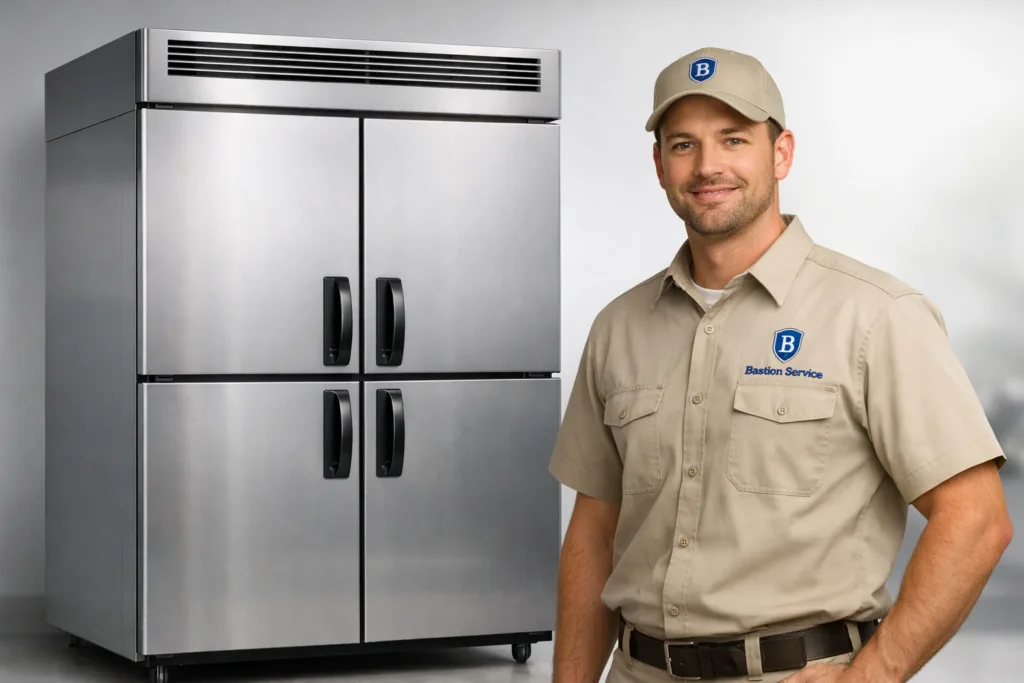




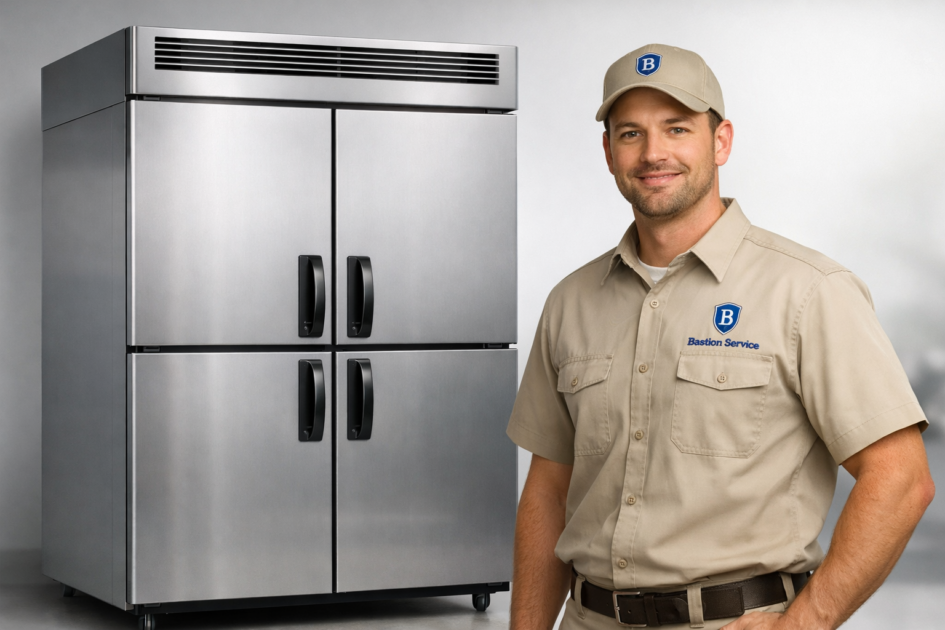
When a Hoshizaki freezer begins running warm, frosting over, leaking, or making new noise, the most useful next step is service focused on the actual failure instead of swapping parts based on symptoms alone. For businesses in Playa Vista, freezer trouble can quickly affect stored product, prep timing, staff workflow, and daily operations. Bastion Service handles Hoshizaki freezer repair by checking how the unit is cooling, where performance is breaking down, and what repair path makes the most sense based on the condition of the equipment and the urgency of the problem.
Related commercial service paths in Playa Vista include Hoshizaki Commercial Repair in Playa Vista, Commercial Freezer Repair in Playa Vista, and Hoshizaki Refrigerator Repair in Playa Vista.
Common Hoshizaki freezer problems and what they usually indicate
Not staying cold enough
If the cabinet temperature is drifting above the set point, the cause may involve restricted airflow, a dirty condenser, evaporator problems, sensor faults, control issues, weak door sealing, or refrigeration system trouble. Some units still seem to run normally while the temperature slowly rises, which can make the problem easy to miss until product starts softening or staff notices uneven freezing from one section to another.
A freezer that cools down after a reset and then warms back up should not be treated as fixed. That pattern often points to an underlying issue that needs diagnosis before the unit is trusted for regular use again.
Frost buildup on the interior or around the door
Frost is often a sign that moisture is getting where it should not or that the freezer is not moving through defrost correctly. Damaged gaskets, doors not closing fully, airflow restrictions, or failed defrost components can all lead to repeated ice accumulation. Over time, that buildup can block air movement, reduce usable storage space, and make the freezer work harder than it should.
If the ice returns soon after being cleared, the problem is usually not just surface-level. Repeated frost almost always means there is an operating fault that still needs repair.
Constant running or frequent short cycling
A Hoshizaki freezer that runs almost nonstop may be struggling to remove heat, while one that starts and stops too frequently may have a sensor, control, airflow, or electrical problem. Either pattern can create unstable cabinet temperatures and extra wear on major components. In busy kitchens and food-service operations, that often shows up as uneven product consistency, higher internal humidity, or alarms that keep coming back.
Water leaks or excess condensation
Water around the unit can come from clogged or frozen drains, failed defrost management, poor door sealing, or ice melting in areas where it should not. This is not only a cleanup issue. Moisture around a freezer can point to temperature instability inside the cabinet and can also create safety concerns in the surrounding work area.
Fan noise, vibration, or harsher operating sounds
New buzzing, rattling, scraping, or louder fan noise can indicate motor trouble, loose hardware, blade interference, ice obstruction, or a system working under strain. Noise becomes more important when it appears with warming, weak airflow, or heavy frost. That combination usually means the freezer should be inspected before regular operation continues.
Why symptom-based diagnosis matters
Freezer problems often overlap. A unit that is not freezing properly may look like it has a major cooling failure when the real cause is a blocked condenser, a failing evaporator fan, a bad sensor reading, or a door issue allowing warm air into the cabinet. On the other hand, what appears to be a simple frost problem can sometimes be tied to deeper performance issues that affect temperature recovery and compressor load.
Diagnosis helps separate minor repair needs from larger equipment concerns. It also helps businesses in Playa Vista avoid spending money on the wrong repair while the freezer continues to lose performance. When the source of the problem is identified early, scheduling, parts planning, and downtime decisions become much more manageable.
Signs the freezer needs service soon
A Hoshizaki freezer does not need to stop completely before it needs attention. In many cases, early service is the best way to reduce product risk and prevent a larger interruption.
- The cabinet temperature will not stay in range during normal use
- Product feels softer than usual or freezes unevenly
- Frost keeps returning after it is removed
- The unit runs for long stretches without recovering properly
- Airflow seems weak or fans sound abnormal
- Water is collecting near or under the freezer
- The door does not close or seal the way it should
- Staff are checking temperatures more often to make sure the unit is holding
Once a team starts working around a freezer problem instead of relying on normal performance, service is usually already overdue.
What often causes weak freezing performance
Weak freezing is not always caused by one major failed part. It can come from a chain of smaller issues that reduce overall performance. Common examples include dirty condenser coils that limit heat removal, evaporator icing that restricts airflow, worn gaskets that let warm air into the cabinet, failed fan motors, inaccurate sensors, or controls that are not responding correctly to actual temperatures.
Load conditions matter too. If the freezer is opening more often than usual, recovering slowly after restocking, or developing warm spots in a specific section, those details can help narrow down where the fault is occurring. The pattern matters just as much as the symptom itself.
Door gasket and airflow problems can lead to bigger repairs
Door sealing issues are easy to underestimate. A torn gasket, warped door, misalignment, or closure problem allows moisture and warmer air into the cabinet. That can lead to frost, longer run times, poor temperature consistency, and strain on the cooling system. What starts as a door problem can end up affecting multiple parts of freezer operation.
Airflow issues create similar problems. If the evaporator area is blocked by ice or a fan is not moving air correctly, the cabinet may still feel cold in one spot while product in another section starts warming. That uneven performance is a strong sign that the freezer needs inspection instead of continued adjustment by staff.
When continued use increases risk
Using a struggling freezer for too long can make the original issue worse. Long run times increase wear, repeated icing can choke off airflow further, and constant manual adjustments can mask the symptom pattern a technician needs to see. A unit that is barely holding temperature today may become a full outage during the next heavy-use period.
For businesses in Playa Vista that depend on reliable frozen storage, the goal is not only to restore cooling but to confirm the freezer can recover properly, maintain stable temperatures, and return to normal operation under real workload conditions.
Repair or replace?
Many Hoshizaki freezer issues are worth repairing when the cabinet is structurally sound and the problem is isolated to serviceable components. That is often the case with fan motors, gasket problems, defrost faults, sensor issues, drainage problems, or certain control-related failures.
Replacement becomes a more serious discussion when the freezer has repeated cooling breakdowns, extensive wear, poor temperature stability after previous service, or several major issues at once. The best decision depends on age, overall condition, repair history, and how much downtime the operation can realistically absorb.
How to prepare for a freezer service call
Before service is scheduled, it helps to note what the freezer is doing and when the problem appears. Useful details include whether the unit is running constantly, whether frost is concentrated in one area, whether the temperature issue happens after doors are opened, and whether unusual sounds started before or after the cooling problem. If there are alarms, recurring leaks, or sections that stay warmer than others, that information can speed up the diagnostic process.
It also helps to avoid repeated resets or major setting changes unless necessary for short-term product protection. Keeping the symptom pattern as clear as possible makes it easier to isolate the fault and recommend the right repair.
When a Hoshizaki freezer in Playa Vista starts affecting storage reliability, scheduling service promptly is usually the smartest move. A focused inspection can identify whether the issue involves airflow, defrost, sealing, controls, drainage, or core cooling performance, and it gives your team a realistic next step before downtime spreads into a larger operating problem.


