
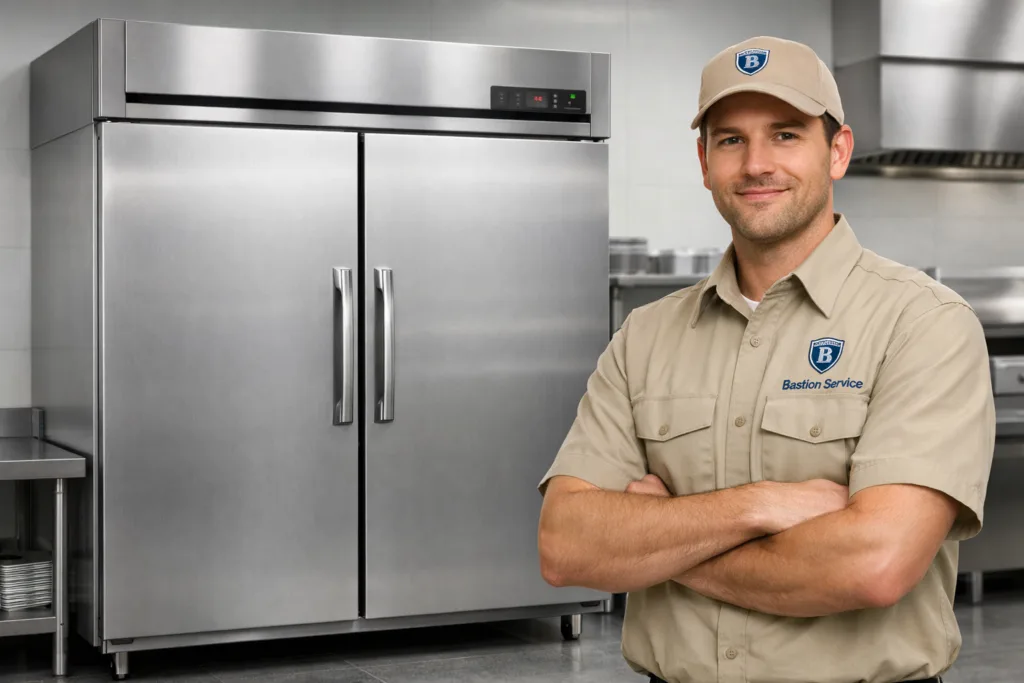




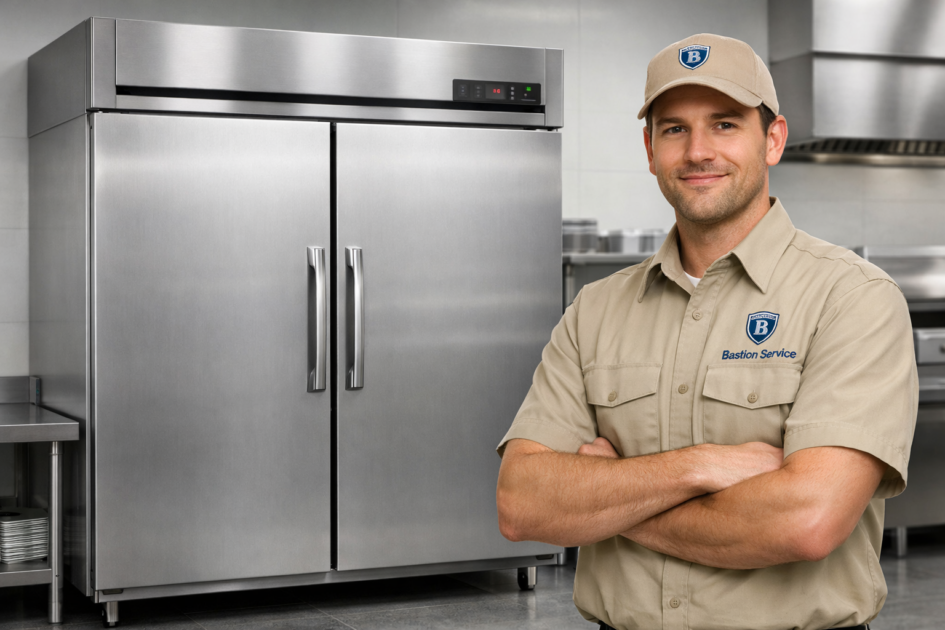
Temperature instability in a commercial freezer can come from several different sources, and the right repair path depends on what the unit is doing between cycles, after door openings, and during peak kitchen or storage use. Warm product, soft inventory, long run times, or uneven temperatures from top to bottom often point to airflow restrictions, evaporator fan trouble, door gasket wear, sensor issues, or a defrost problem that is slowly choking normal circulation.
Related commercial equipment paths in Hawthorne include Beverage-Air Freezer Repair in Hawthorne.
Common freezer problems and what they may indicate
Heavy frost buildup usually means moisture is getting into the cabinet or the defrost system is not clearing the coil as intended. A door that does not seal tightly, repeated loading with the door open, damaged gaskets, a failed defrost heater, or a control fault can all produce frost patterns that reduce usable space and make temperature recovery much slower. In a commercial setting, that can quickly affect product consistency and employee workflow.
If one area stays colder than another, the issue is often tied to circulation rather than overall cooling capacity alone. Blocked evaporator airflow, stacked product restricting vents, fan motor failure, or ice accumulation around the coil can all create pockets of poor performance. If cooling concerns are centered more in adjacent fresh-storage equipment than in the freezer compartment, Commercial Refrigerator Repair in Hawthorne may be the better service path.
Unusual noise is another important clue. Grinding, rattling, buzzing, or a fan striking ice can indicate motor wear, loose panels, blade obstruction, compressor strain, or mounting vibration. A freezer that suddenly sounds louder than normal should not be ignored, especially when the noise appears alongside long run times, weak cooling, or recurring alarms.
Water around the base of the unit can come from a blocked drain line, a defrost drainage issue, excess condensation, or melting ice caused by poor temperature control. Leaks are not always simple housekeeping problems; they often signal that the freezer is no longer managing moisture and defrost cycles correctly.
Why early diagnosis matters for business operations
A struggling freezer can continue running long enough to create a false sense that the problem is minor. In reality, equipment that is barely holding temperature often puts extra strain on fans, controls, and the compressor while product quality becomes less predictable. Catching a circulation problem or door-seal issue early is very different from waiting until the cabinet can no longer recover after routine use.
Diagnosis also helps determine whether the unit can remain in limited service while parts are sourced, or whether continued operation is more likely to cause inventory loss or more expensive damage. A freezer with mild gasket leakage may still function short term with close monitoring, while a unit with severe frost, hard starts, or clear temperature failure usually needs prompt attention.
Signs the problem is becoming more urgent
- Cabinet temperature rising above set point or drifting throughout the day
- Frost buildup returning quickly after manual clearing
- Little to no airflow from interior vents
- Fan noise, buzzing, or intermittent grinding sounds
- Water pooling near the unit or under the door
- Long recovery times after normal loading activity
- Continuous running or short cycling that was not present before
These symptoms usually mean the freezer is already operating less efficiently than it should. In Hawthorne, that can translate directly into slower prep, more staff workarounds, and increased risk to stored inventory.
Ice, airflow, and temperature recovery issues
Some of the most disruptive freezer calls involve poor temperature recovery rather than a complete failure to cool. The cabinet may still feel cold, but it takes too long to pull down after stocking, or product near the door softens while the back wall stays frozen. That pattern often points to restricted airflow, coil icing, fan weakness, or a door problem that is letting warm air enter faster than the system can remove it.
When the complaint includes weak or inconsistent ice production from connected equipment, water fill concerns, or signs that the issue is affecting a separate ice system rather than freezer storage itself, Commercial Ice Machine Repair in Hawthorne may be more relevant.
Repair versus replacement considerations
Many commercial freezer problems are repairable, especially when they involve fan motors, controls, sensors, door hardware, drainage issues, defrost components, or maintenance-related airflow restrictions. Those repairs are often more practical than replacement when the cabinet is structurally sound and the unit has otherwise been reliable.
Replacement becomes a more serious discussion when the equipment has repeated cooling failures, major sealed-system trouble, compressor-related cost stacking, or cabinet wear that makes dependable operation unlikely. The decision is rarely about one symptom alone. Age, service history, parts availability, energy use, and the freezer’s role in daily operations all matter.
What a service visit should help clarify
A useful commercial freezer repair visit should identify whether the problem is tied to airflow, frost pattern, controls, fan operation, door sealing, drainage, or a deeper refrigeration-system fault. It should also clarify whether the unit is truly reaching and maintaining target temperature under normal business use instead of only appearing cold during brief checks.
For operators in Hawthorne, the main goal is not simply getting the cabinet cold again for the moment. It is restoring stable operation that supports uptime, protects inventory, and reduces the chance of another disruption soon after service.


