
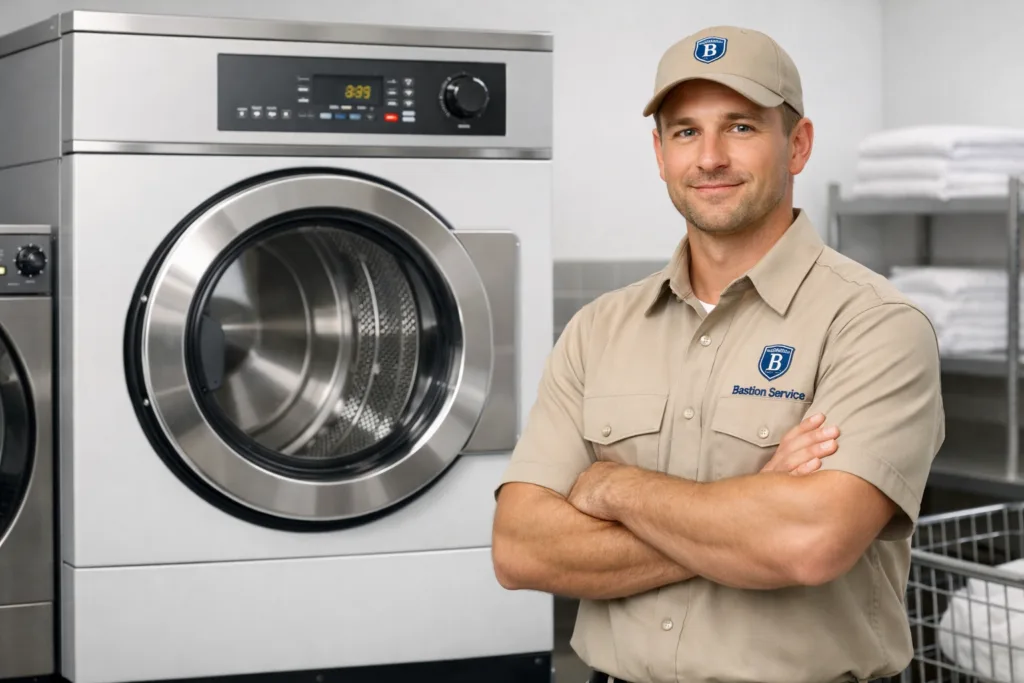




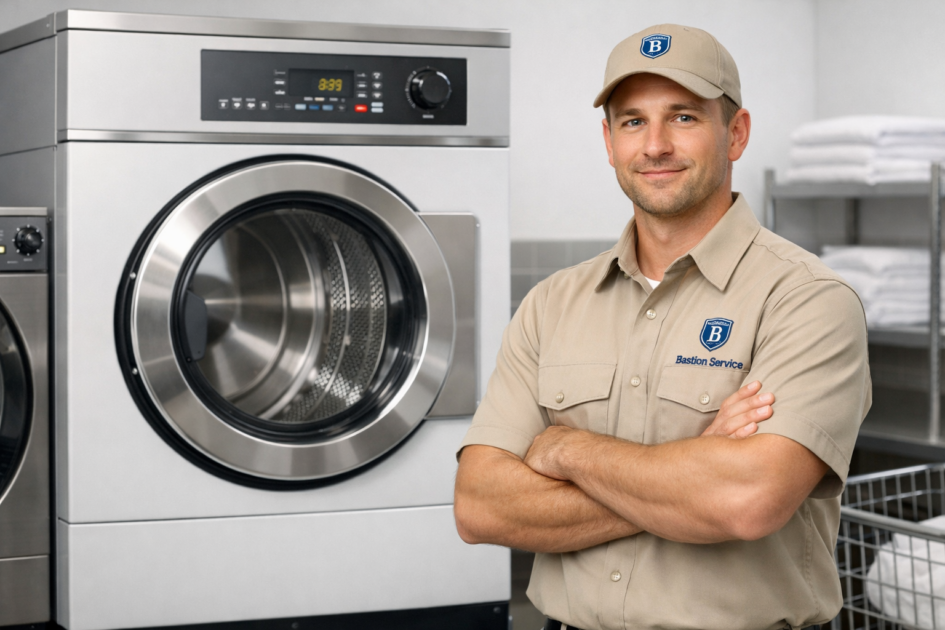
Commercial dryers support daily throughput, staff scheduling, and customer-facing turnaround times, so even a “minor” performance drop can create operational drag. A unit that still runs but takes too long to finish loads can affect laundry flow just as much as a full shutdown, especially in businesses that rely on repeat cycles throughout the day.
Related commercial equipment paths in Palms include Speed Queen Dryer Repair in Palms and Wascomat Dryer Repair in Palms.
Common symptoms and what they usually point to
Long dry times are one of the most common complaints, but they do not always mean the heating system has failed. In many commercial units, extended cycles can result from restricted airflow, lint accumulation inside key passages, weak blower performance, faulty thermostats, moisture-sensing problems, or door seal and drum seal wear that lets heat escape during operation.
If the dryer tumbles but does not heat properly, likely causes may include failed heating elements, igniters, gas-valve related faults, thermal cutoffs, high-limit devices, relays, or incoming electrical supply issues. When the machine starts and then shuts down before a cycle completes, attention often shifts to overheating protection, motor strain, control board interruptions, or switch failures that break operation under load.
Noise should also be taken seriously in commercial equipment. Squealing can suggest idler or roller wear, while scraping or thumping may point to drum support problems, damaged glides, loose internal parts, or uneven drum movement. These issues rarely improve on their own, and continued use can turn a manageable repair into more extensive damage affecting the drum, cabinet, or drive system.
Airflow problems that reduce drying performance
Airflow is central to dryer output. Loads that come out warm but still damp often indicate that heat is being produced but moist air is not being moved out of the system efficiently. Blocked exhaust paths, blower wheel issues, heavy lint buildup, crushed vent sections, or sensor readings that do not reflect actual moisture levels can all lengthen cycle times and increase energy use.
In a commercial setting, that kind of slowdown affects more than one machine. Reduced airflow can create inconsistent finishing times, force staff to rerun loads, and disrupt planned laundry sequencing. The result is lower capacity per shift, even before the unit reaches a complete no-heat or no-start condition.
When the problem may involve the broader laundry workflow
Not every delay starts inside the dryer itself. If damp loads, drainage issues, or poor extraction are affecting what reaches the dryer, Commercial Washer Repair in Palms may be the better place to start, since excess retained water can make a healthy dryer appear inefficient.
That distinction matters for businesses trying to solve bottlenecks rather than just replace parts. A proper service visit should help determine whether the dryer is failing on its own or whether upstream laundry issues are making drying times look worse than they really are.
Signs service should be scheduled promptly
Some symptoms justify quick attention because they can lead to secondary damage or safety concerns. Overheating, repeated shutdowns, a burning smell, breaker trips, or control behavior that changes from cycle to cycle are all signs that the machine should be evaluated instead of pushed through more production.
Mechanical noise is another reason not to wait. Rollers, belts, pulleys, support components, and drive parts usually give warning signs before a major failure, and acting early can help avoid a larger outage. This is especially important where one dryer failure forces staff to overload remaining equipment or extend operating hours to keep up.
Repair versus replacement decisions
Many commercial dryer issues are still good repair candidates when the fault is limited to serviceable components such as belts, rollers, thermostats, sensors, heating parts, switches, igniters, or accessible electrical items. In those cases, restoring normal airflow, heat, and drum movement can return the unit to productive use without major disruption.
Replacement becomes more likely when the machine has multiple failing systems, severe internal wear, repeated overheating history, recurring control issues, or repair estimates that no longer make sense for its age and duty cycle. The key question is not only whether the dryer can be made to run again, but whether it can return to reliable business use without ongoing interruptions.
What businesses in Palms should expect from a service visit
A useful commercial dryer diagnosis should identify the failed component, check for related wear or heat damage, and clarify whether continued operation risks more costly problems. That includes looking beyond the obvious symptom to confirm whether the root cause is heat generation, air movement, drum support, controls, power supply, or another issue affecting performance.
For businesses in Palms, the best service outcome is a realistic plan based on uptime, parts path, and expected operating demand. When the machine’s performance is judged against actual workflow needs rather than a simple on-or-off test, it becomes easier to decide whether repair will restore dependable output or whether a larger equipment decision is the more practical move.


