
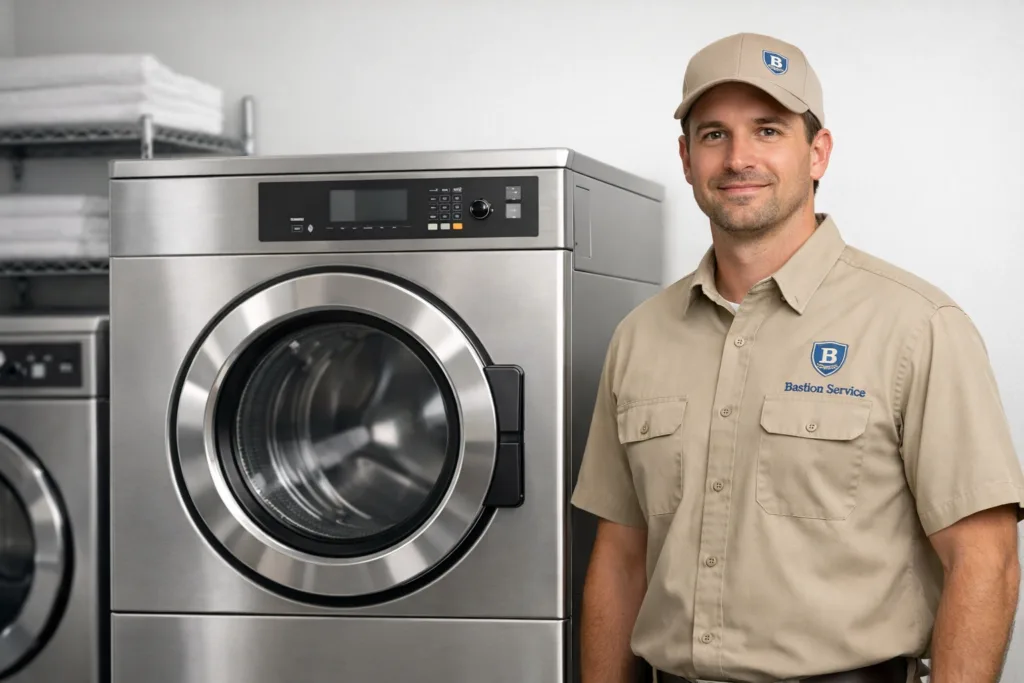




Dryer problems in a commercial setting rarely stay isolated for long. One machine that is not heating properly, tumbling inconsistently, or stopping before the load is finished can slow staff, increase rework, and create avoidable delays across the rest of the laundry workflow. Because similar symptoms can come from very different faults, the most efficient path is usually to identify whether the issue starts with heat production, airflow, drum movement, controls, or power delivery.
Related commercial equipment paths in Inglewood include Speed Queen Dryer Repair in Inglewood and Wascomat Dryer Repair in Inglewood.
Common commercial dryer problems that disrupt operations
Businesses in Inglewood often schedule service when a dryer runs but leaves loads damp, takes much longer than normal to finish cycles, makes new noises, shuts down under load, or will not start at all. In day-to-day operations, those symptoms affect more than one machine. They can interrupt turnaround timing, tie up staff attention, and put pressure on the rest of the equipment lineup.
Long dry times are especially important to evaluate early. They may be caused by restricted exhaust airflow, lint buildup, weak heating performance, failed sensors, or cycling problems that keep temperatures from reaching the right range. A dryer that appears to be working but needs repeated cycles is often already losing efficiency and creating unnecessary strain on components.
What different symptom patterns may mean
No heat or very weak heat
If the drum turns but fabrics stay damp, possible causes include heating element failure, ignition-related faults on gas units, thermal cutoff problems, control issues, or incoming power problems. In commercial applications, poor heating can also be confused with vent restriction because both problems create similar results: long run times, uneven drying, and inconsistent load completion.
When heat loss is combined with unusually long cycles, the diagnosis should account for both internal dryer components and the exhaust path. Treating only one side of the problem can leave the business with the same bottleneck even after a part has been replaced.
Drum turns poorly, squeals, or thumps
Noises such as scraping, thumping, squealing, or rumbling often point to worn rollers, idler wear, belt damage, motor strain, or drum support issues. In a commercial unit, these symptoms tend to worsen under heavier daily use, so a small mechanical sound can become a no-start or seized-drum problem if it is ignored.
Vibration may also indicate imbalance, mounting issues, or wear that is affecting rotation under load. When staff notice a drum that starts reluctantly, slips, or sounds rough during acceleration, it is usually better to stop relying on the machine for full-volume use until the cause is confirmed.
Stops mid-cycle or overheats
A dryer that shuts off before the load is finished may be overheating, tripping a safety device, losing power intermittently, or developing motor or control faults. This pattern matters because repeated resets can make the issue look temporary when the real problem is building heat, restricted airflow, or an electrical fault that continues to return.
Overheating is one of the most important warning signs to address promptly. Excess heat can damage fabrics, shorten component life, and increase the risk of secondary failures in belts, sensors, controls, and wiring.
Will not start at all
When a commercial dryer does not start, the cause may involve the door switch, controls, motor circuit, thermal protection, or power supply. A no-start condition can be straightforward, but it can also be the final stage of an issue that had already been developing through noise, slow drying, or intermittent shutdowns.
Airflow issues often look like heater failure
One of the more common reasons a commercial dryer underperforms is poor airflow. Lint accumulation, restricted venting, crushed duct sections, or exhaust problems can trap heat and moisture in the system, leading to long dry times, high operating temperatures, and inconsistent results from one load to the next.
That is why a dryer that is still producing some heat should not automatically be assumed to need a heating part. If airflow is the primary problem, continued use can increase cycling stress and make the machine less reliable even before a major part fails.
How dryer problems affect the broader laundry workflow
In a commercial laundry setup, dryer downtime often shows up first as a scheduling issue. Loads stack up waiting for available capacity, clean items are delayed, and staff may start rerunning partially dry batches to keep output moving. That added cycle volume can increase utility use and push already stressed equipment harder than normal.
If the slowdown begins earlier in the wash process with filling, draining, spin performance, or water retention in the load, Commercial Washer Repair in Inglewood may be the better place to start before treating the dryer as the main source of the backlog.
When to stop using the dryer and schedule service
It is usually best to pause normal operation when the unit produces a burning smell, overheats, makes severe mechanical noise, shuts off repeatedly, or suddenly needs much longer to dry similar loads. These signs often mean the machine is operating with rising internal stress, and continued use can turn a manageable repair into a more expensive failure.
Even when the dryer still runs, partial performance loss should not be dismissed in a business environment. Equipment that is technically operating but no longer handling normal throughput can create hidden costs through delayed work, repeat cycles, excess wear, and avoidable disruption during busy periods.
Repair versus replacement factors for commercial equipment
Many commercial dryer issues are still repairable, especially when the problem is limited to serviceable components, maintenance-related airflow corrections, or isolated mechanical or electrical faults. Replacement becomes a more serious discussion when the machine has a pattern of recurring breakdowns, widespread internal wear, or repair needs that do not match the unit’s age, condition, and workload history.
The most useful decision point is not the symptom alone but the confirmed cause, the condition of major assemblies, and the likelihood that service will restore stable operation. For businesses in Inglewood, that approach helps separate temporary performance loss from signs that the equipment is reaching the end of practical service life.
What a business-focused service visit should clarify
A productive commercial dryer diagnosis should identify what failed, whether airflow or installation conditions are contributing to the complaint, and whether any secondary wear is already present. That gives operators a better basis for deciding how quickly to proceed, whether additional maintenance is needed, and how to reduce the chance of repeat downtime after the repair.
For operations that depend on steady laundry output, getting those answers early is often the best way to protect uptime and keep a single dryer problem from affecting the rest of the workday.


