
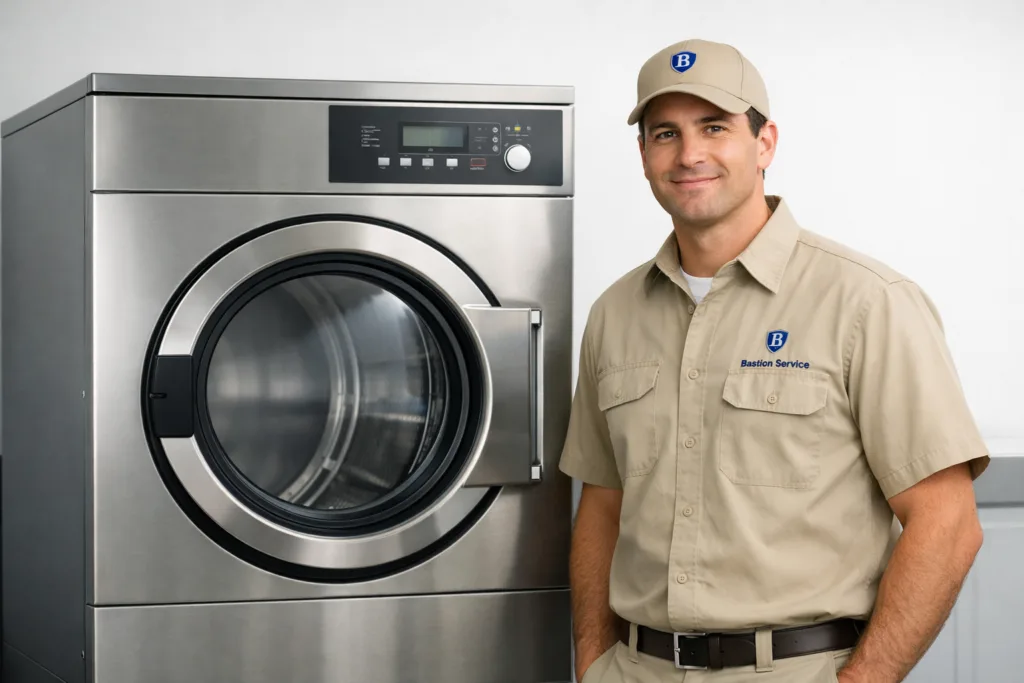




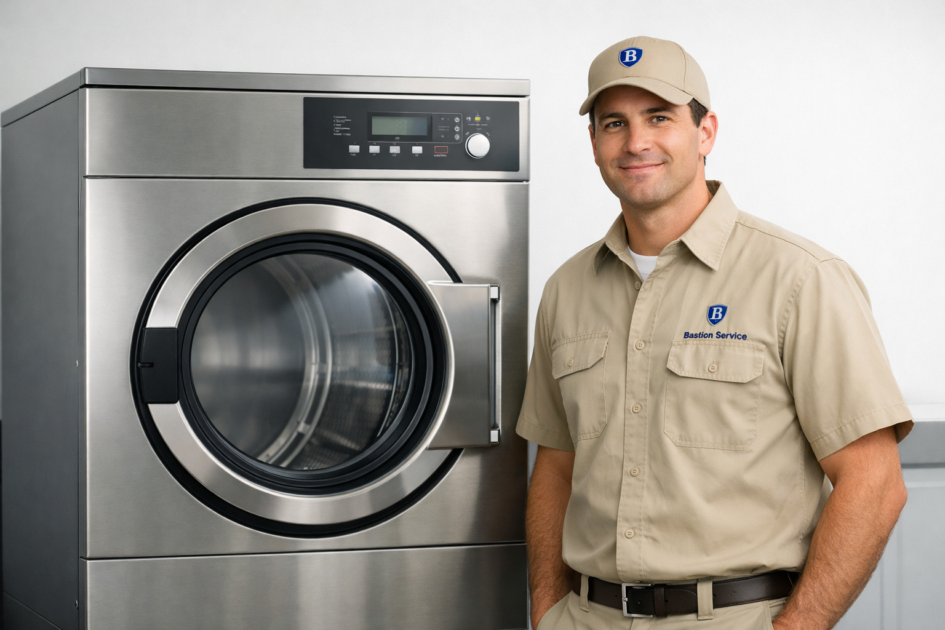
Dryer problems can disrupt an entire laundry workflow faster than many equipment issues because one weak machine creates backups all the way through wash, dry, folding, and delivery timing. When a Wascomat dryer begins losing heat, extending cycle times, shutting down, or making new noise, the most useful next step is service built around the actual symptom pattern and the condition of the unit. Bastion Service works with businesses in Culver City to inspect the fault, determine whether the problem is limited or spreading into related components, and schedule repair based on the impact on daily operations.
Related commercial service paths in Culver City include Wascomat Commercial Repair in Culver City, Commercial Dryer Repair in Culver City, and Wascomat Washer Repair in Culver City.
How Wascomat dryer problems are usually diagnosed
A dryer may show one visible symptom while the real cause sits elsewhere in the system. A no-heat complaint may come from a failed heating component, but it can also trace back to airflow restriction, a safety limit opening, a control problem, or a power-related issue. Long dry times may look like weak heat when the bigger problem is venting, sensor performance, or blower movement.
That is why symptom-based inspection matters. Service should account for how the dryer behaves at startup, during the cycle, and near shutoff. Important clues include whether the drum turns normally, whether heat appears and then drops out, whether loads dry unevenly, whether the machine stops only when hot, and whether any burning smell or excess cabinet heat is present.
Common Wascomat dryer symptoms and what they can indicate
No heat or low heat
If the dryer tumbles but clothing or linens stay damp, the issue may involve the heating circuit, thermostats, temperature protection devices, controls, contactors, sensors, or restricted exhaust. In some cases, low heat appears first and gradually turns into full heat loss. Businesses often notice this as drying quality declines before the machine fully stops doing its job.
This symptom should not be ignored just because the drum still turns. Running repeated cycles to compensate for weak heat can increase wear, waste labor time, and reduce available machine capacity.
Long dry times
When loads are finishing later than expected, the most common causes are poor airflow, incomplete heat output, lint buildup in critical paths, blower problems, or moisture-sensing issues. Long dry times are especially costly in busy laundry rooms because they reduce turnover and force staff to wait on loads that should have been finished earlier.
If one dryer suddenly starts taking much longer than the others under similar use, that change usually points to a specific fault worth checking before it becomes a shutdown issue.
Dryer will not start
A no-start condition may involve door switch problems, control faults, power supply issues, failed relays, motor trouble, or safety circuits preventing operation. Sometimes the machine appears dead; in other cases, it responds inconsistently or only starts under certain conditions.
For a business, a no-start complaint is usually straightforward in one sense: the machine is already out of service. The key question becomes whether the fault is isolated and repairable or part of a larger wear pattern affecting the unit.
Stops during the cycle
If a Wascomat dryer starts and then shuts off before finishing, likely causes include overheating, motor protection opening, control interruption, airflow restrictions, or drag in the drive system. This pattern is often more serious than it first appears because repeated mid-cycle shutdowns can point to stress building inside the machine.
Machines that restart after cooling down often lead operators to keep using them, but that can turn an intermittent problem into a more expensive failure.
Noise, vibration, or rough drum movement
Grinding, squealing, thumping, rattling, or scraping usually points to wear in rollers, bearings, idlers, belts, motor components, or drum support parts. New vibration can also come from loose hardware or movement changes caused by worn supports.
These sounds matter because they rarely stay minor. A dryer that keeps running with failing support or drive parts can create secondary damage to the drum, motor system, and heating performance.
Overheating or burning smell
Excess heat, scorching, or unusual odor requires prompt attention. Restricted venting, failed cycling controls, lint accumulation, or heat regulation faults can all create unsafe operating conditions. If loads come out unusually hot, if fabrics show signs of heat stress, or if the cabinet area feels hotter than normal, the dryer should be checked before normal use continues.
Why airflow issues matter so much on dryer calls
Airflow is one of the most important factors in dryer performance. Even when heating components are still functioning, blocked or limited airflow can cause weak drying, repeated high-limit trips, overheating, and long cycle times. It can also make a good part look bad during a rushed diagnosis.
On a Wascomat dryer, airflow-related complaints often overlap with other symptoms. The machine may seem to have low heat, inconsistent cycle completion, or random shutdowns when the underlying issue is that hot air is not moving correctly through the system. That is one reason a repair visit should look beyond a single failed part and consider how the machine is breathing under load.
What businesses should watch for before the machine fully fails
Some dryers give early warnings before a complete breakdown. Paying attention to those changes can help reduce downtime and prevent avoidable damage. Signs that usually justify scheduling service include:
- Cycle times getting longer week by week
- Loads coming out damp in spots
- Heat that seems weaker or less consistent
- New squealing, thumping, or scraping sounds
- Stopping and restarting unpredictably
- Cabinet heat that feels higher than normal
- Recurring error conditions or safety trips
- A burning smell, even if it only appears occasionally
When these changes are caught early, repair is often more contained. Waiting usually increases wear on nearby components and creates more disruption for staff and customers.
Repair versus replacement: what usually guides the decision
Many Wascomat dryer problems can be repaired when the machine is otherwise in solid condition and the failure is limited to serviceable components such as controls, switches, sensors, heating parts, belts, rollers, idlers, or related assemblies. In those cases, the main goal is to restore stable operation without repeated interruptions.
Replacement becomes a more serious consideration when the dryer shows broader deterioration, repeated major faults, structural damage, severe drum or cabinet wear, or a combination of issues that keeps the machine from returning to reliable duty. For businesses in Culver City, the decision usually comes down to cost compared with expected uptime, not just whether the dryer can be made to run one more week.
Preparing for a Wascomat dryer service visit
Good information from the site can speed up diagnosis and help prioritize the repair. Before service, it helps to note:
- Whether the dryer has no heat, low heat, or uneven heat
- Whether the drum turns normally
- If the machine stops at a certain point in the cycle
- Any noise changes and when they started
- Whether the issue affects every load or only certain loads
- If there is a smell, visible overheating, or tripped protection
- Whether nearby dryers are performing normally
Details like these help separate airflow concerns from heat faults, motor issues, or control-related problems. They also make it easier to judge whether the unit should remain in use while awaiting repair or be taken out of rotation immediately.
Service planning for dryer downtime in Culver City
For laundromats, hotels, multi-housing laundry rooms, and other businesses in Culver City, a dryer issue affects more than one machine. It changes staffing flow, load timing, customer expectations, and how quickly backed-up work can be recovered. That is why repair decisions should focus on downtime risk as much as the visible symptom.
If your Wascomat dryer is not heating, is taking too long to dry, is shutting down, or is developing drum noise, scheduling service before the problem spreads is usually the most cost-effective move. A focused inspection can show whether the fault is isolated, whether airflow or heat control is contributing to the failure, and what repair path makes the most sense for restoring stable day-to-day operation in Culver City.


