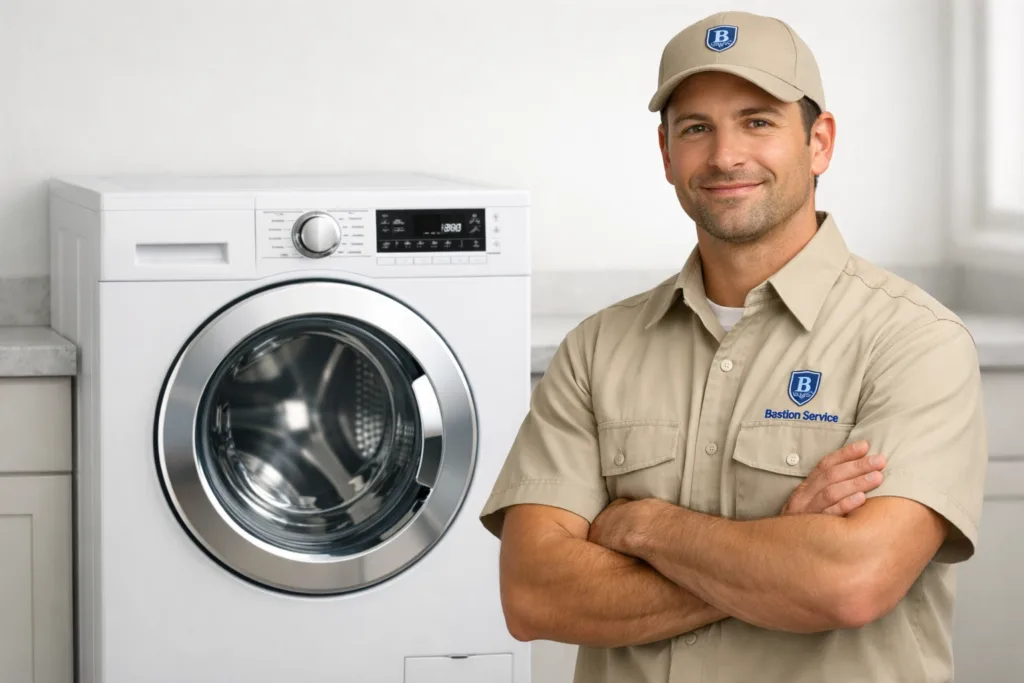
Washer problems often start small and then become more disruptive with each load. A machine that leaves clothes wet, pauses unexpectedly, or starts making new noises may still turn on, but the underlying fault can worsen if it is ignored. With Blomberg washers, the most useful first step is identifying whether the issue involves draining, spinning, filling, locking, heating, or the electronic controls that manage the cycle.
Common Blomberg washer symptoms and what they can mean
Many washer complaints sound simple at first, but the same symptom can point to several different causes. That is why symptom patterns matter. Whether the problem happens every cycle, only with larger loads, or only at a certain point in the wash can help narrow down what is failing.
Washer not draining or clothes coming out soaked
If water remains in the tub at the end of the cycle, the problem may involve the drain pump, a restriction in the drain path, a kinked hose, or a control issue that prevents the machine from completing the drain and spin sequence. In other cases, the washer drains partially but cannot reach full spin speed, leaving laundry much wetter than normal.
Signs that usually point to a drain or spin problem include:
- Standing water after the cycle ends
- A humming sound without full draining
- Repeated attempts to spin
- Longer cycle times before shutdown
- Door staying locked because water is still inside
Running repeated cycles to force the load through can add strain to the pump and drive system, so it is usually better to stop and have the issue checked.
Leaks under or around the washer
Water on the floor is not always coming from the same place. A front-load Blomberg washer may leak from the door boot, soap oversudsing, hose connections, pump housing, or an internal hose. Some leaks appear only during fill, while others happen only during drain or high-speed spin.
Even a minor leak can become a bigger household problem over time. Flooring, trim, and nearby cabinetry can be affected if moisture keeps returning. If the source is not obvious, the timing of the leak during the cycle often helps identify where to look first.
Shaking, banging, or excessive vibration
A washer that suddenly becomes loud or unstable should not be dismissed as normal wear. Vibration can be caused by an uneven installation, suspension wear, an unbalanced load, loose internal components, or bearing-related problems. If the machine shifts position during spin or strikes nearby surfaces, the risk of further damage goes up quickly.
Watch for these clues:
- Thumping during spin only
- Metallic scraping sounds
- Movement across the floor
- New noise that gets worse with heavier loads
- Visible shaking even when loads are moderate
Door lock problems and cycles that stop mid-wash
If the door will not lock, unlock, or stay recognized by the machine, the washer may refuse to start or may stop before the cycle is complete. A latch assembly issue is one possibility, but some interruptions are actually triggered by draining trouble, sensing faults, or control board communication problems.
When a Blomberg washer pauses with water still inside or repeatedly flashes an error before finishing, the code alone is not always enough to confirm the failed part. The code is most useful when paired with testing of the door lock system, water movement, and cycle behavior.
Poor wash results, detergent residue, or musty laundry
Not every washer problem is a complete breakdown. Some machines still run but stop cleaning properly. If clothing comes out dull, soapy, or not fully rinsed, the issue may involve water fill performance, drain efficiency, over-sudsing, temperature problems, or a cycle that is cutting short before completing as designed.
Common complaints include:
- Detergent left on dark clothing
- Items still smelling unclean after washing
- Residue in the drum or dispenser
- Heavy items staying waterlogged
- Cycles that seem to finish without fully washing the load
Fill problems or no water entering the washer
A washer that will not fill may have an inlet valve issue, restricted water supply, screen blockage, or a control problem. Some machines fill too slowly and then stop with an error. Others add too little water for the selected cycle, which can leave loads poorly washed and off balance later in the program.
If the washer hums, starts and stops, or advances through the cycle without proper filling, the problem should be evaluated before more loads are attempted.
Heating issues and abnormal cycle length
When wash temperatures are not correct, performance often drops before the homeowner notices a direct fault. If cycles seem unusually long, items are not being cleaned well, or the machine is not reaching expected temperatures, the issue may involve the heating system, temperature sensing, or controls.
Heating-related problems can also affect rinse quality and detergent performance. In a washer that depends on accurate temperature management, a small fault can cause several symptoms at once.
When the washer should be taken out of use
Some issues can wait a short time, but others are worth addressing right away. It is wise to stop using the washer if you notice any of the following:
- Active leaking during any part of the cycle
- A burning smell or unusual heat
- Harsh grinding or scraping noises
- Repeated failure to drain
- Power tripping when the washer starts or spins
- The drum failing to spin while full of wet laundry
These conditions can lead to water damage, added strain on the motor or pump, or more expensive internal wear if the machine continues to run.
What can cause cycle failure in a Blomberg washer
Cycle failure is one of the more frustrating complaints because it can look random from the outside. The washer may stop at the same point every time, reset itself, remain locked, or drain and then refuse to spin. In some cases the machine starts normally but never reaches the final stages of the wash.
Possible causes include:
- Drain system restrictions
- Door lock or latch faults
- Load sensing or balance issues
- Motor or drive-related problems
- Temperature or water-level sensing faults
- User interface or main control failures
The pattern of when the cycle fails is often one of the best clues. A stop during fill suggests something different from a stop during drain, rinse, or high-speed spin.
Repair or replace: how Rancho Park homeowners can think about the decision
Not every washer problem points in the same direction. Some repairs are relatively contained, such as certain hose leaks, drain pump failures, latch issues, or straightforward fill problems. Other failures may involve more extensive disassembly, multiple worn components, or a machine that has already developed a pattern of recurring trouble.
For a household in Rancho Park, the better decision usually depends on a few practical factors:
- The age and overall condition of the washer
- Whether the problem is isolated or part of repeated breakdowns
- The severity of any leak, noise, or control failure
- The cost and complexity of the needed repair
- How reliably the machine was performing before this issue started
If the washer has been otherwise stable and the failure is limited to one serviceable component, repair often makes sense. If the machine has multiple symptoms at once or has been declining over time, the decision may be different.
What a service visit should help clarify
A useful washer service call should do more than confirm that the machine is malfunctioning. It should identify which system is failing and whether the symptom is being caused by the part itself, the installation, or how the cycle is being interrupted. That means checking the washer’s ability to fill, agitate, drain, lock, spin, and complete the selected program normally.
It also helps to look at real-world factors that can mimic a component failure, including leveling problems, drain setup issues, repeated overloading, or detergent conditions that create excess suds. In homes throughout Rancho Park, those details can make the difference between a repeat problem and the right repair path the first time.
Helpful details to notice before scheduling washer service
If you are arranging service, a few observations can make the diagnosis faster and more accurate. Try to note:
- Whether the problem happens on every cycle or only sometimes
- If the washer fails during fill, wash, drain, rinse, or spin
- Any error code shown on the display
- Whether water remains in the tub
- If the washer is louder with large loads only
- Whether leaking appears at the front, rear, or underneath
Those details can help separate a drainage issue from a spin problem, or a door lock fault from a control interruption.
Focused help for Blomberg washer issues in Rancho Park
When a Blomberg washer becomes unreliable, the goal is not simply to restart it for one more load. The better approach is to identify why it is failing, whether the problem is likely to spread, and what repair path actually fits the condition of the machine. From poor wash results and fill problems to leaks, heating issues, and cycle failures, symptom-based evaluation gives Rancho Park homeowners a better basis for the next step.