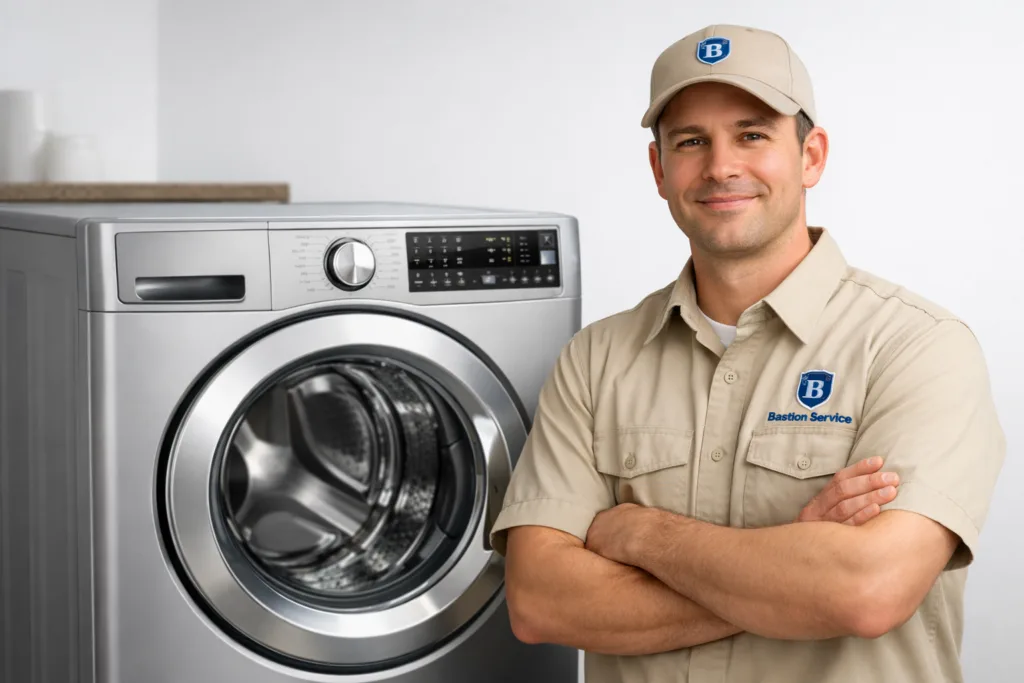
Electrolux washers are designed to manage water levels, balance, door locking, and cycle timing with tight electronic feedback. When one part of that system falls out of sync, the symptom you notice at home may not be the actual failed part. A washer that will not spin, for example, may really be reacting to a drainage problem or a door lock signal it does not trust.
That is why the most useful first step is to look at the exact pattern: when the problem starts, what the machine does next, and whether it happens on every load or only under certain conditions. In Rancho Park homes, those details often make the difference between a straightforward repair and replacing parts that were never the cause.
Common Electrolux washer problems homeowners notice first
Most washer failures do not begin as a total breakdown. They usually start with slower draining, longer cycles, damp clothes, unusual vibration, or a leak that appears only at one stage of the wash. Paying attention to the first signs can help prevent a minor issue from becoming tub damage, flooring damage, or repeated cycle failures.
Washer will not start
If the control panel lights up but the cycle will not begin, the washer may not be confirming that the door is locked. Electrolux units rely on door lock feedback before filling or spinning, so a latch issue, wiring problem, or control fault can all create the same no-start symptom. In some cases, a cycle selection or interface problem can also prevent operation even though the machine appears to have power.
If the washer is completely unresponsive, the cause may be different, such as a power supply issue, failed control, or damaged user interface. The key difference is whether the machine powers on at all and whether it responds normally before refusing to run.
Stops in the middle of the cycle
A washer that starts normally and then freezes, drains unexpectedly, or shuts down mid-cycle is often reacting to a condition it detects as unsafe or incomplete. Common examples include slow draining, water level sensing trouble, motor load issues, or door lock interruptions. Some machines pause for long periods and then try to continue, which can make the problem seem intermittent when it is actually repeating the same fault each load.
If this happens more than once, it is usually best not to keep testing it with additional laundry. Repeated failed cycles can leave water trapped inside and put extra strain on the pump and drive system.
Not draining or leaving clothes soaked
When standing water remains in the tub or clothes come out much wetter than normal, diagnosis usually begins with the drain system. A restriction in the drain path, a weak or failing pump, or a problem with pressure sensing can all interfere with the final spin. Because many washers will not enter full spin if they believe water is still inside, a draining problem often shows up as a spinning complaint first.
Homeowners may notice:
- Water still visible after the cycle ends
- A humming sound during drain attempts
- Long pauses before spin
- Clothes that are heavy and dripping after wash
- A cycle that appears to end without fully finishing
Leaking water during wash, drain, or spin
Not all washer leaks come from the same place, and timing matters. A leak that appears during fill may point toward an inlet or hose issue. Water that shows up while the drum is tumbling may suggest a door boot problem, oversudsing, or internal splash where water is not being contained correctly. A leak that appears during drain or spin can indicate problems in the drain path, pump area, or hose connections.
Because even a small leak can damage nearby flooring or baseboards, it is smart to stop using the washer if water is consistently collecting beneath or around the machine.
Loud banging, walking, or excessive shaking
One off-balance load does not always mean a repair is needed, but repeated banging during spin is worth attention. Electrolux washers can become unstable when shocks or suspension components wear down, when the load is not being redistributed properly, or when there is a deeper tub support issue. If the machine begins moving more than usual or sounds like the drum is striking internally, continued use can increase wear quickly.
This is especially important if the noise has become progressively worse over time instead of happening only with bulky items.
Error codes or confusing electronic behavior
Error codes are useful because they show what the washer is detecting, but they do not always identify the failed part by themselves. A code related to draining, locking, heating, or sensing may be triggered by the component, the wiring, or a control response problem. Intermittent behavior can be even harder to interpret, especially if the code clears and returns later.
Helpful clues include whether the same code appears every cycle, whether the controls freeze, and whether the issue shows up only after the washer has been running for a while.
Symptom patterns that help narrow the cause
Homeowners do not need to diagnose the machine on their own, but a few observations can make service more efficient and more accurate. The most useful information is usually not the code alone, but what the washer did before and after the problem appeared.
If it fills but will not tumble
This can point to motor, control, belt, or load-related issues depending on the model and the exact sequence. If the door locks and water enters normally, that helps rule out some no-start causes and moves attention toward wash action and drive behavior.
If it tumbles but will not spin fast
This often suggests the washer is not successfully completing drain, sensing balance correctly, or receiving the conditions it needs for high-speed spin. Wet clothes at the end of the cycle do not always mean the spin system itself is the failed part.
If it leaks only on certain loads
Leaks tied to towels, bedding, or larger loads can indicate movement-related leakage, oversudsing, or stress on hoses and seals under heavier operating conditions. That pattern is different from a leak that appears every time the machine fills.
If the problem appears only sometimes
Intermittent issues are often connected to wiring, sensor feedback, heat-related control faults, or components that are weakening but not fully failed. A machine that works perfectly for several loads and then stops again should still be evaluated, especially if the pattern is becoming more frequent.
When to stop using the washer
Some washer problems can wait a short time for service, but others should not be ignored. It is best to stop using the machine and arrange repair if you notice any of the following:
- Water leaking onto the floor
- A burning smell or signs of overheating
- Repeated tripping or electrical irregularities
- Standing water left in the tub
- Heavy banging during spin
- A door that will not lock or unlock properly
- Error codes that return after reset attempts
Running the washer in these conditions can turn a contained repair into broader damage involving the pump, motor, tub support, flooring, or nearby cabinetry.
Repair or replace: what usually makes sense
For many households in Rancho Park, the decision comes down to the age of the washer, the overall condition of the machine, and whether the failure is isolated or part of a larger decline. Problems involving a pump, latch, hose, shock set, or other serviceable component are often reasonable to repair when the washer is otherwise in solid condition.
Replacement may deserve more consideration when the machine has multiple active issues, significant internal wear, repeated control-related faults, or a repair history that suggests reliability is declining. The goal is not to push every machine toward repair, but to determine whether the fix is likely to restore normal operation without leading to another major issue soon after.
What to note before scheduling service
A few simple notes can make diagnosis faster and more targeted. Before service, it helps to write down:
- Whether the washer fills with water
- Whether the drum tumbles normally
- Whether it drains completely
- Whether the spin cycle reaches full speed
- Any sounds such as humming, grinding, or banging
- When a leak appears during the cycle
- Any error code shown on the display
- Whether the issue happens on every load or only certain ones
That symptom history often helps separate a drainage issue from a spin issue, a latch problem from a control problem, or a simple leak from a more involved mechanical fault.
Electrolux washer service focused on the actual failure
Washer problems are frustrating because similar symptoms can come from very different causes. The best repair path is based on what the machine is actually failing to do: drain, lock, fill, sense, balance, heat, or complete the cycle. Bastion Service helps Rancho Park homeowners evaluate Electrolux washer problems with a clear diagnosis and a practical repair plan based on the symptom, appliance condition, and repair path.
Whether the washer is leaving clothes wet, stopping mid-cycle, leaking, or showing repeated fault codes, the next step should be based on the root cause rather than trial and error. That approach gives homeowners a better sense of what can be fixed, what should not be delayed, and when replacement may be the smarter long-term choice.