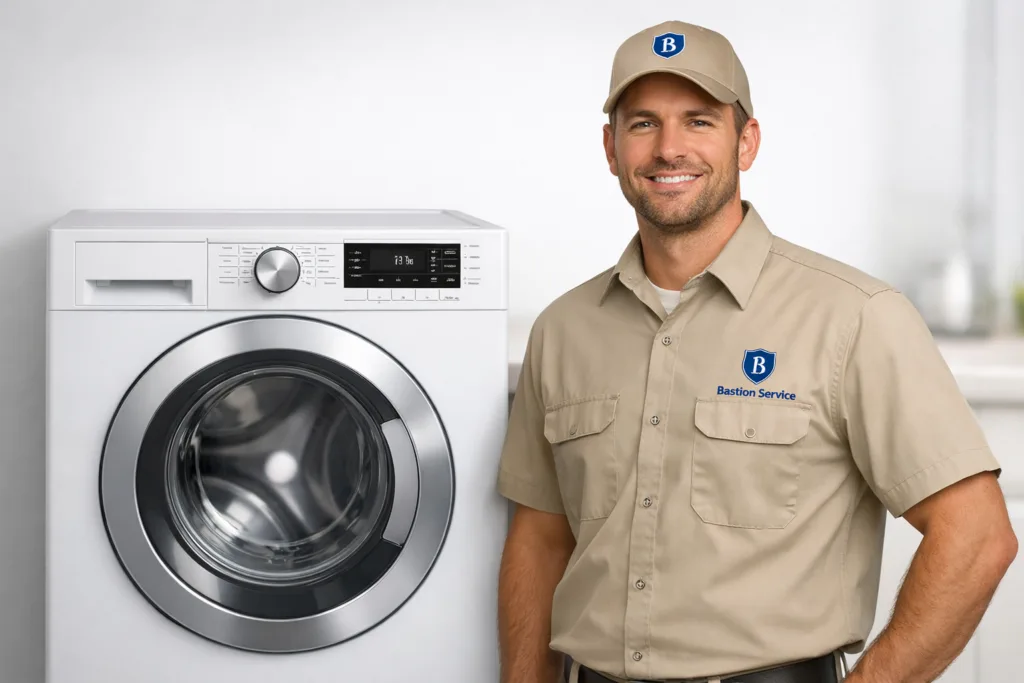
Washer problems rarely stay isolated for long. A machine that occasionally leaves clothes damp can develop into a full no-spin condition, and a small drip can turn into floor damage if it keeps happening through repeated loads. With Blomberg washers, the most useful starting point is to match the symptom to the part of the cycle where the problem appears.
How Blomberg washer symptoms usually point to the real problem
Many failures look similar at first. A washer that will not spin may actually be struggling to drain. A unit that stops mid-cycle may have a door lock issue, a sensing problem, or an interrupted drain sequence. Looking at what the washer does during fill, wash, drain, and spin helps narrow down whether the issue is mechanical, electrical, or related to water flow.
In Del Rey homes, this matters because homeowners often notice only the final result: soaked laundry, standing water, or a cycle that never finishes. The underlying cause can be very different from what it first appears to be.
Standing water after the cycle ends
If water remains in the drum, the problem commonly involves a restricted drain path, a weak or jammed pump, a hose issue, or a control problem that prevents the drain stage from completing. You may also hear humming without water movement, or notice that the washer pauses longer than usual before shutting down.
When this keeps happening, continued use can put extra strain on the pump and increase the chance of overflow or repeated shutdowns.
Clothes come out too wet
Wet laundry at the end of a cycle often points to incomplete spin, but the reason can vary. Blomberg washers may reduce or cancel spin if the load is unbalanced, if the door lock does not confirm properly, or if draining is too slow. Worn suspension parts can also interfere with a stable high-speed spin.
If the machine tumbles normally but never seems to reach full speed, it is worth treating that as a repair issue rather than assuming the load was too heavy every time.
Leaks during fill, wash, or drain
Where and when the leak appears matters. Water near the front may suggest a door boot or sealing issue. Water underneath can point to pump housing problems, internal hose wear, or a drain-related leak. If leaking happens mainly during spin, excessive vibration may be forcing water out where it normally would not escape.
Even a slow leak should be addressed early, especially if the washer sits near finished flooring or cabinetry.
Loud banging or strong vibration
A washer that knocks, shifts, or walks forward during spin may have a simple loading issue, but repeated heavy movement usually deserves attention. Common causes include worn shocks, weakened suspension components, leveling problems, or internal support wear. A machine that is allowed to keep slamming through spin can damage its cabinet, hoses, and surrounding floor area.
Won’t fill, overfills, or stops unexpectedly
Filling problems can come from inlet valve faults, water supply restrictions, pressure-sensing issues, or control failures. If the washer starts normally and then stops partway through, the issue may involve the lock system, drain performance, a sensor input, or the electronic control side of the machine.
These problems can be frustrating because the washer may work on one load and fail on the next, making the issue seem random when it is actually developing in a repeatable pattern.
Signs the problem is getting worse
Homeowners often spot warning signs before a full breakdown. If your Blomberg washer has started showing any of the following, it is smart to stop and evaluate it before running more loads:
- Cycle times are becoming noticeably longer.
- The washer hums before draining or spin never fully starts.
- You hear grinding, rattling, or hard thumping that was not there before.
- The door does not lock or unlock consistently.
- Error messages appear off and on instead of staying constant.
- Small leaks show up only during certain parts of the cycle.
Intermittent issues are easy to postpone, but they are often the ones that grow into more expensive repairs if the washer keeps running under strain.
When to stop using the washer
Some symptoms are more than an inconvenience. It is best to stop using the machine and schedule service if:
- Water is leaking onto the floor.
- The drum bangs forcefully during spin.
- The washer repeatedly leaves water in the tub.
- You smell overheating or hear a loud electrical hum that does not sound normal.
- The breaker trips during operation.
- The door locks clothes inside and will not release properly.
These conditions can lead to added appliance damage and, in some cases, damage around the laundry area.
Repair or replace? What usually makes the most sense
Repair is often worthwhile when the washer is otherwise in good condition and the problem is tied to a serviceable part such as a pump, valve, latch, hose, or suspension component. A single failure with a clear repair path is very different from a machine that has multiple developing issues.
Replacement becomes more likely when there is major internal wear, repeated control-related trouble, multiple failing systems at once, or a repair estimate that no longer makes sense for the age and condition of the unit. For many households in Del Rey, the decision comes down to whether the repair is likely to restore normal laundry use without leading to another major issue soon after.
What to note before scheduling service
A few details can make diagnosis much easier. Before setting up a visit, try to note:
- Whether the washer fills, tumbles, drains, and spins at all.
- What point in the cycle the problem appears.
- Any code shown on the display.
- Whether the issue happens on every load or only sometimes.
- If there is visible leaking, unusual noise, or strong movement.
That information helps narrow down whether the issue is related to draining, balance, filling, locking, sensing, or control behavior.
Focused Blomberg washer repair for Del Rey households
The best repair decisions come from understanding the exact symptom pattern instead of swapping parts based on guesswork. Whether the issue is poor draining, vibration, leaking, failed fill, or an interrupted cycle, the goal is to identify the cause, assess the machine’s overall condition, and determine whether repair is the sensible next step for your household.