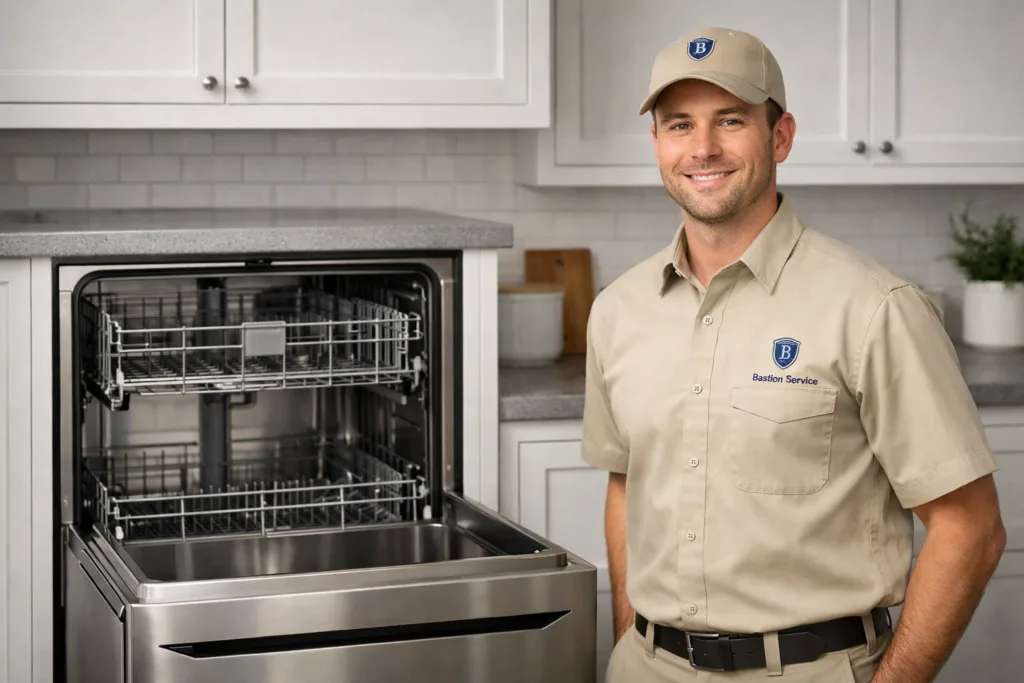
Dishwasher problems often look simple from the outside, but the same complaint can come from very different failures inside the machine. A unit that leaves dishes dirty may have a wash system problem, a fill issue, weak heating, or a drain fault that interrupts the cycle before it finishes correctly. With Dacor models, symptom-based inspection is often the fastest way to understand whether the repair is straightforward or whether the dishwasher is showing signs of a broader component failure.
What common Dacor dishwasher symptoms usually point to
Standing water after the cycle
If water remains at the bottom of the tub, the issue may involve the filter area, drain pump, drain hose, air gap setup, or a restriction that prevents normal flow out of the machine. In some cases, the dishwasher is not actually completing the drain portion of the cycle because another fault is stopping the sequence early. Re-running the same cycle over and over can overwork the pump and leave odor-causing water inside the unit.
Dishes come out dirty or gritty
Poor wash results usually trace back to weak spray pressure, blocked spray arms, low incoming water volume, circulation trouble, or detergent that is not dispensing at the right time. If debris is left on both racks, the problem is often more than loading technique. If only one area is affected, the pattern can help narrow down whether the issue is related to spray coverage, rack position, or internal wash performance.
Cloudy glassware and film on dishes
Cloudiness can come from rinse performance, mineral residue, low wash temperature, or incomplete draining that leaves soil in the tub during the next load. A dishwasher that is not heating water correctly may still appear to run normally while producing noticeably weaker cleaning results. If cloudiness appears along with detergent residue or damp dishes at the end of the cycle, the heating system deserves closer attention.
Leaking from the door or underneath
A leak can start at the door gasket, lower seal, tub edge, inlet connection, sump area, or an internal hose. Some leaks happen only during wash circulation, while others show up after draining. That timing matters. A small drip may not seem urgent, but continued use can affect nearby flooring and cabinet materials, especially if moisture spreads where it is not immediately visible.
Dishwasher will not start
When the control responds but the cycle does not begin, the cause may involve the door latch, switch response, user interface, or control communication. If the dishwasher appears completely unresponsive, power supply and electrical faults also need to be considered. On built-in units, the difference between “has power but won’t run” and “has no power at all” is important because it points to very different repair paths.
Cycle stops mid-wash
A dishwasher that starts normally and then shuts down may be dealing with drain resistance, fill problems, overheating, sensor feedback issues, or control interruption. Mid-cycle failure is one of the symptoms that homeowners often describe as random, but repeatable timing patterns can reveal a lot. If it always stops at roughly the same stage, that usually helps narrow the fault more quickly.
Buzzing, grinding, or unusual wash noise
New sounds can suggest debris in the pump area, a struggling motor, spray arm contact, or internal movement that is no longer smooth. A brief sound once in a while may be minor, but repeated grinding or loud buzzing should not be ignored. Noise is often one of the earliest signs that a part is still functioning, but not for long.
Issues that affect repair decisions
Not every dishwasher problem carries the same weight. Some failures are isolated and repair well. Others point to wear in multiple systems at once. A useful service decision usually depends on a few factors:
- Whether the machine fills, washes, drains, and heats normally
- Whether the problem is limited to one part of the cycle or shows up throughout operation
- Whether leaking or electrical symptoms create a stop-use situation
- Whether the dishwasher has had repeated recent breakdowns
- Whether repair would restore normal daily performance without likely follow-up failures
For many homes in West Los Angeles, the most important question is not simply whether the dishwasher can be repaired, but whether the repair is likely to return it to reliable routine use.
Why wash performance complaints can be misleading
“It’s not cleaning” is one of the most common dishwasher complaints, but it is also one of the least specific. A Dacor dishwasher can leave behind food soil because of circulation weakness, poor drain-out between phases, low heat, a dispenser problem, or reduced water entry. That is why replacing detergent, changing rinse aid, or switching cycles does not always solve the problem.
Pattern matters. If glasses are cloudy but plates are mostly clean, the issue may differ from a dishwasher that leaves heavy residue on everything. If the lower rack is acceptable but the upper rack is not, spray delivery and water movement become more likely suspects. Paying attention to where and when the problem appears often helps separate a user-facing symptom from the actual mechanical cause.
When a leak means stop using the dishwasher
Some dishwasher issues allow a little time for scheduling. Leaks usually do not. If water appears under the door, along the cabinet sides, or on the floor after a cycle, it is wise to stop using the machine until the source is identified. Even a slow leak can spread under the appliance and affect surfaces that are costly to repair.
The same caution applies if the unit trips the breaker, gives off a burning smell, or leaves water standing every time it runs. Those symptoms suggest more than a routine cleaning issue and should not be treated as minor inconvenience.
Repair or replacement for an older Dacor dishwasher
Repair is often sensible when the fault is limited to a pump, seal, latch, valve, drain component, or another targeted failure and the dishwasher is otherwise in solid condition. Replacement becomes more worth discussing when the machine has multiple active problems, recurring control issues, significant wear, or a repair path that approaches the value of restoring only short-term function.
Homeowners in West Los Angeles often make the best decision by looking at the whole picture rather than reacting only to the latest symptom. A single leak or drain problem may be a straightforward fix. A leak combined with weak cleaning, heating trouble, and repeated cycle failure points to a different conversation.
What helps before a service appointment
If you are arranging service, it helps to note exactly what the dishwasher does and does not do. Useful details include:
- Whether the tub fills with water at the start
- Whether spray sounds seem normal or unusually quiet
- Whether the detergent dispenser opens
- Whether the cycle finishes or stops partway through
- Whether dishes are wet, cold, dirty, or cloudy at the end
- Whether water is left in the tub after draining
- Whether leaking happens during washing or after the cycle ends
These details can make diagnosis faster and help separate a drainage problem from a wash system, heating, or control fault.
Focused Dacor dishwasher repair in West Los Angeles
Dacor dishwasher repair in West Los Angeles is most effective when the service approach follows the symptom pattern instead of guessing from the most visible complaint. Whether the problem involves poor draining, low rinse temperature, leaking, pump noise, or a cycle that will not complete, identifying the actual failed system is what leads to a repair that makes sense for the home and the appliance.