
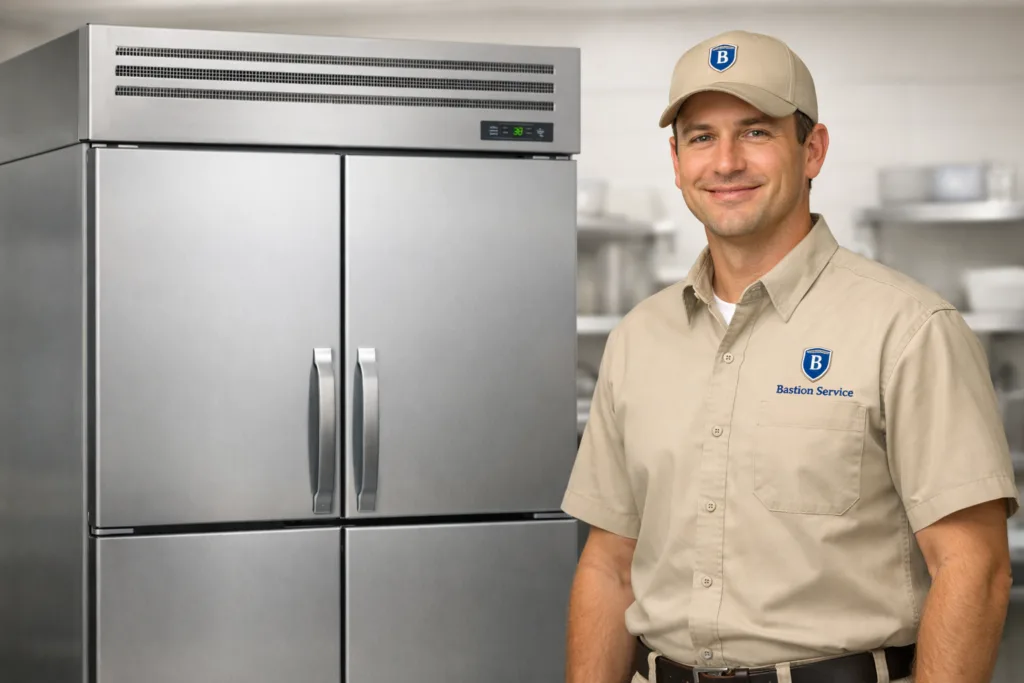




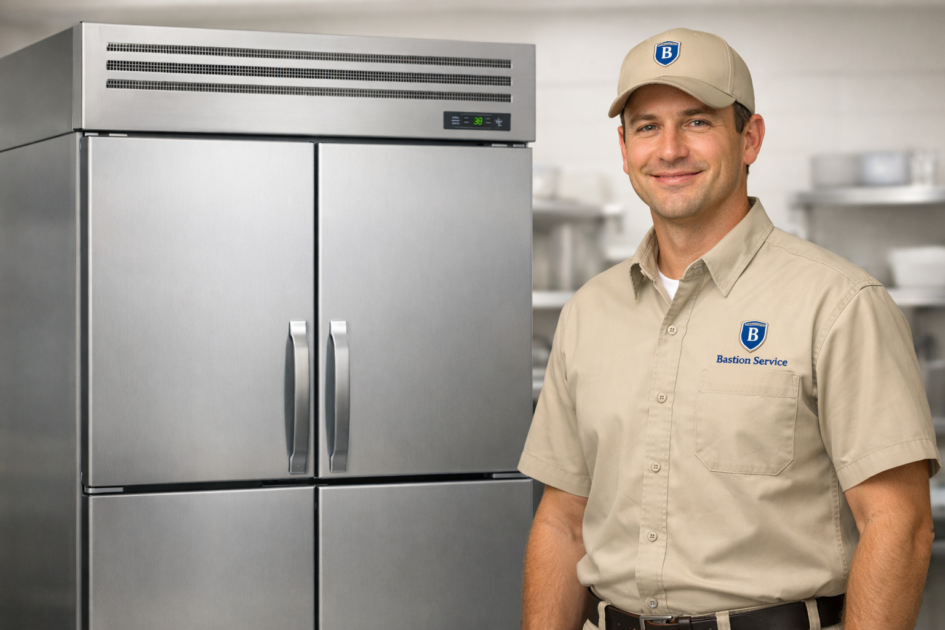
A Beverage-Air refrigerator that starts running warm, icing over, leaking, or cycling erratically can interrupt prep, storage, and service fast. For businesses in Santa Monica, the most useful next step is to have the symptom pattern checked before a small performance issue turns into lost product or a full equipment stoppage. Bastion Service provides Beverage-Air refrigerator repair with attention to how the unit is actually performing in day-to-day operation, what failure is most likely, and how urgently the repair should be scheduled.
Related commercial service paths in Santa Monica include Beverage-Air Commercial Repair in Santa Monica, Commercial Refrigerator Repair in Santa Monica, and Beverage-Air Freezer Repair in Santa Monica.
Many refrigerator problems look similar at first. A cabinet that will not hold temperature might be dealing with restricted airflow, dirty coils, fan trouble, a control issue, a weak door seal, a defrost fault, or a refrigeration-system problem. Because those failures can overlap, service decisions are better when they are based on testing and observed performance rather than guessing from one symptom alone.
Common Beverage-Air refrigerator problems
Cabinet temperature rising or drifting
If the refrigerator is on but product temperature is climbing, the issue may be tied to poor condenser airflow, evaporator fan failure, thermostat or sensor trouble, blocked airflow inside the cabinet, or loss of cooling capacity. In some cases the unit may appear to recover overnight or during lighter use, then fall behind again during normal business hours. That pattern usually points to an operating problem that needs repair rather than a one-time fluctuation.
Temperature drift also matters when the cabinet cools unevenly. One shelf may stay cold while another runs noticeably warmer, or the unit may struggle after door openings and take too long to pull back down. Those signs often indicate airflow or control issues that should be addressed before reliability gets worse.
Frost buildup on panels, product, or inside the evaporator area
Frost usually means moisture is entering where it should not, airflow is being restricted, or the defrost cycle is not working correctly. A damaged gasket, doors not closing fully, fan issues, or a failed defrost component can all produce similar icing symptoms. As frost builds, air movement drops, cooling becomes less even, and the refrigerator may begin running longer without reaching the set temperature.
What starts as a thin layer of ice can quickly become a performance issue that affects storage consistency. If frost keeps returning after being cleared, the unit needs more than cleanup. It needs the source of the moisture or defrost problem identified.
Water leaking inside or onto the floor
Leaks can come from a blocked drain, drain-pan issue, excessive condensation, or ice melting in the wrong location. Even when the amount of water seems minor, repeated leaking can create sanitation concerns, affect surrounding equipment areas, and introduce a slipping hazard for staff. In busy kitchens and storage areas, that makes refrigerator leaks an operational problem as much as a mechanical one.
Recurring water under the cabinet is also a clue that the refrigerator may be icing internally or not managing humidity and drainage correctly. If the floor keeps getting wet, the unit should be checked instead of treated as a housekeeping issue.
Noisy operation, constant running, or short cycling
A change in sound often shows up before total cooling failure. Rattling panels, buzzing, clicking, fan noise, or a compressor that seems to run without stopping can each point to different causes. Some are relatively contained, such as mounting wear or a fan motor problem. Others may indicate stress on the cooling system or controls.
Short cycling is especially important to address. When the refrigerator starts and stops too often, it may be struggling with temperature sensing, electrical components, airflow, or compressor-related issues. Constant running is just as concerning when the cabinet still cannot hold temperature, because that usually means the system is working harder without getting the result it should.
Why symptom-based diagnosis matters
Refrigeration issues often overlap in a way that makes quick assumptions expensive. A warm cabinet does not automatically mean compressor failure, and visible ice does not automatically point to a major sealed-system problem. Good service starts by verifying what the refrigerator is doing, how consistently it is cooling, whether air is moving properly, and which components are no longer responding as they should.
That approach helps avoid replacing parts that are not actually causing the problem. It also gives businesses in Santa Monica a better sense of whether the unit can remain in limited use while repair is scheduled, or whether it should be taken out of rotation to prevent product loss and further damage.
Signs the unit should be serviced soon
- Temperature swings that are becoming more frequent
- Product not staying as cold as expected
- Frost or ice returning after manual clearing
- Water collecting inside the cabinet or on the floor
- Fans that sound weak, noisy, or inconsistent
- Doors not sealing tightly or closing cleanly
- Long run times without proper pull-down
- Repeated clicking, shutdowns, or erratic cycling
These issues are often early warnings. Addressing them while the refrigerator is still partly functional can be easier than waiting until the cabinet stops cooling entirely.
When the problem is urgent
Some conditions call for faster scheduling. If the refrigerator cannot maintain safe holding temperatures, the compressor is overheating, the evaporator fan has stopped moving air, the unit is tripping power, or the cabinet is warming rapidly, waiting can increase both downtime and repair scope. The same applies when the refrigerator is leaking heavily or icing to the point that usable storage space is being reduced.
In those situations, the key question is not just whether the unit is still running, but whether it is still operating in a way that supports safe and workable storage. A refrigerator can remain powered on and still be functionally unreliable.
Repair or replace?
Many Beverage-Air refrigerator problems are repairable, especially when they involve gaskets, fan motors, controls, sensors, drains, switches, or defrost components. When those issues are caught early, repair can restore normal cooling and help avoid a larger breakdown.
Replacement becomes a more serious discussion when the refrigerator has multiple failing systems, a history of repeat outages, poor temperature stability even after prior service, or a major repair need that no longer makes sense for the unit’s condition. For most operators, the decision should be based on whether the refrigerator is likely to return to stable service, not simply whether it can be turned back on once.
How service supports day-to-day operations
Refrigerator repair is not only about fixing a part. It is about restoring predictable performance so staff can use the equipment without constantly checking temperatures, moving product around, or compensating for weak cooling. For restaurants, hotels, break rooms, and other businesses in Santa Monica, that means looking at temperature recovery, airflow, door condition, coil cleanliness, and whether the current symptom points to a larger reliability issue.
If your Beverage-Air refrigerator is showing signs of unstable cooling, repeated frost, leaking, or unusual cycling, service is most effective when scheduled around the actual symptom pattern and the operational impact on your business. A focused inspection can clarify the cause, help set repair expectations, and make the next step easier before downtime spreads further.


