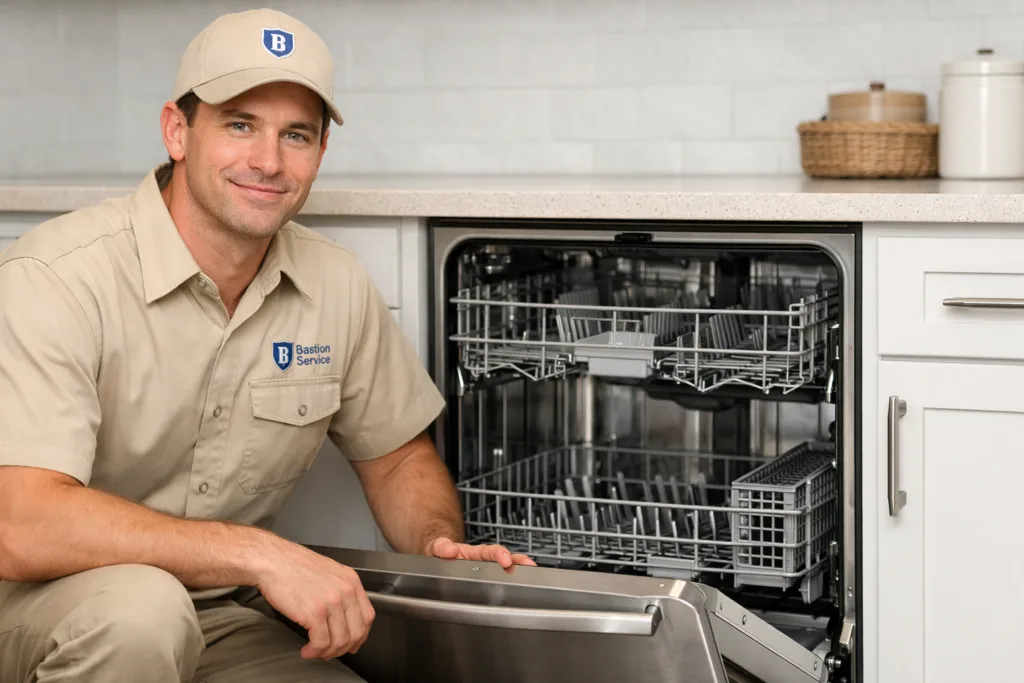
Dishwasher trouble is easiest to solve when the symptoms are looked at as a pattern rather than as a single bad load. A GE unit that leaks, leaves residue on glasses, or stops before the cycle ends can have a very different root cause from what it first appears to be. In Del Rey homes, the most useful next step is usually to identify whether the problem is tied to draining, circulation, heating, controls, or a sealing issue before any repair decision is made.
Common GE dishwasher problems seen in Del Rey homes
Most dishwasher failures start with a small change in performance. Maybe dishes are still wet, maybe the tub has water left in it, or maybe the machine has started making a sound that was never there before. Those details matter because they help narrow down what system is actually failing.
Standing water after the cycle
If water remains in the bottom of the tub, the problem may involve a blocked filter area, restricted drain hose, drain pump issue, or a problem where the unit is not advancing correctly into the drain portion of the cycle. Some GE dishwashers will still sound active even when they are not clearing water properly, which can make the problem seem smaller than it is.
Repeated draining problems should not be ignored. Leftover water can cause odors, leave dirty residue on dishes, and put extra strain on the pump over time.
Cloudy glasses, food residue, or poor wash results
When dishes come out looking dull, gritty, or still dirty, the issue is not always detergent. Poor wash performance can come from spray arms that are blocked, low water fill, circulation trouble, heating problems that keep detergent from dissolving correctly, or sensor and control issues that prevent the cycle from running as intended.
If the same result happens over multiple normal loads, it is usually a machine problem rather than a loading mistake.
Leaks at the door or under the dishwasher
A leak can come from several places, including the door gasket, pump seals, hose connections, overfilling, or spray action that is pushing water where it should not go. A small puddle may seem minor, but repeated leaking can damage cabinet bases, flooring, and trim around the dishwasher opening.
If you notice moisture returning after each cycle, stopping routine use is often the safer choice until the source is identified.
Unit will not start or shuts off mid-cycle
When a GE dishwasher does not respond, starts inconsistently, or stops partway through, possible causes include a faulty door latch, user interface problem, wiring fault, or control board issue. In some cases the panel appears normal but the dishwasher never begins washing. In others, it starts and then quits before draining or drying.
These symptoms tend to require testing rather than part-swapping, since several different failures can look nearly identical from the outside.
Low heat or dishes that never dry properly
Drying issues often show up as wet interiors, cool dishes at the end of the cycle, or detergent residue that suggests the water never reached proper temperature. A heating element problem is one possibility, but so are thermostat-related issues, control faults, and wash problems that affect the full cycle.
If low rinse temperature is part of the symptom pattern, it can affect both cleanliness and drying performance at the same time.
Grinding, buzzing, or new pump noise
A dishwasher that suddenly sounds harsher than usual often has debris in the pump area, wear in a motor component, or a drain problem. The exact sound matters less than the change. If a machine that was once quiet now makes a repeated grinding or buzzing noise each cycle, that usually means a component is under stress.
Why the same symptom can have different causes
Dishwasher repair gets confusing when one symptom points to more than one possible failure. For example, poor drying could be caused by a heating issue, but it might also follow weak wash action or an interrupted cycle. A leak at the front edge might come from the door seal, but it can also happen because of over-sudsing, improper leveling, or spray patterns that are forcing water outward.
That is why a useful diagnosis checks how the dishwasher fills, circulates, drains, heats, and seals as a complete system. It helps prevent unnecessary parts replacement and gives homeowners a better sense of whether the repair is likely to solve the problem completely.
Signs the dishwasher should not keep running
Some issues can wait a short time for service, but others are better treated as stop-use problems. Continued operation can turn a contained appliance repair into cabinet, floor, or electrical damage.
- Water is leaking onto the kitchen floor
- The tub repeatedly holds dirty water after a cycle
- The machine makes a new grinding or harsh pump noise
- Cycles stop partway through on a regular basis
- The dishwasher trips the breaker or loses power while running
- There is a strong standing-water smell that keeps returning
When one or more of these symptoms is present, it usually makes sense to pause normal use until the fault is confirmed.
Repair or replace a GE dishwasher?
For many households in Del Rey, the better choice depends on the age of the dishwasher, the condition of the interior and racks, the cost of the repair, and whether this is an isolated issue or part of a longer pattern. A machine in otherwise solid condition is often worth repairing if the problem is limited to a confirmed pump, latch, drain component, water inlet issue, or control-related failure.
Replacement starts to make more sense when the dishwasher has multiple worn systems, visible structural wear, repeat service history, or repair needs that approach the value of the appliance. If the machine has both performance problems and overall deterioration, investing in another repair may not be the best long-term answer.
What to notice before scheduling service
A few observations can make the problem easier to pinpoint. Before service, it helps to note whether the dishwasher is filling with water, whether the spray action sounds normal, whether the problem happens on every cycle, and whether the issue is getting worse or simply staying the same.
Useful details include:
- Whether standing water is clean or dirty
- Whether leaking happens early in the cycle or near the end
- If the control panel responds normally
- Whether dishes are dirty, wet, or both
- If unusual noise happens during wash or during drain
- Whether the issue started suddenly or gradually
Those details often help separate a drain problem from a wash problem, or a heating issue from a control issue.
What homeowners usually want from a repair visit
Most people are not looking for technical jargon. They want to know what failed, whether the symptom pattern supports that conclusion, and whether the repair is worth making. Good service should make it easier to decide between repairing the current dishwasher and moving on from it.
For GE dishwasher repair in Del Rey, that usually means a straightforward explanation, realistic next steps, and a repair path based on the actual condition of the appliance rather than guesswork. When the cause is identified correctly, it becomes much easier to restore normal kitchen routine without repeated cycle failures or recurring water problems.