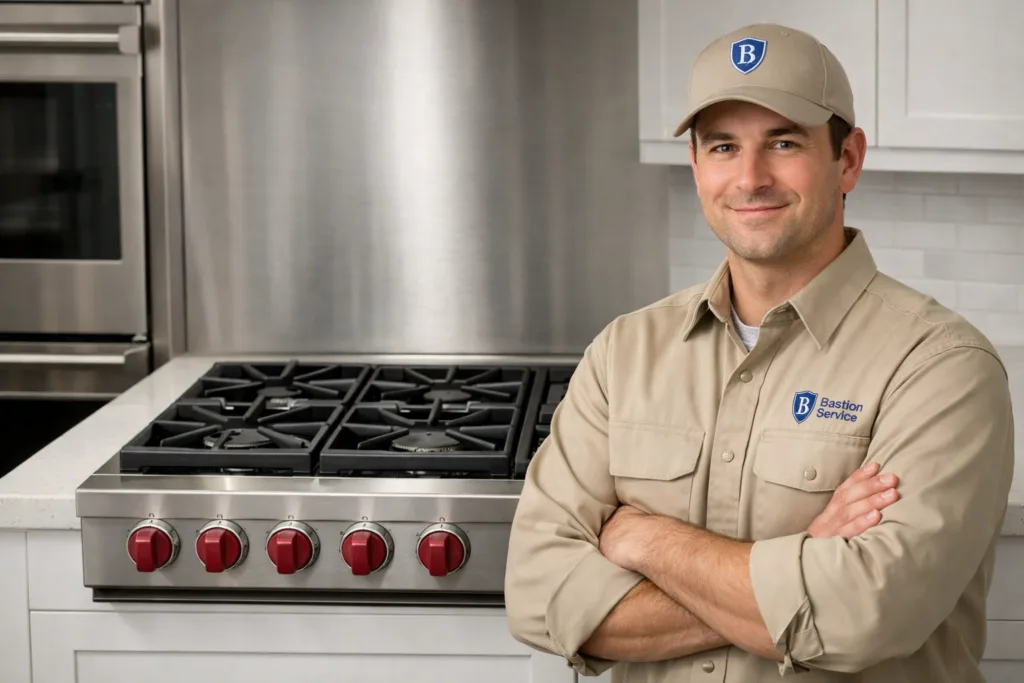
Cooktop problems are easier to solve when the exact behavior is identified early. A burner that clicks every time but never lights points to a different repair path than a burner that lights late, goes out unexpectedly, or heats unevenly. On Wolf cooktops, those differences matter because the issue may involve the burner assembly, igniter, switch, wiring, control components, or the incoming power or gas supply to the unit.
How symptom patterns help narrow down a Wolf cooktop problem
One of the most useful details is whether the issue affects one burner, several burners, or the whole cooktop. A single weak burner often suggests a localized fault, while multiple burners acting up at the same time can indicate a shared ignition, control, or power-related problem. Homeowners in Fairfax often find that what seems like a simple burner issue is actually easier to resolve once the full pattern is documented.
Burner clicks but does not ignite
On gas models, repeated clicking without ignition can happen when the burner cap is out of position, the ignition area is dirty, moisture is trapped around the igniter, or the spark system is not firing correctly. If the clicking is constant even when the burner is dry and properly seated, the problem may involve the switch harness or spark module rather than the burner itself.
If there is a strong or persistent gas odor, stop using the cooktop and treat it as a safety issue first. If there is no gas smell and the burner still fails to light reliably, the next step is usually inspection of the ignition components and burner setup rather than continued trial-and-error use.
Delayed ignition or uneven flame
A burner that lights after a long delay or produces an uneven flame should not be ignored. Delayed ignition may mean the gas is not reaching the burner evenly, the ports are blocked, or the ignition point is not occurring where it should. Uneven flame can affect cooking results and may also signal wear, buildup, or a burner assembly problem that needs more than routine cleaning.
In many cases, flame issues are repairable when the underlying cause is isolated early. Leaving the problem alone often leads to more stress on ignition parts and less predictable performance during daily cooking.
Electric cooking zones not heating properly
On electric or induction-style Wolf cooktops, a zone that does not heat, overheats, or cycles inconsistently may involve a failed element, damaged wiring, a sensor fault, or a control issue. If only one zone is affected, the repair may be more contained. If several zones are behaving the same way, diagnosis usually shifts toward shared controls or power distribution inside the unit.
Erratic heating is especially frustrating because it can look like cookware is the problem when the real issue is within the cooktop. If settings no longer match the actual heat output, service is usually warranted before the condition worsens.
Cooktop will not turn on at all
A cooktop that appears completely dead may have a supply issue, internal electrical failure, damaged wiring, or a failed control component. Basic homeowner checks such as confirming power at the breaker can be helpful, but repeated resets or continued attempts to operate a nonresponsive unit are rarely productive. A full loss of function often means the fault is beyond normal household troubleshooting.
Common Wolf cooktop issues seen in residential kitchens
Not every repair call starts with a total failure. Many start with small but recurring symptoms that interrupt cooking and gradually become more frequent. Common examples include:
- One burner that stops lighting unless it is clicked several times
- Continuous clicking after a spill or cleaning
- Flame that appears too low, too high, or uneven around the burner
- Electric zones that heat slowly or run hotter than the selected setting
- Knobs or controls that stop responding normally
- Intermittent shutdowns during use
- Breaker trips when the cooktop is turned on
- Cracked glass or visible surface damage that affects safe use
These symptoms do not all point to the same part, which is why replacing parts based on a guess often wastes time and money.
When it makes sense to stop using the cooktop
Some problems are mostly about convenience, but others can lead to additional damage if the appliance stays in service. It is wise to pause use if the cooktop is tripping breakers, producing delayed ignition, sparking unexpectedly, overheating cookware, or showing obvious damage to the glass or surface area. Repeated use under those conditions can put more stress on wiring, switches, controls, and ignition components.
Moisture-related issues are another example. A spill may seem minor at first, but if liquid reaches switches or internal electrical areas, the symptom can return repeatedly until the source is properly addressed.
Repair versus replacement for a Wolf cooktop
For many households in Fairfax, repair is worth considering when the cooktop is otherwise in solid condition and the problem is tied to a specific burner, igniter, switch, element, or control component. Built-in cooking appliances are not always simple to replace, especially when the existing cutout, countertop layout, and kitchen workflow already fit the current unit well.
Replacement becomes more likely when several systems are failing at once, surface damage is extensive, or repair needs have begun stacking up over a short period. The key question is whether the problem is isolated or part of broader decline across the appliance. That distinction is especially important with a premium cooktop, where a targeted repair can still make good sense.
What to note before scheduling service
A few details can make diagnosis faster and more accurate. Before the visit, it helps to note:
- Which burner or cooking zone is affected
- Whether the problem is constant or intermittent
- Whether the issue began after a spill, cleaning, or power interruption
- Whether clicking occurs without ignition or continues after lighting
- Whether the flame is weak, uneven, or delayed
- Whether a zone overheats, underheats, or shuts off unexpectedly
- Whether the unit trips the breaker or loses power entirely
Those details help separate a localized burner issue from a broader electrical or control problem and support a practical repair plan based on what the cooktop is actually doing.
Focused help for homeowners in Fairfax
Wolf cooktop repair in Fairfax is most effective when the symptom is evaluated in context instead of treated as a generic heating problem. If the appliance has started clicking, failing to ignite, heating unevenly, or losing power, timely service can help prevent a smaller fault from turning into a wider repair. For households that rely on the cooktop every day, getting the cause identified early is usually the fastest way back to safe, consistent cooking.