
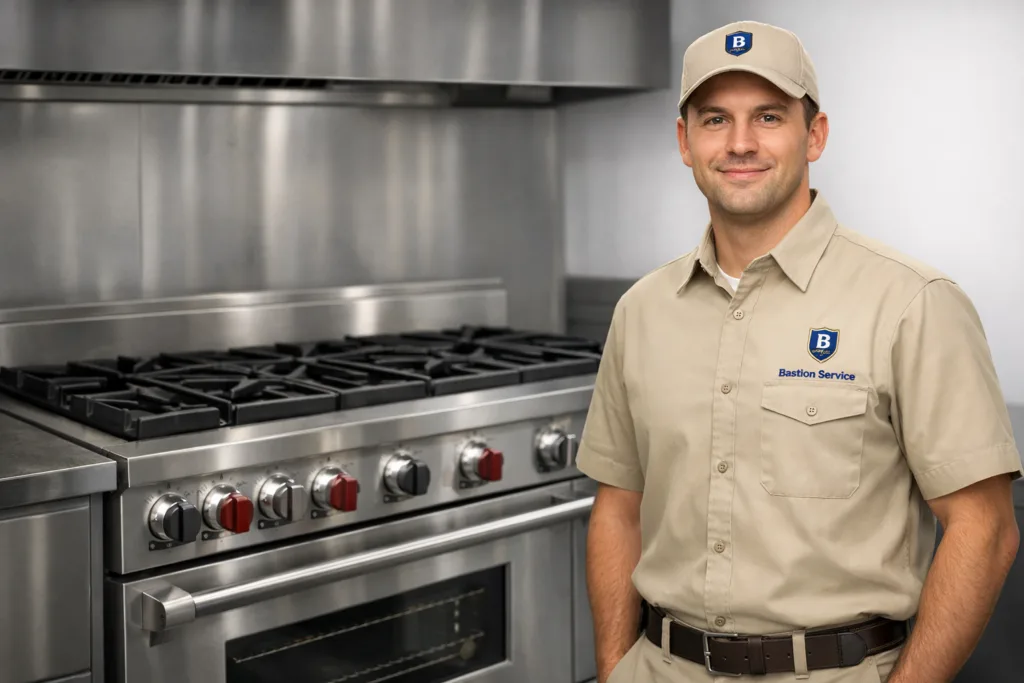




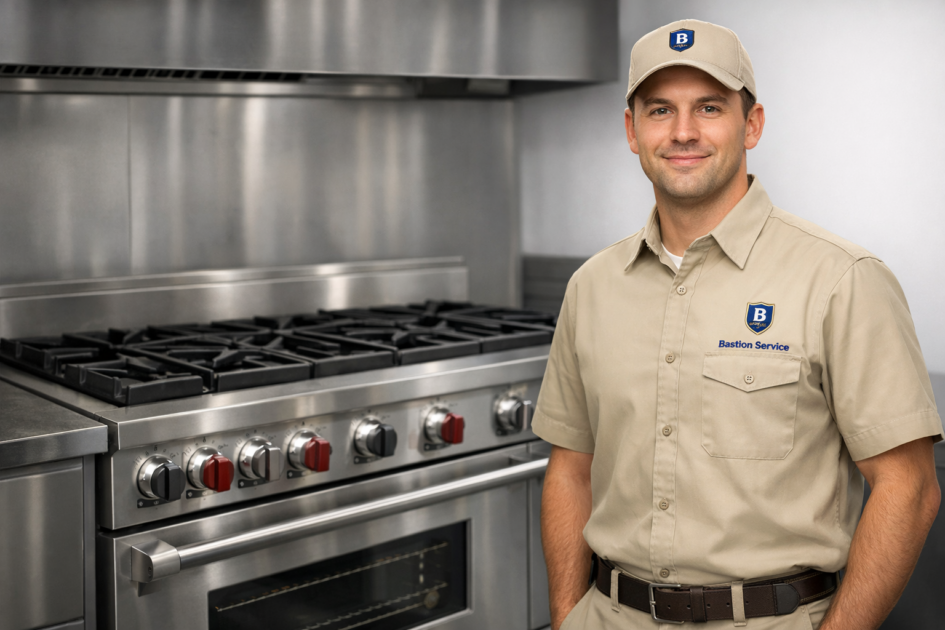
Range problems can disrupt prep, line timing, and food consistency fast, especially when burners fail during service or the oven side will not recover heat the way staff expects. For businesses in Sawtelle, the smartest next step is to match the exact symptom to the likely failed system so repair work addresses the real cause instead of treating only the visible complaint. Bastion Service provides Wolf range repair for issues that affect ignition, burner output, oven performance, controls, and day-to-day reliability.
Related commercial service paths in Sawtelle include Wolf Commercial Repair in Sawtelle, Wolf Oven Repair in Sawtelle, and Wolf Fryer Repair in Sawtelle.
Why a Wolf range may stop lighting, heating, or holding temperature
One symptom does not always point to one part. A burner that clicks without lighting may be dealing with ignition component wear, burner blockage, alignment issues, or a fault that interrupts proper flame carryover. An oven that runs cold or overshoots temperature may involve the sensor circuit, thermostat or control response, ignition performance, or a heating pattern issue inside the unit.
In active kitchens, these failures often appear gradually before they become obvious. Staff may notice slower pan response, repeated ignition attempts, uneven browning, longer cook times, or the need to keep adjusting settings during a shift. Those patterns matter because they help narrow whether the problem is isolated to a burner assembly, a control issue, or a broader heat-management fault within the range.
Common Wolf range symptoms and what they usually suggest
Burners click but do not ignite
Repeated clicking with no flame can point to dirty or damaged ignition components, burner cap or assembly misalignment, moisture or debris around the ignition area, or ignition failure under load. If the burner eventually lights after several tries, the problem may still be advancing and should not be ignored just because it is intermittent.
Burners light late or produce uneven flame
Delayed ignition, weak flame, or an uneven burn pattern often suggests clogged burner ports, wear in burner components, gas-flow issues within the appliance, or valve-related problems. In practice, this may show up as slower sauté work, trouble maintaining even heat across multiple pans, or one section of the range lagging behind the rest.
Oven temperature swings during cooking
If the oven side is running too hot, too cool, or drifting away from the selected setting, likely causes include sensor drift, control failure, thermostat issues, or ignition-related heating inconsistency. This usually becomes visible through uneven results, extended bake or roast times, or batches that no longer finish the same way from one cycle to the next.
Heat recovery is too slow
When the range struggles to return to temperature after the door opens or after heavy burner use, the issue may involve weakened heating performance, sensor feedback problems, or components that are no longer responding correctly during sustained operation. Slow recovery is especially disruptive when the kitchen depends on repeatable output through busy service windows.
Controls respond inconsistently
Knobs, switches, selectors, or electronic controls that behave unpredictably can indicate failing control assemblies, worn switches, wiring faults, or heat-related internal wear. These issues often begin as occasional misbehavior and then become more frequent as the unit continues operating under daily demand.
How these problems affect kitchen workflow
A Wolf range does not have to fail completely to create operational problems. One unreliable burner can force staff to shift pans constantly. An oven that drifts from set temperature can slow ticket times and create inconsistent product quality. Repeated manual adjustments also increase the chance that operators compensate in ways that mask the original fault while putting extra strain on the equipment.
For Sawtelle businesses, it helps to document what is happening during startup, during continuous cooking, and after the unit has been hot for a while. A range that works when cold but fails after extended use may point to a different issue than one that will not ignite from the start. Those details make repair scheduling more efficient and help avoid unnecessary parts changes.
When service should be scheduled right away
- Ignition fails repeatedly or requires multiple attempts
- Burners drop flame, burn unevenly, or do not reach expected output
- Oven temperatures drift enough to affect food consistency
- Controls stop responding normally or behave unpredictably
- Staff are using workarounds every shift to keep the range in use
- The same symptom returns after temporary improvement
If employees are forcing knobs, relighting burners over and over, or constantly adjusting settings to chase heat, the problem is usually beyond normal wear tolerance. Continued operation in that condition can turn a narrower repair into a larger one.
What to check before the service visit
Basic symptom notes can make diagnosis faster. It is useful to know whether the problem affects all burners or only one, whether the oven issue is constant or intermittent, and whether the failure appears more often during heavy use. If the range has error behavior, unusual clicking, delayed flame, or noticeable hot and cold spots, that information can help narrow the likely fault before disassembly begins.
It also helps to note whether the complaint started suddenly or built up over time. Sudden failure can suggest a part breakdown or electrical interruption, while gradual performance decline more often points to wear, contamination, calibration drift, or heat-related deterioration of components.
Repair or replacement: how businesses usually decide
Many Wolf range issues are best handled with targeted repair when the main unit remains in solid condition and the problem is confined to serviceable components. That is often the case with burner faults, ignition failures, sensor issues, and some control-related problems. Replacement becomes a more serious consideration when the range shows repeated failures across multiple systems, widespread wear, or a pattern of recurring downtime that no longer fits the kitchen’s needs.
The key is separating a single correctable fault from a larger reliability trend. A service assessment can help determine whether the current problem is contained, whether nearby components show related wear, and whether the unit is likely to return to stable operation after repair.
What a service-focused repair visit should accomplish
A productive Wolf range repair appointment should confirm the reported symptom, test affected heating or ignition functions, identify whether the issue is mechanical, electrical, control-related, or airflow and combustion related within the appliance, and then outline the most sensible next step. That approach reduces guesswork and supports better decisions about timing, parts, and expected downtime.
For businesses in Sawtelle, the goal is not simply to get the range running for the next hour. The goal is to restore stable burner performance, reliable oven heat, and control response that supports daily kitchen output. If your Wolf range is clicking, not lighting, heating unevenly, or struggling to hold temperature, scheduling service based on the exact symptom pattern is the most practical way to limit disruption and move toward a lasting repair.


