
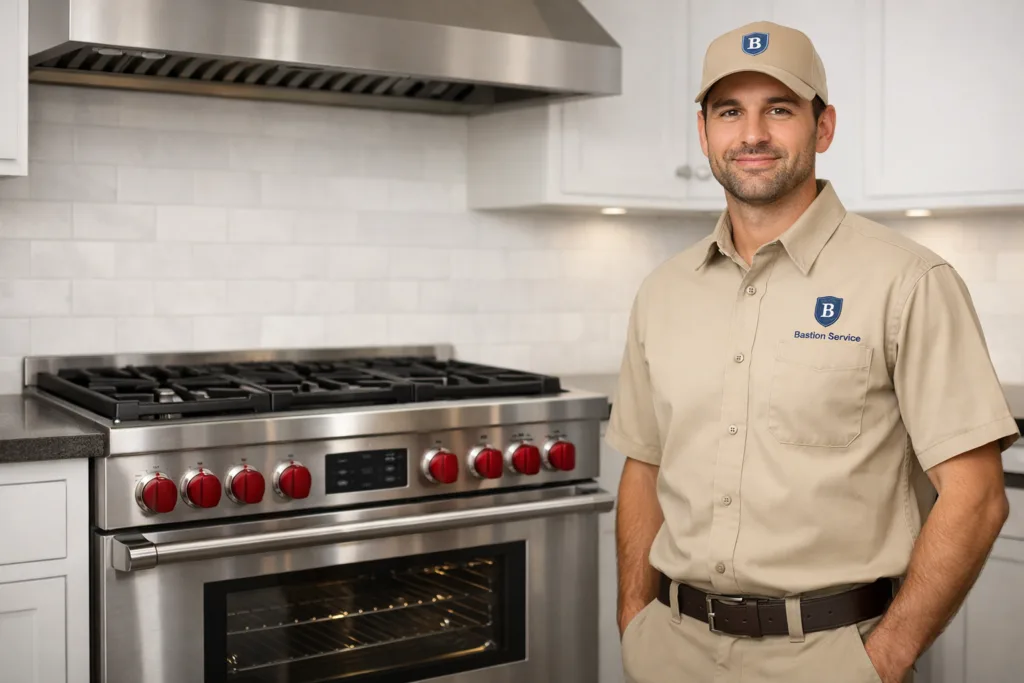




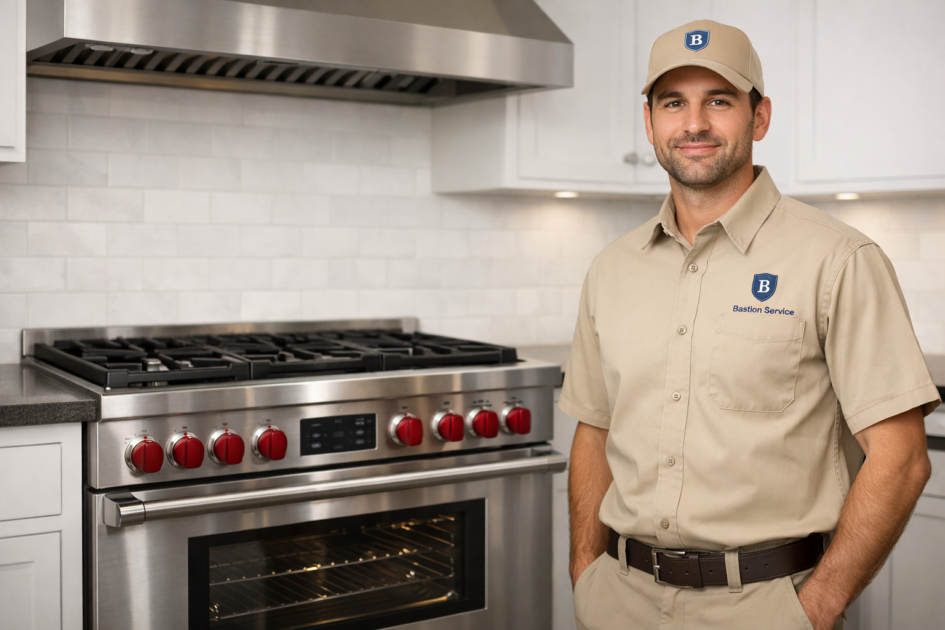
When a Wolf cooking appliance starts acting up, the most useful starting point is the symptom itself. A burner that clicks but does not light, an oven that runs hot or cold, or a range that works inconsistently from one day to the next can all point to more than one underlying problem. Looking at how the issue appears, how often it happens, and whether it affects one function or several usually tells you far more than the symptom alone.
For specific Wolf appliance paths in Cheviot Hills, review Wolf Oven Repair in Cheviot Hills, Wolf Wall Oven Repair in Cheviot Hills, and Wolf Range Repair in Cheviot Hills.
Start with the way the problem shows up
Wolf appliances are designed for strong cooking performance, so changes are often noticeable quickly. In Cheviot Hills homes, homeowners usually spot trouble first through cooking results or everyday usability. Food may take longer to finish, burners may hesitate before ignition, or controls may feel less responsive than usual. Those patterns matter because they help separate a simple wear issue from a larger electrical, ignition, sensor, or control problem.
It also helps to notice whether the issue is constant or intermittent. A burner that never lights points in a different direction than one that lights only after several tries. An oven that is always off by temperature is different from one that drifts unpredictably during longer cooking cycles. These details make repair planning much more accurate.
Common Wolf cooktop symptoms and what they may mean
Cooktop problems often show up in ways that interrupt daily use right away. You may notice clicking without ignition, a weak or uneven flame, delayed lighting, or a burner that works sometimes and fails other times. In some cases, the fault is limited to one burner assembly or ignition component. In others, the behavior can be tied to switches, wiring, moisture intrusion, or a broader ignition system issue.
One of the most common frustrations is continuous clicking. That can happen because of a worn ignition part, a switch problem, or residue and moisture affecting the system. If the clicking continues after the burner lights, it is a sign the appliance is not operating as it should. Even when cooking is still possible, the condition can become more disruptive over time.
Uneven flame is another symptom worth taking seriously. If one burner suddenly seems weaker than usual or heats cookware inconsistently, the issue may not be just routine cleaning. Burner alignment, ignition wear, gas flow irregularity, or component damage can all affect performance.
Wolf oven and wall oven issues homeowners often notice first
Oven problems are usually discovered through uneven baking, long preheat times, poor roasting results, or temperature inconsistency from one use to the next. A Wolf oven or wall oven may still power on and appear functional while producing unreliable cooking results, which is why performance complaints deserve attention even before the appliance stops heating entirely.
Common symptom patterns include:
- Preheat taking much longer than normal
- Food browning too quickly on one side
- Dishes finishing undercooked in the center
- Temperature settings not matching actual cooking results
- The unit shutting off unexpectedly during a cycle
- The door not sealing or closing the way it used to
These symptoms can be linked to heating components, temperature sensors, control issues, door gasket wear, or airflow-related problems inside the oven cavity. Because several different faults can produce similar cooking complaints, it is important not to assume the first visible part is the real cause.
Range problems can involve more than one system at once
A Wolf range combines cooktop and oven functions in one appliance, which means a single service call may involve multiple symptom groups. Some homeowners notice that the burners are fine but the oven is unreliable. Others find the opposite, or see both sections become less dependable around the same time.
That overlap is important. If ignition issues, temperature drift, and display irregularities are all happening together, the problem may be broader than one isolated part. On the other hand, a range can also have two unrelated faults that simply appeared close together. A full inspection helps avoid treating one symptom while missing another that affects daily cooking just as much.
Symptoms that usually should not be ignored
Some problems are inconvenient but manageable for a short time. Others should move to the top of the list because they affect safe operation or can lead to additional damage. You should stop normal use and arrange prompt evaluation if you notice any of the following:
- Sparking where sparking should not occur
- Burners failing repeatedly to ignite
- An oven that will not maintain cooking temperature
- Controls that work only intermittently
- A door that will not close securely
- Repeated breaker trips during normal operation
- A persistent gas odor around the appliance
In gas-related situations, odor concerns should be treated as a safety matter first, not as a routine convenience issue. If a symptom suggests the appliance may not be operating safely, continued use is rarely worth the risk.
Why intermittent problems are often harder than complete failure
A complete failure is disruptive, but it is usually easier to identify. Intermittent issues can be more frustrating because the appliance appears normal part of the time. A burner may light perfectly in the morning and fail at dinner. An oven may bake one meal correctly and then struggle to hold temperature the next day.
These on-and-off patterns often point to components that are wearing out, electrical connections that are becoming unstable, or controls that are beginning to fail under heat or repeated use. Waiting too long can make the pattern less predictable and can sometimes affect related parts as the appliance tries to keep functioning around the fault.
When continued use can make the repair bigger
Many homeowners keep using a premium appliance as long as it still turns on. That is understandable, but partial operation can still put added strain on the system. A burner that struggles to ignite may wear down ignition parts faster. An oven with poor temperature feedback may run longer than necessary and overwork heating components. A door that does not seal well can reduce efficiency and increase heat loss through every cooking cycle.
That does not mean every minor issue causes major damage. It does mean changing symptoms deserve attention before a simple repair turns into a larger one. If the appliance is becoming less reliable week by week, that pattern usually matters as much as the symptom itself.
Repair or replace depends on the appliance, not just the frustration level
Repair decisions are usually best made after the problem is properly identified. With Wolf appliances, replacement is not automatically the right answer just because performance has dropped. In many cases, repair remains worthwhile when the appliance is otherwise in strong condition and the issue is limited to a specific component or system.
Replacement becomes a more realistic conversation when several major problems are appearing together, prior repairs have not resolved recurring issues, or the cost of restoring full function starts climbing across multiple visits. The right decision depends on the actual condition of the appliance, not just the fact that dinner has become harder to manage.
What helps homeowners prepare for service
Before scheduling service, it helps to note a few details:
- Which function is failing: burner, bake, broil, preheat, display, or door operation
- Whether the problem happens every time or only occasionally
- Whether one section of the appliance works normally while another does not
- Any recent changes in cooking times, flame quality, or temperature results
- Any unusual sounds, odors, error displays, or shutdown behavior
Even simple observations can help narrow the likely cause. They also make it easier to distinguish between a performance complaint and a developing failure that needs faster attention.
What homeowners in Cheviot Hills are usually trying to solve
Most households are not looking for a long technical explanation. They want to know why the appliance is misbehaving, whether it can still be used safely, and whether repair is likely to restore normal cooking. That is especially true with premium kitchen equipment, where the goal is not just getting power back on, but getting dependable cooking performance back.
For Wolf cooktops, ovens, ranges, and wall ovens, symptom-based evaluation is the best way to make that decision. Whether the issue is weak flame, temperature inconsistency, slow preheat, repeated clicking, or an oven door that no longer seals properly, the next step should be based on how the appliance is actually failing in everyday use.


