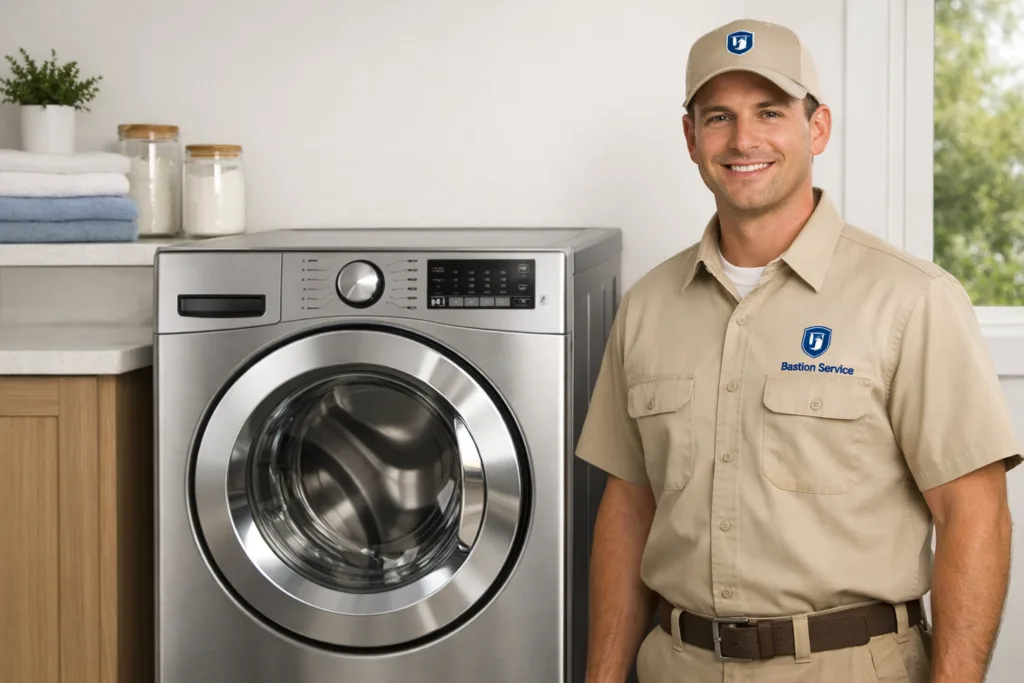
Washer problems are easiest to solve when the symptom is tied to a specific part of the cycle. A machine that will not start points in a different direction than one that fills but does not agitate, and a washer that drains slowly is different again from one that leaks only during spin. In Rancho Palos Verdes homes, narrowing down when the failure happens is often the fastest way to understand whether the issue involves the latch, pump, inlet valve, motor, suspension, or control system.
Common washer problems and what they may mean
A washer that will not power on or begin a cycle may have a power supply issue, a failed door or lid lock, a damaged control board, or a user interface problem. If the tub fills normally but the cycle stalls before washing begins, the machine may not be sensing that the door is secured, or the drive system may not be engaging correctly.
When clothes come out overly wet, the problem is often in the drain or spin portion of the cycle. A clogged pump filter, restricted drain hose, weak drain pump, or imbalance detection issue can all keep the washer from reaching full spin speed. Front-load and top-load machines can show this symptom for different reasons, so the sound the unit makes during drain and spin can be a useful clue.
Leaks need to be judged by where the water appears and when it shows up. Water near the front of the machine may suggest a door boot or door seal issue, while water underneath can come from hoses, the pump, the tub-to-pump connection, or an internal seal. If the leak appears only during fill, the inlet side may be involved. If it happens during drain or high-speed spin, the source is often lower in the system.
Noise, shaking, and off-balance cycles
Not every loud washer has a major mechanical failure, but repeated banging, grinding, scraping, or roaring should not be ignored. Some shaking is caused by uneven flooring, poor leveling, or overloaded loads such as towels and bedding. More serious noise can point to worn suspension rods, shocks, bearings, a damaged basket, or a drive component that is beginning to fail.
If the machine walks forward, slams the cabinet, or repeatedly stops to rebalance, it is usually best to stop forcing more cycles through it. Continuing to run a washer with suspension or bearing trouble can increase wear on the tub, motor, and cabinet, and in some cases it can turn a repairable problem into a much larger one.
Drain and spin issues that deserve quick attention
A washer that leaves standing water in the tub should be checked promptly. Drain problems often begin as a slow drain, then turn into a no-drain condition once the pump weakens further or debris packs more tightly into the system. Coins, small garments, lint buildup, and hose restrictions are common causes, but electrical pump failure is also possible.
Spin issues can feel similar to drain issues because both leave clothing wet, but they are not always the same fault. If the washer drains the water but the basket never reaches speed, the cause may be a lid switch, door lock, motor control, clutch, belt, or balance-related shutdown. If the companion laundry problem is that clothes are tumbling but staying damp after washing, Dryer Repair in Rancho Palos Verdes may be the better service path.
Fill problems, poor wash results, and cycle interruptions
When a washer fills too slowly, does not fill with enough water, or stops mid-fill, the cause may be an inlet valve problem, sediment at the screens, low supply pressure, or a control issue. A unit that overfills or continues taking in water when it should stop needs attention sooner, since that can create overflow risk and point to a faulty valve or water-level sensing problem.
Poor wash performance can also come from mechanical or sensing faults rather than detergent alone. If clothing remains heavily soiled, detergent residue stays in the drum, or cycles seem unusually short, the machine may not be tumbling properly, heating properly where applicable, or advancing through the program as intended. These are the kinds of symptoms that benefit from targeted testing instead of guessing at parts.
When to stop using the washer
Some washer issues are inconvenient but manageable for a short time, while others should take the machine out of use immediately. It is usually wise to stop using the washer if it leaks onto the floor, gives off a hot or electrical smell, trips the breaker, grinds loudly, or stops mid-cycle with water trapped inside. Those conditions can lead to floor damage, electrical risk, or more expensive internal wear.
If the issue is limited to mild vibration or occasional off-balance loads, homeowners may be able to reduce the stress by leveling the unit, washing smaller loads, and avoiding bulky mixed items until the machine is evaluated. But when the same symptom repeats across multiple loads, it is usually a sign of a fault that will not resolve on its own.
Repair versus replacement considerations
Whether repair makes sense often depends on the washer’s age, overall condition, and the type of failure involved. Repairs involving hoses, drain pumps, door locks, inlet valves, or some drive components may still be worthwhile when the rest of the machine is in solid shape. On the other hand, replacement becomes more reasonable when the washer has severe bearing wear, major structural corrosion, repeated control failures, or multiple long-running problems at the same time.
A proper diagnosis helps avoid replacing a machine for the wrong reason. A washer that appears completely unresponsive may still have a single failed latch or electrical component, while a machine with chronic noise, leakage, and unstable spinning may be nearing the end of practical service life. The useful question is not just whether it can be made to run today, but whether the repair is likely to hold up under normal household laundry use.
What to expect from a service visit
Washer service usually begins with a review of the exact symptom, followed by operating checks through fill, wash, drain, and spin where possible. From there, inspection can focus on the pump system, water inlet components, drive parts, suspension, door or lid lock, and controls. That process helps separate a simple restriction or part failure from a larger internal problem.
For homeowners in Rancho Palos Verdes, the most practical next step is to match the symptom to the stage of the cycle where it occurs, stop using the washer when there are leak or safety concerns, and move forward with service based on the actual fault rather than trial-and-error repairs. That approach keeps the focus on restoring a reliable laundry routine with less guesswork.