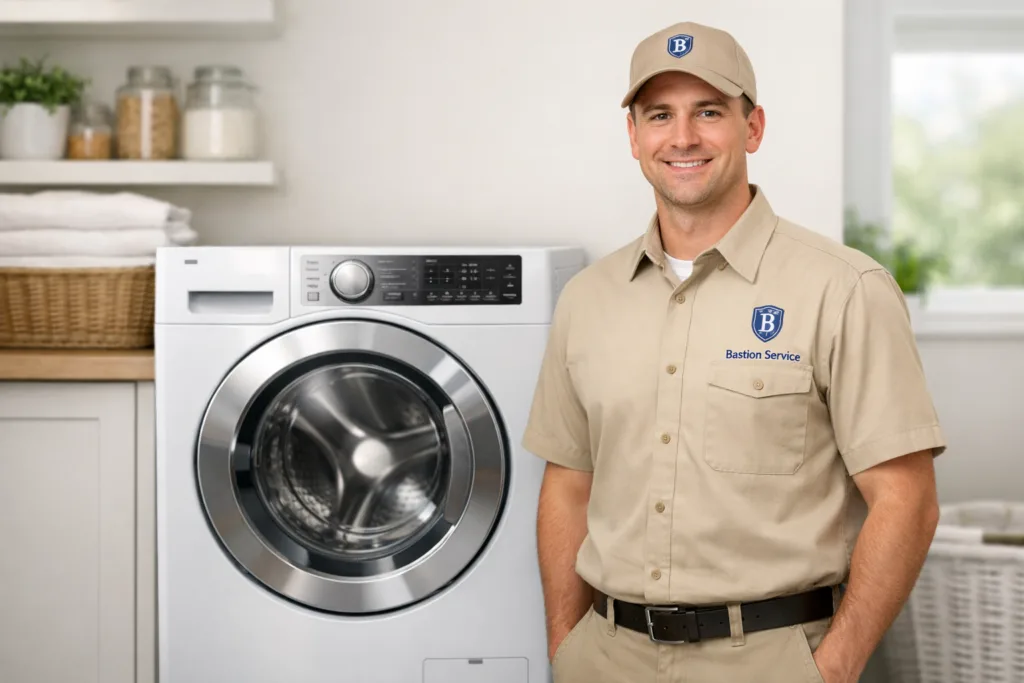
Washer problems are easiest to solve when the symptom is tied to the part of the cycle where the failure happens. A machine that will not fill, stalls before draining, leaves clothes dripping wet, or leaks only during spin can point to very different issues. Looking at when the problem starts helps narrow down whether the cause is related to water inlet components, the drain system, the drive assembly, the door or lid lock, or the main control.
Common washer problems and what they can mean
A washer that will not start is not always dealing with a major internal failure. In some homes, the issue is as simple as a tripped breaker, an outlet problem, or a door that is not latching fully. In other cases, the fault may involve the lid switch, door lock, start capacitor, user interface, or control board. If the machine powers on but does nothing after pressing start, the locking system and controls are often the first areas to check.
If the tub fills with water but the cycle does not move forward, the washer may have a drive problem or a sensor issue that prevents normal operation. Depending on the design, that can involve a worn belt, a damaged motor coupling, a failed actuator, a weak motor, or a control fault. On some models, the machine may appear to pause for too long, repeatedly sense the load, or stop before agitating, which can make the problem seem inconsistent even when a part is steadily failing.
Drain and spin complaints are among the most common laundry disruptions. When a washer finishes with water still in the tub, drains slowly, or stops before the final spin, the cause may be a clogged pump, blocked drain hose, restricted filter area, or a failing pump motor. If the machine drains but clothes still come out soaked, the issue may be more related to spin speed, load balance, suspension wear, or the control system not allowing the basket to reach full speed.
Leaks, water around the machine, and cycle-specific clues
Leaks are easier to diagnose when you know when the water appears. A puddle during fill may point to inlet hoses, fill valves, or a problem where water is splashing out of the tub. Water that appears during wash or rinse can suggest a damaged door boot, a cracked internal hose, over-sudsing, or a tub seal issue. If the leak shows up during drain or spin, the drain path, pump housing, or hose connections are often more likely. Even a small recurring leak should be addressed before it damages flooring, trim, or the wall behind the appliance.
Front-load and top-load machines can fail in different ways, but both benefit from the same basic approach: identify whether the problem happens during fill, wash action, drain, or high-speed spin. That pattern often tells more than the brand badge on the front of the unit.
Noise, shaking, and movement during cycles
A washer that bangs, grinds, squeals, or walks forward during operation should not be ignored. Some movement can come from an uneven floor or a single heavy item in the load, but repeated shaking usually points to a mechanical issue. Suspension rods, shocks, springs, bearings, and basket support components can all wear over time. When these parts weaken, the washer may start a spin cycle, go out of balance, stop itself, and try again without ever finishing properly.
Grinding or scraping sounds can also suggest contact between moving parts that should not be touching. That may involve bearing wear, a damaged pulley, a loose drive component, or a foreign object caught where it should not be. Continuing to run the washer in that condition can increase wear and sometimes turn a manageable repair into a larger one.
When it makes sense to stop using the washer
It is best to stop using the machine if it is leaking heavily, tripping the breaker, giving off a burning smell, failing to unlock correctly, or making severe metal-on-metal noise. These signs can indicate electrical risk, motor strain, or fast-moving internal damage. Repeatedly restarting a washer that will not drain or forcing extra spin cycles can also overwork the pump and drive system.
If the issue is less severe, such as occasional imbalance or a mild delay in draining, homeowners can sometimes reduce the chance of worsening the problem by using smaller loads and avoiding overfilling the tub. Still, recurring symptoms rarely correct themselves. A washer that starts missing steps in the cycle usually becomes more disruptive over time rather than less.
In many laundry rooms, washer trouble also changes how the companion appliance is used. Wet loads that do not spin out properly can make drying times much longer, and that can expose airflow or heat problems in the second machine as well. Dryer Repair in Fairfax
Repair or replace?
Repair is often the better choice when the washer is otherwise in solid condition and the failure is limited to a pump, valve, latch, hose, belt, suspension component, or similar targeted part. Replacement becomes more worth considering when the machine has major rust, tub damage, repeated control failures, or costly drive-system problems on an older unit. The right decision depends on age, condition, and whether the current issue is isolated or part of a pattern.
For many households in Fairfax, the most useful service visit is one that explains not just what stopped working, but what else looks normal and what may be wearing out. That helps you judge whether the repair is likely to restore dependable day-to-day laundry use or whether the machine is nearing the point where additional repairs are harder to justify.
What to expect from washer service in Fairfax
A productive diagnosis usually starts with the symptom sequence: Does the washer fill with water? Does it agitate or tumble? Does it drain completely? Does it reach full spin? Does it unlock at the end? Error codes, unusual noises, and the exact point where the cycle stops can all help shorten the path to the likely fault. Helpful details include whether the problem happens on every load, only on large loads, or only on certain settings.
Washer repair in Fairfax is most effective when the problem is approached as a whole-cycle issue rather than a single vague complaint. “Not working” can mean no power, no fill, no drain, no spin, poor cleaning, or leaking, and each symptom points in a different direction. With the right diagnosis, homeowners can make a more confident decision about repair timing, expected parts, and whether the machine is safe to keep using in the meantime.