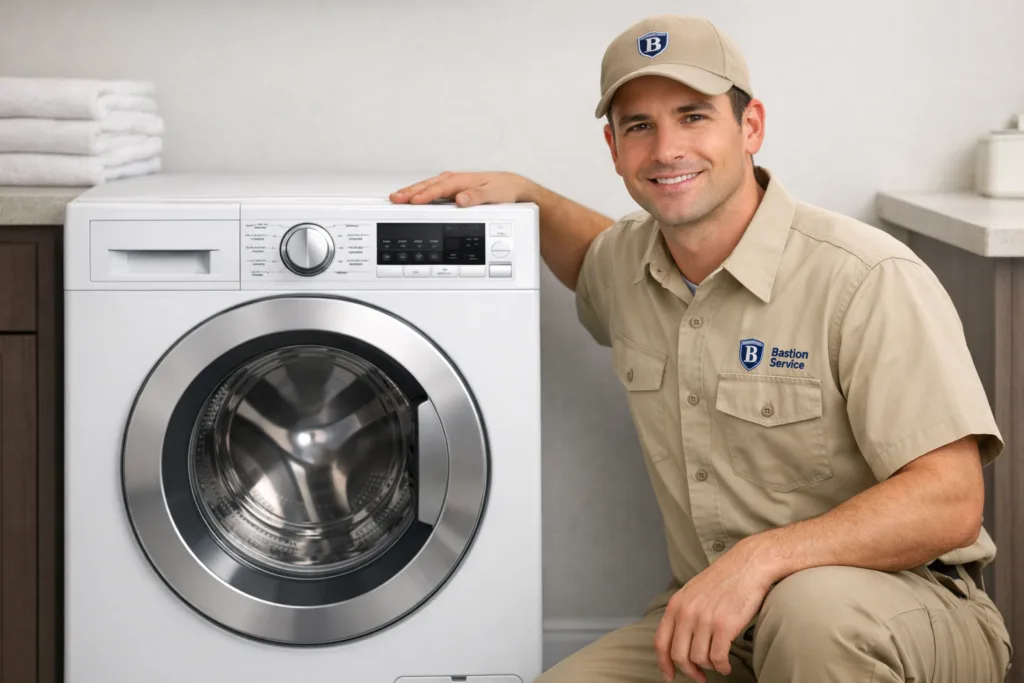
Many Bosch washer problems follow a pattern that homeowners can notice before the machine fully stops working. Clothes may come out wetter than usual, a cycle may take much longer than normal, the door may stay locked after the wash ends, or the machine may begin making new sounds during spin. Paying attention to those changes helps narrow down whether the issue is related to draining, filling, sensing, suspension, or electronic control.
Common Bosch washer problems and what they often mean
Bosch washers are designed to pause or cancel cycles when they detect a condition that could lead to poor washing performance or water damage. That protective behavior is useful, but it can also make one symptom look bigger than it is. A washer that refuses to spin, for example, may not have a spin-system failure at all. It may be reacting to a drain problem, a door lock issue, or an imbalance it cannot correct.
Washer not draining at the end of the cycle
If water is left in the drum after washing, the most common causes include a restricted drain path, a clogged filter, a weak or failed drain pump, or a pressure-sensing problem that prevents the machine from recognizing that water has cleared. In some cases, the washer will unlock late or not at all because it still reads water inside the tub.
Signs that point to a drain-related repair include:
- Standing water after the cycle finishes
- Clothes that remain heavy and soaked
- Humming sounds without full draining
- Repeated cancellation during rinse or spin
- Drain-related error codes or blinking indicators
When this issue keeps happening, it is best not to continue running load after load. Repeated poor drainage can overwork the pump and leave moisture sitting in the machine longer than it should.
Washer spins poorly or stops before final spin
A Bosch washer may skip or reduce spin speed when it detects unbalanced laundry, drainage trouble, or a component problem in the suspension or drive system. A single bulky load can sometimes cause this once, but repeat no-spin or low-spin complaints usually mean more than a loading issue.
Common causes include worn shocks, drain restrictions, sensor faults, motor-related problems, or control issues that interrupt the cycle before high-speed spin begins. If the machine shakes hard, bangs, or moves during spin, it may also need attention to leveling or internal support parts.
Leaks from the front, back, or underneath
Not every Bosch washer leak starts in the same place, and the location of the water matters. A leak at the front may point to a door boot problem, tears in the gasket, or detergent and residue buildup affecting the seal. Water at the back may come from the inlet hoses, drain hose, or a connection that loosens over time. Moisture under the machine can also come from a pump housing or internal hose issue.
Homeowners in Fairfax should take even small leaks seriously. Water that seems minor during one cycle can spread beneath the washer, affect flooring, and become harder to trace if the machine continues to run without inspection.
Washer will not fill or fills too slowly
If a Bosch washer starts but does not take in enough water, the problem may involve the inlet valve, screens at the hose connection, water supply issues, or a control or sensor fault. Sometimes the machine begins a cycle, pauses, and then stops because it cannot confirm correct fill conditions.
This type of issue can look like several different symptoms at once:
- The cycle starts but no water enters
- The washer fills briefly and then stops
- Wash performance is weak because water levels stay too low
- The machine takes a long time before tumbling begins
Heating problems and poor wash results
If clothing comes out less clean than expected, detergent does not dissolve well, or cycles seem unusually long, the washer may have trouble heating water properly. Bosch models that rely on internal heating can show indirect symptoms when the heater, temperature sensing circuit, or control system is not operating correctly.
Homeowners often notice this as poor cleaning, lingering odors, or repeated cycle interruptions rather than a clear “no heat” message. Because wash quality can also be affected by overloading, detergent choice, or water flow problems, testing is important before assuming the heater is at fault.
Door lock problems and cycles that stop mid-wash
A Bosch washer must confirm that the door is locked before it can move into key parts of the cycle. If the lock assembly, latch, wiring, or control does not respond correctly, the machine may fail to start, stop suddenly, or keep the door locked longer than normal. Intermittent lock issues can be especially frustrating because the washer may work one day and refuse the next.
Recurring door or cycle interruption symptoms often include:
- The Start button is pressed but nothing happens
- The door clicks yet the cycle does not begin
- The machine stops with wet laundry still inside
- The door remains locked after draining should be complete
Noise, shaking, and movement during spin
A Bosch washer should not sound harsh, metallic, or violent during normal use. Some vibration is expected during load redistribution, but repeated banging, scraping, or walking forward usually points to a condition that needs attention. Depending on the sound and when it occurs, the cause may be worn suspension components, an installation issue, foreign objects between tubs, or drum-support wear.
If the noise appears only with heavier loads, that can still be a warning sign rather than something to ignore. Components that are starting to wear often show themselves first under the stress of towels, bedding, or larger family loads.
Why the same symptom can have different causes
One reason Bosch washer repairs should not be guessed at is that several failures can produce nearly identical behavior. A machine that will not complete spin could have a drain restriction, a failing pump, an off-balance detection issue, a door lock problem, or a control fault. A leak near the front panel could come from the gasket, the dispenser path, oversudsing, or water escaping from a different point and traveling forward.
That is why a proper diagnosis matters before replacing parts. It keeps the repair focused on the real failure instead of the most obvious symptom.
Simple checks homeowners can make before scheduling service
There are a few safe observations that may help clarify what is happening. These do not replace service, but they can help describe the problem more accurately.
- Check whether the washer is leaving standing water in the drum
- Notice whether the problem happens on every load or only certain loads
- Look for visible kinks in the drain hose or supply hoses
- Pay attention to when the cycle stops: fill, wash, drain, or spin
- Note any error code, flashing light pattern, or unusual sound
- Watch for leaks at the door, underneath, or behind the machine
If the washer has an accessible pump filter and the model allows routine cleaning, that may be worth checking. But if the same symptom returns, or if the machine is leaking, tripping power, or making severe noise, it is usually time for service rather than continued trial and error.
When repair usually makes sense
Many Bosch washer issues are still worth repairing when the problem is limited to a serviceable part such as a pump, hose, inlet valve, door latch, gasket, or suspension component. These repairs are often more practical than replacing the appliance, especially when the rest of the washer is in solid condition.
Replacement becomes more likely when the machine has multiple major problems at once, significant tub or bearing damage, chronic electronic failures, or repair costs that no longer align with the washer’s age and overall condition. For households in Fairfax, the most useful next step is a diagnosis that explains not just what failed, but whether the machine is a good candidate for repair.
Signs you should stop using the washer until it is checked
Some symptoms are more urgent than others. It is wise to stop running the washer if you notice any of the following:
- Water leaking onto the floor
- Burning smells or overheating odors
- Loud grinding, scraping, or repeated banging
- The breaker trips during operation
- The drum remains full of water and will not drain
- The machine repeatedly stops with a locked door and wet laundry inside
Continuing to operate the washer under these conditions can lead to more damage, either inside the appliance or around the laundry area.
What Fairfax homeowners usually want to know first
Most people want straightforward answers: what failed, whether the washer can still be used safely, and whether the repair is likely to be reasonable. A good service call should sort out whether the problem is isolated or part of a larger wear pattern, how urgent the issue is, and whether the machine is worth fixing based on its present condition.
For Bosch washer problems in Fairfax, the most effective approach is symptom-based evaluation backed by actual testing. Whether the complaint is poor draining, weak spin, leaks, heating trouble, or cycle failure, the goal is to identify the cause accurately and choose the repair path that makes sense for the household.