
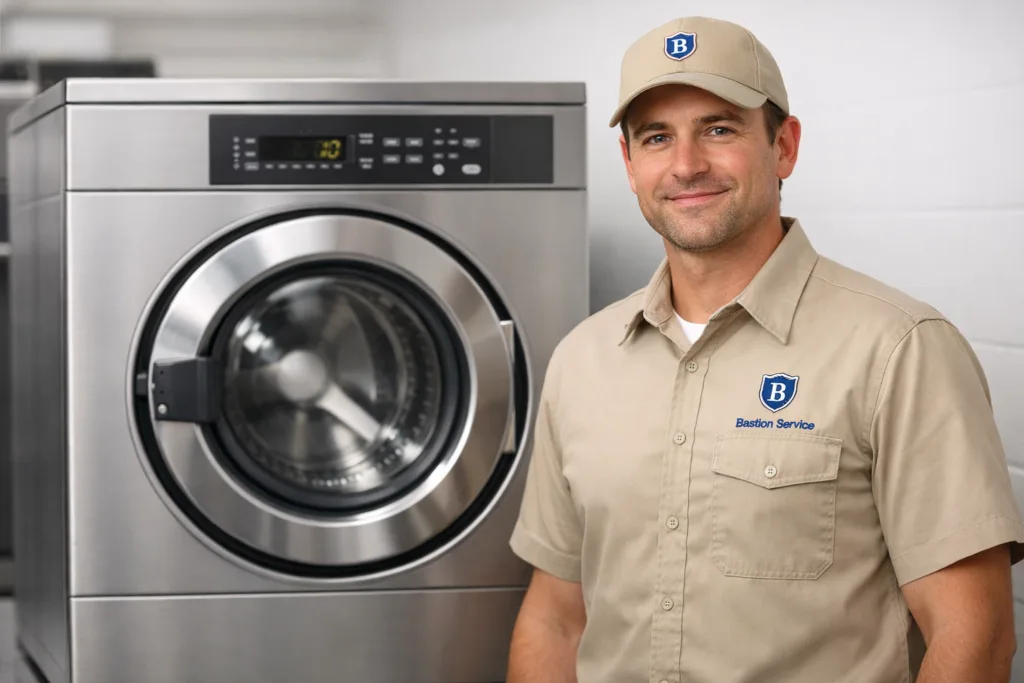




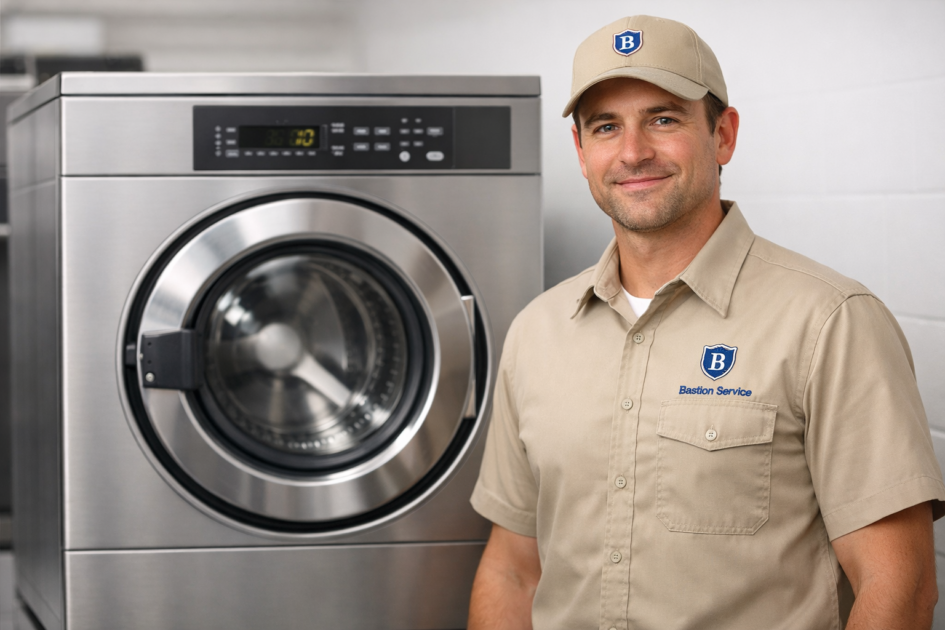
Washer problems have a way of spreading through the workday. One unit that stops mid-cycle, fails to drain, or leaves linens too wet can slow handoff times, tie up staff, and create avoidable delays for businesses in Redondo Beach. Bastion Service provides Wascomat washer repair based on the machine’s actual symptoms, operating behavior, and likely failure path so scheduling decisions are made around repair value and downtime impact, not guesswork.
Related commercial service paths in Redondo Beach include Wascomat Commercial Repair in Redondo Beach, Commercial Washer Repair in Redondo Beach, and Wascomat Dryer Repair in Redondo Beach.
Symptoms That Usually Mean Service Should Be Scheduled Soon
Some washer issues can look minor at first but quickly affect throughput. If a Wascomat washer is being reset repeatedly, taking longer to finish loads, or producing inconsistent results from one cycle to the next, it is usually time to stop treating the problem as routine wear. Early service helps narrow down whether the fault is related to drainage, extraction, controls, filling, heating, or a safety-related interruption.
- Cycle will not start or stops before completion
- Water remains in the drum after the cycle
- Loads come out overly wet
- Leakage around the machine or under the front edge
- Slow fill, no fill, or poor temperature performance
- Loud vibration, banging, or repeated imbalance shutdowns
- Error behavior, lock issues, or unresponsive controls
Why Is My Wascomat Washer Not Starting or Not Completing the Cycle?
When a washer does not begin properly or quits before the program ends, the problem is not always the control board itself. Start failures and incomplete cycles can come from door lock faults, power supply issues, communication interruptions between components, failed sensors, or a system that is stopping the cycle because another condition has not been satisfied. A drain problem, for example, can cause the machine to stall later in the sequence and make the issue look like a control failure.
If the unit sometimes starts and sometimes does not, that inconsistency is useful diagnostic information. Intermittent operation often points to a part or connection that is failing under heat, vibration, or load. In a business setting, repeated resets may keep the machine moving for the moment, but they also make the underlying issue more disruptive over time.
Drainage Problems and Water Left in the Drum
A Wascomat washer that will not drain correctly can affect more than one stage of the cycle. Water left in the drum can prevent proper spin speed, lead to error conditions, and send overly wet loads to the next step. Common causes include restrictions in the drain path, pump trouble, level-sensing issues, or a control sequence that is not completing correctly.
Drain complaints should be handled promptly because they often create secondary symptoms. What begins as “not draining” can turn into “won’t spin,” “cycle won’t finish,” or “laundry is taking too long overall.” If water remains in the basket regularly, that is a strong sign that continued operation is increasing downtime rather than protecting it.
Spin Problems, Poor Extraction, and Wet Loads
When a washer runs but extraction performance drops, the result is usually felt immediately in workflow. Wet loads take longer to finish, dryers stay occupied longer, and the next rounds of laundry start backing up. On Wascomat washers, poor spin performance may be tied to imbalance detection, suspension wear, motor or drive issues, drain-related limitations, or control logic preventing full-speed extraction.
Not every wet-load complaint means the same thing. If the washer reaches the end of the cycle but the textiles are still heavy with water, the machine may be protecting itself from vibration or failing to reach intended spin speed. If the cycle stops before extraction, the root cause may be elsewhere. The distinction matters because the repair decision changes depending on where the cycle is actually failing.
Slow Fill, No Fill, and Wash Quality Concerns
Fill problems often show up as delayed cycle times, poor cleaning results, or repeated interruptions. A machine that takes too long to fill may have inlet valve trouble, restricted screens, pressure-sensing issues, supply-side limitations, or a control problem that is affecting water delivery. If temperature is also inconsistent, wash results can decline even when the washer appears to be running.
Businesses in Redondo Beach often notice fill-related issues through performance changes before they see a complete breakdown. Cycles may begin stretching longer, chemistry may seem less effective, or staff may report that results vary from load to load. Those patterns are worth checking early because they usually point to a specific system rather than general wear.
Leaks, Door Lock Issues, and Safety-Related Interruptions
Water on the floor, door lock faults, or a machine that will not secure properly should not be left to “see if it clears up.” Leaks can come from hoses, seals, drain components, or internal water-handling failures. Door lock issues can prevent start-up, interrupt active cycles, or create inconsistent stop conditions that waste operator time.
These symptoms matter beyond machine performance. Leaks affect surrounding flooring and work areas, while lock problems can keep a washer out of rotation entirely. If either condition is happening repeatedly, the service goal is to identify the exact failure point and determine whether related parts have been stressed by continued use.
Noise, Vibration, and Out-of-Balance Shutdowns
Unusual banging, shaking, or repeated imbalance behavior is one of the clearest signs that a washer should be evaluated before it is pushed through more loads. Sometimes the cause is load distribution, but repeated events can also indicate worn support components, mounting issues, structural wear, or developing drive and drum problems.
Vibration problems tend to become more expensive when ignored. A machine that starts out merely louder than usual can progress into harsher movement, interrupted cycles, and added wear on neighboring parts. If the washer is no longer operating with the same stability it had before, that change is meaningful and should be treated as a repair issue, not just a nuisance.
How Symptom Patterns Help Narrow the Repair Decision
Washer failures often overlap, which is why symptom timing matters. A machine that stops during the rinse may point in a different direction than one that never fills, and a washer that drains but will not extract is different from one that cannot remove water at all. The most useful information for service usually includes:
- Whether the problem happens every cycle or only under certain loads
- What stage of the cycle the washer reaches before failing
- Whether there is standing water, leakage, or unusual noise
- Whether the machine has been reset to keep it running
- Whether results changed gradually or failed all at once
That pattern helps separate a single faulty component from a larger wear issue. It also helps determine whether the best next step is a targeted repair, a stop-use recommendation until the fault is corrected, or a broader discussion about the machine’s remaining service life.
When Repair Makes Sense and When the Conversation Gets Bigger
Many Wascomat washer problems can be addressed effectively when the fault is isolated and the rest of the machine remains in solid condition. That is often the case with drainage components, lock assemblies, inlet problems, certain drive-related issues, and some control-side failures. A focused repair can restore stable operation without turning the situation into a larger equipment decision.
The discussion shifts when breakdowns are stacking up, multiple systems show wear, or the washer no longer supports the pace of daily use. In those cases, the real question is not just whether the machine can be made to run again, but whether it can return to reliable service without repeated interruptions. Looking at downtime history, symptom frequency, and how the machine fits current workload usually leads to the clearest answer.
What to Do Before the Service Visit
A little preparation can make washer service more productive. If possible, note the exact complaint rather than a general description such as “not working.” Record whether the washer stops at the same point each time, whether water remains inside, whether loads are coming out wet, and whether the issue appears with all loads or only some of them.
- Stop forcing repeated failed cycles through the machine
- Keep track of any visible leaks or standing water
- Note recent noise, vibration, or imbalance behavior
- Document whether the machine shows intermittent or constant failure
- Be ready to describe changes in wash results, cycle time, or extraction
That information helps move the visit toward an efficient diagnosis and a repair recommendation tied to actual operating conditions.
Service-Focused Washer Repair for Redondo Beach Businesses
For businesses in Redondo Beach, the right response to a Wascomat washer problem is usually to address it before one failing machine starts affecting the rest of the day’s workflow. Whether the symptom is no drain, poor spin, cycle interruption, leakage, fill trouble, or unstable operation, repair decisions are strongest when they are based on how the washer is failing in real use. Scheduling service while the issue is still specific, repeatable, and contained gives you the best chance of restoring dependable operation without unnecessary added downtime.


