
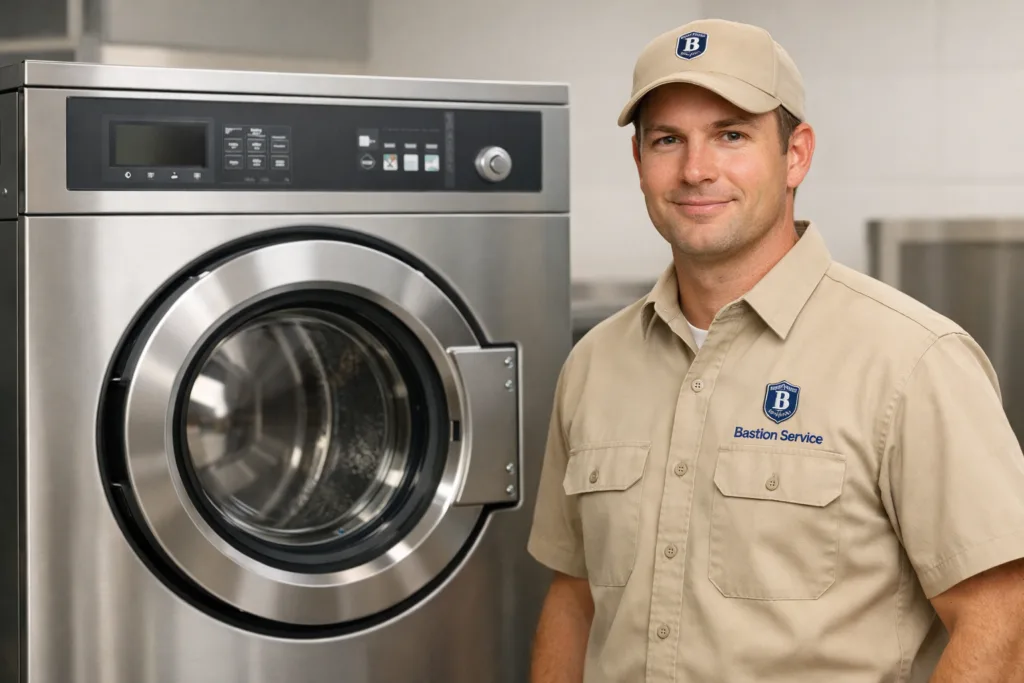




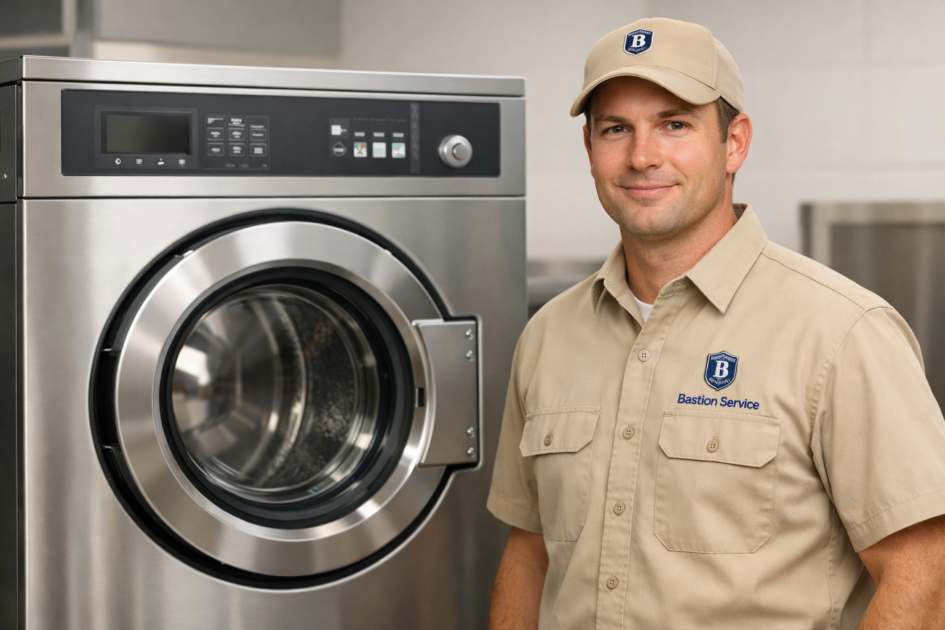
Wascomat washer problems can disrupt laundry rooms, tenant-facing facilities, hospitality operations, and other businesses in Pico-Robertson that rely on steady throughput. The most useful repair visit starts by matching the symptom pattern to the system that is actually failing, whether that points to drainage, fill, drive, controls, door locking, heating, or extraction. Bastion Service schedules washer repair with that service-first approach so businesses can make informed decisions about downtime, approval, and next steps instead of guessing at the cause.
Related commercial service paths in Pico-Robertson include Wascomat Commercial Repair in Pico-Robertson, Commercial Washer Repair in Pico-Robertson, and Wascomat Dryer Repair in Pico-Robertson.
Common Wascomat washer symptoms and what they may mean
Washer will not start or stops before the cycle finishes
A no-start complaint can come from power supply issues, a failed door lock, control board faults, wiring problems, or interface errors. If the washer starts and then shuts down, the cause may be very different, such as a drain fault, water-fill timeout, motor protection event, or a control issue that interrupts the cycle sequence. When staff are repeatedly restarting the same unit to get a load through, the machine usually needs service rather than more resets.
Slow filling, no filling, or inconsistent water levels
Fill problems often trace back to inlet valves, restricted screens, weak supply conditions, pressure-related issues, or controls that are not reading or responding correctly. In day-to-day operations, these faults can show up as long cycle times, poor wash results, partial fills, or repeated stoppages. If one load completes normally and the next does not reach the expected level, that inconsistency is often an early warning sign worth addressing before the washer goes fully down.
Standing water after the cycle or failure to drain
When a Wascomat washer finishes with water still in the drum, the problem may involve a blocked drain path, pump failure, drain motor trouble, level sensing issues, or a control fault that prevents the drain sequence from completing. This symptom also affects extraction, because a washer that cannot drain correctly usually cannot move into a proper spin cycle. If loads are coming out soaked or the machine regularly stops before final spin, the drain system should be checked promptly.
Poor spin performance, wet loads, or hard vibration
If the washer will not ramp up to full speed, leaves laundry unusually wet, or begins shaking more than normal, likely causes include imbalance detection problems, suspension wear, drive component faults, bearing issues, or mounting concerns. Vibration is not just a nuisance. It can accelerate wear on surrounding parts and cause a machine that was once usable to become unstable and unreliable under normal operation.
Leaks, odors, and recurring fault messages
Leaks may come from hoses, door seal wear, internal seals, valves, drain components, or connections that only fail under certain cycle conditions. Odors can point to standing water, residue buildup, incomplete draining, or a machine that is no longer finishing cycles properly. Repeated fault codes are also important, but the code alone does not confirm the failed part. Good service work focuses on the root cause behind the message so the repair solves the actual problem.
Why accurate diagnosis matters
Washer symptoms often overlap. A machine described as “not spinning” may really be failing to drain. A unit that seems completely dead may have a door-lock problem that prevents the cycle from starting. A leak may begin at one connection point while also exposing wear in nearby parts. That is why symptom-based testing matters before repair decisions are made.
For businesses in Pico-Robertson, this affects more than one machine. It affects scheduling, labor, tenant expectations, room turnover, and the ability to keep other equipment from carrying an unfair share of the workload. A correct diagnosis also helps avoid replacing parts that do not solve the problem.
Signs the washer should be serviced now rather than watched
- The unit stops mid-cycle more than once
- Water remains in the drum after completion
- Loads come out wetter than normal
- The door does not lock or unlock consistently
- There is visible leaking around the machine
- Noise levels have increased during wash or spin
- The washer shows repeated errors or requires frequent resets
- Cycle times have become unpredictable
When staff have to monitor every load, retry cycles, or keep one washer out of regular rotation because it cannot be trusted, the equipment is already affecting operations. At that point, scheduling repair is usually more efficient than waiting for a full shutdown.
When continued use can make the repair larger
Some washers still run even while a key system is failing. That can make the problem seem manageable for a short time, but continued use often adds damage. A leaking washer can affect nearby components and surrounding surfaces. A machine with severe vibration can put added stress on suspension and drive parts. Repeated operation through drain or spin faults can overwork the pump, motor, and related controls.
If there is a burning smell, abrupt power loss, obvious electrical irregularity, or strong movement during extraction, stopping use is usually the safest choice until the washer is inspected. Catching the issue earlier can preserve parts that have not yet failed and improve the chances of a more contained repair.
Symptom-based repair planning for Pico-Robertson businesses
Different operations feel washer downtime in different ways. A tenant laundry room may deal with user complaints and backlog. A hospitality property may see delayed linen turnover. A business with on-site laundry may have workflow interruptions that spread into staffing and scheduling. In each case, the repair priority is not just fixing a machine on paper. It is restoring reliable use with the least disruption possible.
That is why symptom details help before the visit. Whether the machine fails at the beginning, during fill, before drain, during extraction, or only on certain loads, each pattern helps narrow the likely cause. If the washer leaks only during drain, stalls only on hot cycles, or vibrates mainly at high speed, those details can shorten the path to the right repair.
Repair or replacement?
Many Wascomat washer failures are repairable, especially when the issue is isolated and the rest of the machine remains in solid operating condition. Pumps, valves, door-lock systems, sensors, controls, drain components, and certain drive-related faults may justify repair when the washer still fits the needs of the site.
Replacement enters the conversation when breakdowns are frequent, several major systems show wear at the same time, or downtime and parts costs no longer support continued investment. The better decision usually comes from the current condition of the machine, not age alone. A service evaluation should help clarify whether the failure is limited or part of a broader decline.
How to prepare for a washer service visit
Before service is scheduled, it helps to note what the washer is doing and when the problem occurs. Useful details include whether the machine powers on, whether the door locks, how far the cycle gets, whether water enters or drains, whether error messages appear, and whether the problem happens on every load or only under certain conditions. If there is leaking, unusual noise, or vibration, that should be reported clearly.
If the washer is still in use, staff should avoid pushing it through repeated failing cycles just to keep it running. A short record of the symptoms is usually more valuable than repeated resets, especially when the goal is to identify the actual cause and restore dependable operation quickly.
What effective washer repair service should accomplish
A productive service visit should do more than confirm that the washer is malfunctioning. It should identify the failed system, check for related wear, determine whether continued use has created secondary issues, and outline the most sensible repair path. For businesses in Pico-Robertson, that means less uncertainty around approval, scheduling, and how to manage downtime while the machine is being restored.
When a Wascomat washer starts missing cycles, leaving water behind, leaking, shaking, or falling short on wash performance, acting on the symptoms early is usually the best way to limit disruption. Service focused on diagnosis, repair planning, and practical scheduling gives Pico-Robertson businesses a clearer path back to stable day-to-day laundry operation.


