
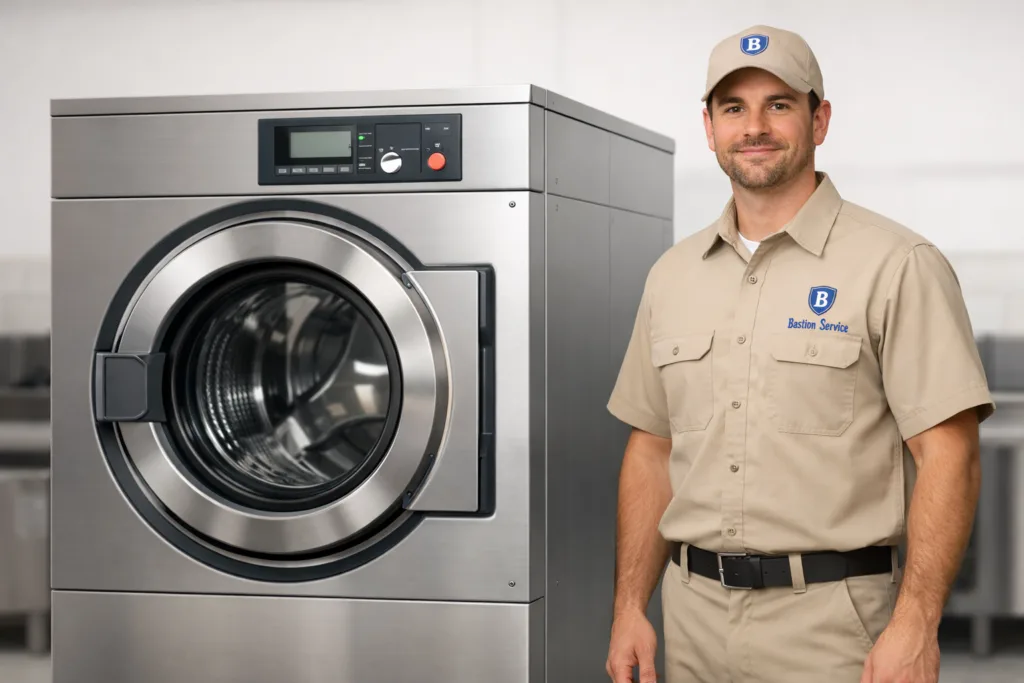




When Wascomat laundry equipment begins causing missed cycles, slow drying, drainage trouble, leaks, or repeated shutdowns, the priority is getting the problem evaluated before downtime spreads through the rest of the operation. For laundromats, hotels, shared laundry rooms, and other businesses in Pico-Robertson, service decisions often need to happen quickly: keep the unit in rotation, take it offline, or move ahead with repair scheduling. Bastion Service helps operators assess the symptom pattern, identify the likely fault, and plan next steps around equipment availability and workflow impact.
For specific equipment paths in Pico-Robertson, review Wascomat Washer Repair in Pico-Robertson, Wascomat Dryer Repair in Pico-Robertson, and Commercial Appliance Repair in Pico-Robertson.
Washer and dryer issues that disrupt daily laundry flow
Laundry equipment problems rarely stay isolated to one load. A washer that leaves water in the drum can create a line of delayed loads, while a dryer with weak heat can tie up capacity for much longer than expected. In many cases, the first visible symptom is only part of the issue. Long cycles, intermittent stops, unusual sounds, rising moisture levels, or repeated reset attempts often point to a developing mechanical, electrical, airflow, or control-related problem.
That is why symptom-based repair matters. Instead of treating every slowdown as a minor inconvenience, businesses in Pico-Robertson benefit from understanding whether the machine has a simple service need or a condition that can lead to larger failure if ignored. Early attention can reduce secondary damage, improve scheduling decisions, and help protect overall throughput.
Common Wascomat washer symptoms and what they may suggest
Washer not draining fully
If a washer ends the cycle with standing water, drains slowly, or pauses during the drain phase, the issue may involve a blocked drain path, pump trouble, sensor problems, or a control failure affecting how the cycle advances. Even when the machine eventually empties, partial drainage can lead to repeat interruptions and inconsistent performance. This symptom is usually worth addressing promptly because ongoing use can create more frequent stoppages and leave the unit unavailable at a busier time.
Wet loads after spin
When items come out much wetter than expected, the problem may relate to extraction speed, imbalance handling, drive components, motor response, or electronic controls. Poor spin performance creates a second layer of trouble because dryers then need more time to finish each load. In a busy laundry setting, reduced extraction affects both washer turnover and dryer capacity, making what looks like a single washer problem into an operation-wide delay.
Leaks around or under the machine
Water around the washer can come from hose issues, internal wear, drainage faults, door-related problems, or other failing components. A leak should not be written off as harmless, especially in equipment used continuously. Beyond the machine itself, water can affect surrounding flooring, create cleanup demands, and interfere with nearby units. Service evaluation helps determine whether the leak is manageable until repair or whether the washer should be removed from use immediately.
Vibration, banging, or grinding noise
Excessive movement during spin, repeated banging, or grinding sounds often indicate that the machine is operating under stress. Causes can range from balance and mounting issues to worn internal parts and bearing-related wear. If the washer is allowed to continue running in that condition, the original problem can become more expensive and may lead to additional component damage. Abnormal noise is one of the clearest signs that a machine should be inspected before it returns to normal rotation.
Cycle interruptions or failure to start
Some washers fill but do not continue correctly. Others stop mid-cycle, display inconsistent behavior, or fail to begin at all. These symptoms may stem from door lock problems, electrical faults, control issues, or other component failures affecting cycle logic. Because intermittent operation can become a full no-start condition without much warning, a washer that only works occasionally is often already in need of repair planning.
Common Wascomat dryer symptoms and likely service concerns
Dryer runs but does not heat well
A dryer that tumbles normally but does not dry loads in a reasonable time may have a heating problem, airflow restriction, sensor issue, or control fault. Weak heat often goes unnoticed at first because the machine still appears to be operating. Over time, though, dry times stretch, machine availability drops, and labor planning becomes harder. If several loads start requiring extra time, the dryer is no longer performing as expected and should be checked before the problem worsens.
Long dry times
Long dry times do not always mean complete heat loss. They can also point to partial heating, restricted airflow, moisture-sensing problems, or a system that is cycling inefficiently. For businesses, this symptom matters because it reduces throughput and creates load backups even when the dryer technically still works. A proper inspection helps identify whether the issue is localized or part of a broader performance decline.
Overheating, hot smells, or shutdowns
If a dryer overheats, stops during operation, or gives off an unusual hot odor, it should be evaluated before continued use. These symptoms can be associated with airflow trouble, heat-management faults, failing components, or electrical problems. Even intermittent overheating deserves attention because it can shorten component life and turn an unstable machine into an unexpected outage.
Drum not turning
When a dryer hums, starts briefly, or appears to run without proper tumbling action, the issue may involve the drive system, motor-related parts, or other mechanical failures. In some cases the drum turns inconsistently before stopping altogether. A dryer in this condition may still tempt staff to restart it, but repeated attempts rarely solve the underlying problem and can increase wear.
Cycle stops before completion
A dryer that shuts off early, loses consistency from one load to the next, or behaves unpredictably can be difficult to manage in a high-use setting. The problem may be tied to controls, sensors, overheating protection, or electrical interruptions. Because these issues can appear sporadically at first, they are easy to delay addressing. The risk is that an intermittent stop becomes a complete breakdown during a high-demand period.
Why symptom timing matters
How the problem appears can be as important as the symptom itself. A machine that failed suddenly may point to a specific component fault, while equipment that has been getting slower, louder, or less consistent over time may have accumulated wear in more than one area. That difference affects repair planning. It can influence whether the unit is likely to need one targeted fix or a broader evaluation for related damage.
Businesses in Pico-Robertson often benefit from documenting when the issue started, whether it happens on every load, and whether the machine behaves differently under heavier use. Those details can help narrow the repair path and reduce time spent chasing intermittent faults.
When a machine should not stay in rotation
Some problems allow limited short-term operation, but others are strong signs that the equipment should be taken offline until it is inspected. These include:
- Persistent leaks
- Standing water that does not clear properly
- Severe vibration or banging during spin
- Grinding or harsh mechanical sounds
- Repeated shutdowns
- Overheating or burning odors
- Breaker trips or unstable power behavior
- Drum failure or repeated cycle interruption
Continuing to run equipment with these symptoms can increase repair scope, create safety concerns, and make surrounding operations less predictable. If staff are adjusting routines around one unstable washer or dryer every day, that is usually a sign the machine needs more than temporary workarounds.
Repair decisions: isolated fault or broader equipment wear?
Not every problem points to replacement. Many washer and dryer issues can be repaired effectively when the fault is identified early and the rest of the machine remains in solid condition. The more difficult cases are the ones involving repeated breakdowns, several symptom groups at once, or equipment that has become unreliable even after earlier repairs.
That is why the repair decision is not only about whether the machine can be restarted. It is also about whether the repair is likely to restore stable performance for daily use. Looking at symptom history, machine behavior, repeat failures, and downtime cost helps operators choose the most sensible path for the business rather than focusing only on the immediate stoppage.
What to prepare before scheduling service
If a Wascomat washer or dryer is affecting production, a few details can make the service visit more productive. It helps to note:
- Whether the issue happens on every cycle or intermittently
- Any error display, shutdown pattern, or recent restart behavior
- Whether the unit still completes some loads
- Changes in noise, vibration, heat, or cycle length
- Whether the problem appeared suddenly or gradually
This information helps connect the symptom pattern to likely failure points and gives the operator a better basis for deciding whether the machine should remain available until repair.
Service-focused next steps for Pico-Robertson businesses
If Wascomat laundry equipment is slowing load completion, creating repeat interruptions, or showing signs of mechanical or control trouble, the most useful next step is to schedule diagnosis before a partial issue becomes a full outage. For businesses in Pico-Robertson, timely repair evaluation helps determine whether the washer or dryer can stay in use, what kind of repair path is likely, and how to reduce avoidable downtime while keeping laundry operations moving.


