
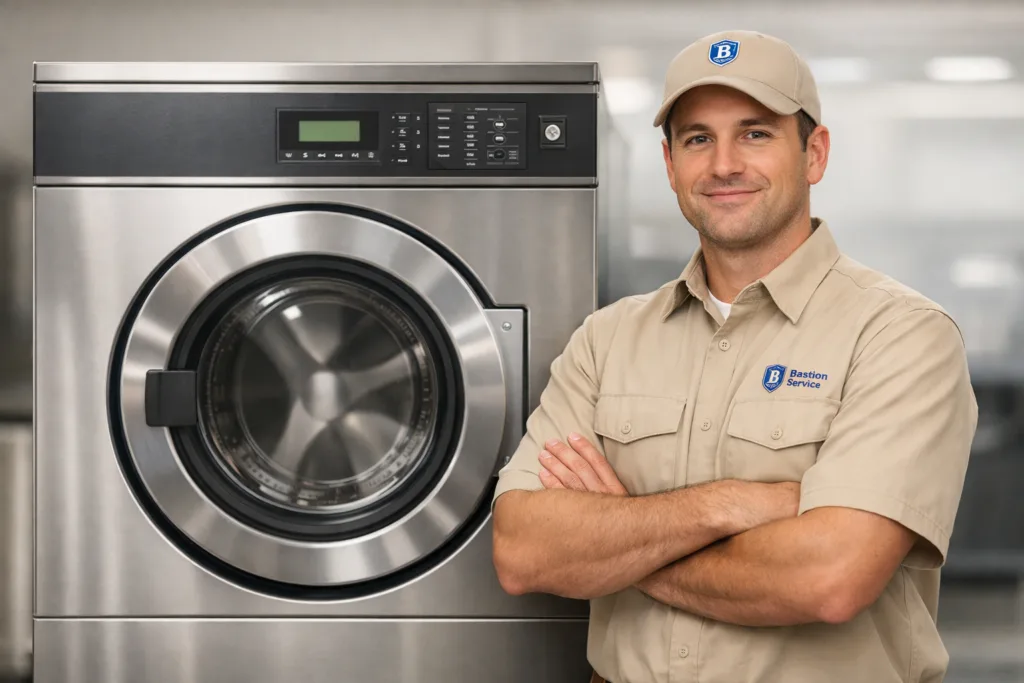




When a Wascomat washer goes down, the disruption usually reaches beyond one machine. Wet loads back up the laundry process, staff lose time monitoring incomplete cycles, and nearby dryers may sit idle waiting for extraction to finish properly. For businesses in Manhattan Beach, the most useful response is service built around the exact symptom, the operating impact, and the next repair step needed to restore reliable use.
Related commercial service paths in Manhattan Beach include Wascomat Commercial Repair in Manhattan Beach, Commercial Washer Repair in Manhattan Beach, and Wascomat Dryer Repair in Manhattan Beach.
Bastion Service works on Wascomat washer problems that affect drainage, spin performance, fill control, cycle completion, and safe operation. A symptom that seems straightforward on the surface can come from several different causes, so the job starts with verifying whether the issue is related to controls, water movement, door locking, drive components, or wear inside the machine.
How service is approached for Wascomat washer problems
Washers used in daily operations are expected to run consistently, not just occasionally. That is why symptom-based testing matters. A machine that stops mid-cycle may have a different root cause than one that will not start at all. A washer with standing water may have a drain obstruction, but it may also be dealing with a failing pump, a sensor issue, or a control problem that prevents the drain sequence from completing.
Good repair planning also looks at what the failure is doing to the rest of the workflow. If loads are coming out too wet, dryer time increases. If fill is inconsistent, wash results may suffer. If vibration is getting worse, continued operation can lead to larger mechanical damage. Identifying the failure early often helps limit downtime and avoid replacing parts that were not actually causing the problem.
Common Wascomat washer symptoms and what they can mean
Not starting or not completing the cycle
A washer that does not respond at startup, pauses unexpectedly, or shuts down before the cycle ends may be dealing with a door-lock problem, control fault, electrical supply issue, timer or board failure, or communication loss between components. Intermittent operation is especially important to address because it often turns into full failure with little warning.
Slow draining or water left in the drum
If water remains after the wash or rinse portion, the machine may have a blocked drain path, weak drain pump, sensor problem, or a control issue affecting drain timing. Slow drainage often leads to spin interruption, cycle timeouts, and repeated attempts to complete the load. Running the washer in this condition can increase stress on the pump and related components.
Weak spin or overly wet loads
When extraction is poor, the effect is felt immediately in longer dryer cycles and slower turnover. This symptom may point to imbalance detection faults, suspension wear, drainage issues, motor or drive trouble, or controls that are not reaching or holding proper spin speed. If the machine is still washing but not extracting correctly, it is already affecting productivity.
Leaks, overfilling, or no-fill complaints
Water on the floor, a tub that fills too slowly, failure to fill, or water levels that rise too high can indicate inlet valve failure, pressure-sensing issues, hose problems, drain backflow, or seal-related wear. Even a small leak deserves attention because moisture around laundry equipment creates slip hazards, can affect surrounding surfaces, and may lead to additional damage if ignored.
Noise, shaking, or movement during extraction
Banging, grinding, rattling, or excessive vibration can come from worn bearings, suspension problems, mounting issues, leveling concerns, drive wear, or repeated imbalance conditions. If the washer has become noticeably louder or more unstable, it is best to stop treating it as normal wear and have the cause checked before more expensive components are affected.
Heating or wash-result concerns
If cycles seem normal but cleaning results have dropped, the problem may involve water temperature, fill accuracy, cycle control, or timing faults. In business settings, poor wash performance is not always traced back to chemistry or loading practices. Sometimes the washer itself is no longer completing the programmed process correctly.
Why a Wascomat washer may stop mid-operation
Cycle interruptions usually happen for a reason the control system considers unsafe or incomplete. The machine may be unable to confirm that the door is locked, unable to drain within the expected time, detecting an imbalance it cannot correct, or failing to reach the programmed water level or speed target. In other cases, electrical or board-related faults can interrupt operation without a clear pattern visible to staff.
That matters because restarting the machine is not the same as fixing the issue. If a washer only finishes after repeated attempts, the underlying fault is still present. Tracking when the stoppage happens can help: during fill, during transition to spin, after draining, or near the end of the cycle. Those details often narrow down the system that needs attention.
Signs the machine should be taken out of service
Some symptoms allow limited operation while scheduling repair, but others should push the machine out of rotation right away. Service should be prioritized if the washer is leaking, failing to lock securely, producing a burning smell, making severe grinding noise, vibrating hard enough to shift position, tripping power, or repeatedly stopping with water trapped inside.
- Recurring drain failures that leave standing water
- Loads that remain much wetter than normal after spin
- Visible leaking during fill, wash, or drain
- Repeated cycle cancellation or timeout conditions
- New banging, scraping, or heavy vibration
- Inconsistent fill levels or temperature-related wash concerns
Continuing to run a washer with these symptoms can make a smaller repair turn into a larger one, especially when water management, extraction, or mechanical stability is already compromised.
Repair decisions: isolated fault or larger wear pattern
Many Wascomat washer problems are repairable when the issue is identified before multiple systems are affected. Pumps, valves, latches, hoses, sensors, some drive-related parts, and certain control failures can often be addressed without replacing the machine. The key question is whether the problem is limited to one failed component or part of a broader decline in condition.
Replacement becomes more likely when the washer has repeated major failures, unresolved vibration damage, ongoing control issues across multiple cycles, or wear that is no longer limited to one system. The best service visit is one that helps the operator decide whether the machine needs a targeted repair now, closer monitoring after service, or a longer-term equipment plan.
What to note before scheduling Wascomat washer service
A few observations from staff can make diagnosis faster and more accurate. It helps to note whether the machine fails at the same stage every time, whether the issue affects every load or only certain cycles, and whether the problem began suddenly or worsened over time. Error displays, unusual sounds, visible leaking, or changes in spin performance are all useful details.
- Does the washer fail during fill, wash, drain, or spin?
- Is water left behind after the cycle?
- Are loads consistently wetter than usual?
- Has vibration or noise recently increased?
- Does the machine stop intermittently or every cycle?
- Are there signs of leaking from the front, rear, or underneath?
Those details help connect the complaint to the system most likely involved and make it easier to plan the repair path with less guesswork.
Wascomat washer repair for Manhattan Beach businesses
Businesses in Manhattan Beach usually need more than a temporary restart. They need to know what failed, whether the washer should stay out of service, and what repair will restore stable operation without repeated disruption. When a Wascomat washer is not draining, not spinning properly, leaking, failing to fill, or stopping before completion, scheduling service early is often the best way to protect workflow and avoid a larger interruption later.
If your washer is affecting throughput, creating safety concerns, or producing inconsistent results, the next step is to schedule a diagnosis based on the exact symptom pattern. That keeps the repair focused on the actual source of the problem and helps your team in Manhattan Beach return the machine to dependable use as quickly as possible.


