
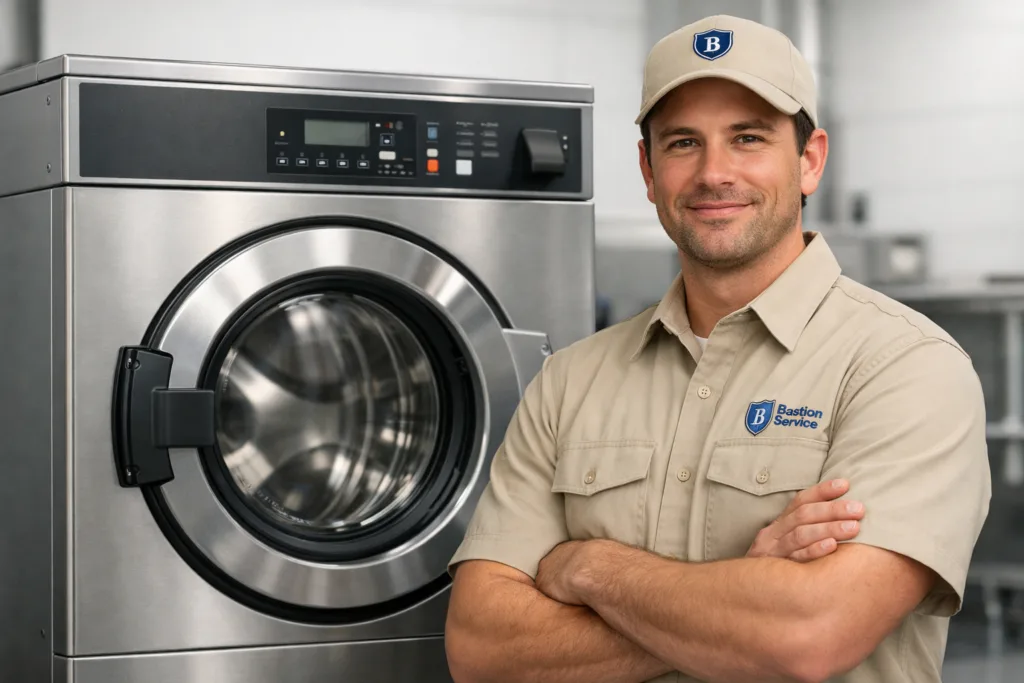






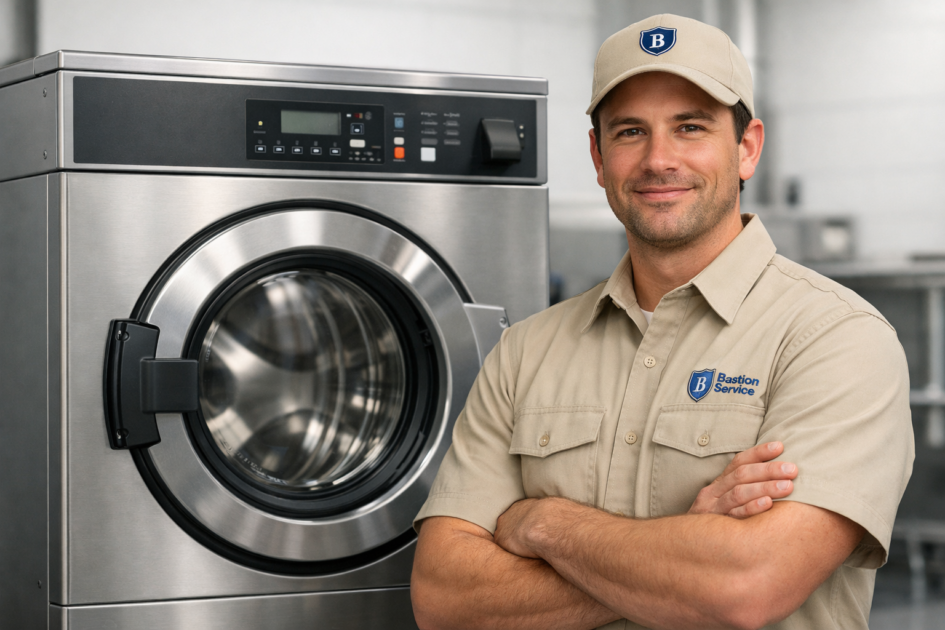
Washer downtime can disrupt sorting, washing, drying, staffing, and delivery schedules faster than many facilities expect. When a Wascomat unit starts failing in Hawthorne, the best next step is service built around the actual symptom pattern, the condition of the machine, and how urgently the equipment needs to return to use. Bastion Service works with businesses in Hawthorne to identify the cause of washer failures, explain what the symptom likely points to, and schedule repair based on the impact to daily operations.
Related commercial service paths in Hawthorne include Wascomat Commercial Repair in Hawthorne, Commercial Washer Repair in Hawthorne, and Wascomat Dryer Repair in Hawthorne.
Common Wascomat washer symptoms and what they often mean
Washer will not start or stops before the cycle finishes
If the machine powers on but does not begin washing, or if it stops partway through a cycle, the fault may involve the door lock system, control board, user interface, wiring, power supply, or a safety condition the machine is detecting. In some cases, the washer is preventing operation because another system, such as drainage or water level sensing, is not responding the way it should.
This is one of the most important symptoms to diagnose correctly because a start failure and a mid-cycle shutdown can look similar from the outside while coming from very different causes. Repeated attempts to restart the unit without testing the related systems can waste time and delay a proper fix.
Not draining, draining slowly, or leaving water in the drum
Standing water at the end of the cycle usually points to a drain pump problem, a blockage, a restriction in the drain path, or a sensor issue that prevents the machine from moving to the next stage. Slow drainage can also trigger other complaints, including no-spin conditions, error codes, wet loads, or cycle time that runs longer than expected.
For laundromats, hotels, healthcare-related laundry rooms, and other facilities in Hawthorne, drainage problems often spread beyond one load. Staff may need to re-run cycles, move wet items manually, or take the washer out of rotation entirely. Early service can help prevent added strain on pumps, motors, and controls.
Poor extraction, slow spin, or wet loads after the cycle
When a Wascomat washer completes the wash portion but does not extract properly, the issue may involve drain performance, load balance sensing, suspension components, the drive system, the motor, or the control logic that governs final spin. A machine that cannot reach proper spin speed leaves excess moisture behind, which increases dryer time and slows total throughput.
If one washer consistently produces wetter loads than similar units, that difference is worth investigating even if the machine still appears to be operating. Extraction problems often become more expensive when they are ignored, especially if added vibration begins affecting neighboring parts.
Leaking water during fill, wash, or drain
Leaks can come from hoses, valves, door components, pump connections, drain lines, seals, or internal parts that only show water loss at a specific stage of the cycle. The visible puddle is not always where the leak starts, which is why inspection matters before parts are ordered or assumptions are made.
Even a small leak can create larger problems for a busy laundry area. Water exposure around the machine can affect floors, nearby equipment, and safe operation for staff. If the leak becomes heavier during agitation, spin, or draining, the machine should be checked before normal use continues.
Shaking, banging, or unusual mechanical noise
A washer that vibrates harder than normal, produces banging during extraction, or develops grinding or rumbling noise may have suspension wear, bearing-related wear, mounting problems, drive issues, or load-distribution faults. Noise that gets worse over time usually means the machine should not stay in regular rotation without evaluation.
These complaints matter because they rarely stay isolated. Continued use can increase wear on the drive system, internal supports, and connected components, turning a manageable repair into a more disruptive one.
Fill problems, temperature problems, or poor wash results
If the washer fills too slowly, does not seem to reach the right water level, or delivers inconsistent wash performance, the cause may involve inlet valves, screens, pressure sensing, control issues, or temperature-related components. Poor cleaning results are not always a detergent or loading issue. When the machine is not filling, heating, or advancing correctly, the wash result usually reflects it.
Facilities that rely on repeatable wash outcomes should pay attention to any sudden change in cycle quality, especially when the same formulas and load types are producing different results from one shift to the next.
Why symptom-based diagnosis matters
Many washer failures overlap. A no-spin complaint may begin with a drain fault. A cycle that stops unexpectedly may trace back to a door lock issue rather than the main control. A leak seen at the front panel may actually start deeper in the machine and travel before it becomes visible. That is why repair decisions should follow testing, not guesswork.
For businesses in Hawthorne, accurate diagnosis helps with more than the repair itself. It supports scheduling, helps avoid unnecessary parts replacement, and gives managers a better sense of whether the machine is dealing with a single part failure or broader wear that affects long-term reliability.
When to schedule service instead of waiting
Service is worth scheduling when the washer:
- fails to start consistently
- stops before the cycle completes
- does not drain fully
- leaves loads unusually wet
- shows repeated fault codes
- leaks at any stage of operation
- shakes more than normal during extraction
- makes new grinding, banging, or rumbling sounds
- fills slowly or washes inconsistently
It is often better to schedule service at the first repeatable sign of trouble rather than waiting for a complete shutdown. Intermittent issues tend to become full failures under heavier daily use, and the resulting downtime can be harder to absorb once work starts backing up.
Signs continued use may cause more damage
Some washer problems are inconvenient. Others can accelerate wear if the unit remains in service. Continued use may worsen damage when the machine is leaking, failing to drain, stopping with wet loads inside, vibrating aggressively, or making harsh mechanical noise. These conditions can affect motors, pumps, belts, controls, structural components, and surrounding equipment areas.
If staff are repeatedly resetting the machine, redistributing loads to force a spin, or manually clearing water after cycles, the washer is already showing that normal operation is no longer stable. Taking the unit out of rotation early is often the less disruptive decision compared with running it until a larger failure occurs.
Repair or replacement: how the decision is usually made
The best path depends on the age of the machine, the severity of the current problem, the condition of major assemblies, prior repair history, and how critical the washer is to workflow. If the issue is limited to a defined and serviceable component, repair is often the sensible option. If the unit has repeated major failures, structural wear, or signs that multiple systems are declining at once, replacement may deserve consideration.
A useful service visit should help clarify that decision. The goal is not simply to get the washer moving again for one cycle, but to determine whether the machine can return to stable operation without repeated interruption.
How businesses can prepare for a service visit
Before service is scheduled, it helps to note what the machine is doing and when the problem appears. Useful details include whether the washer fails during fill, wash, drain, or spin; whether the issue happens on every load or only sometimes; whether water remains in the drum; and whether staff have noticed fault codes, unusual noise, or visible leaking.
If possible, businesses should also be ready to share:
- the model information
- when the symptom first started
- whether the issue is constant or intermittent
- what type of loads were being processed
- any recent changes in performance, cycle time, or extraction quality
This kind of detail helps speed up troubleshooting and makes it easier to align repair timing with operational needs.
Washer service focused on uptime in Hawthorne
Wascomat washer problems affect more than one machine. They can slow drying, create rewash work, increase labor pressure, and interrupt the flow of daily operations across the entire laundry process. For businesses in Hawthorne, the most practical next step is to schedule service when the machine first shows a repeatable problem, confirm the source of the failure, and move forward with a repair plan that fits the condition of the equipment and the urgency of the downtime.


