
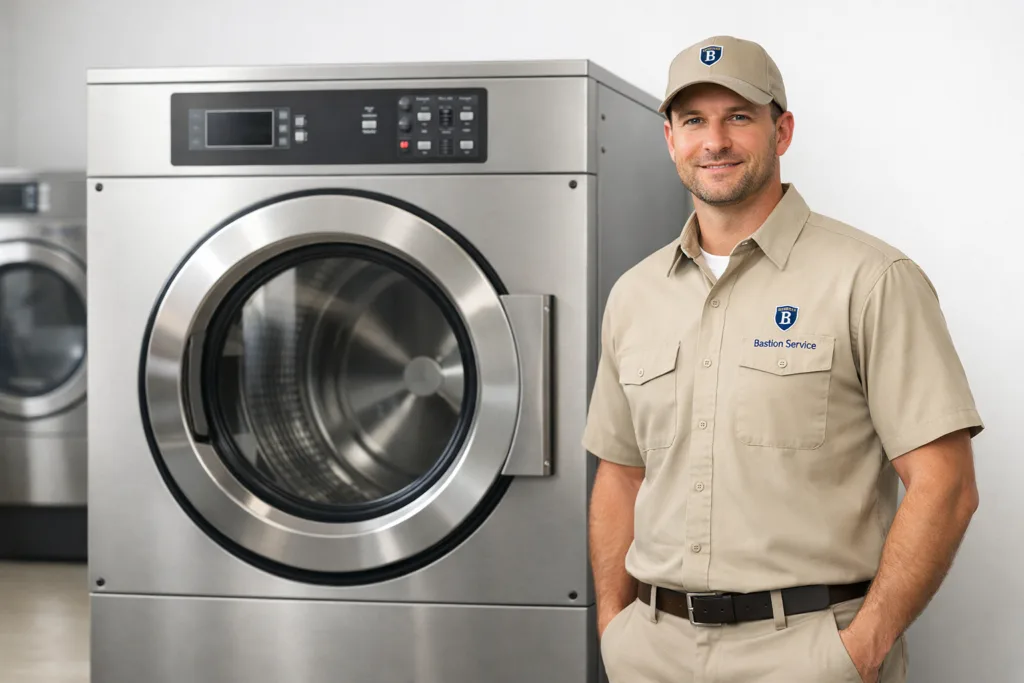




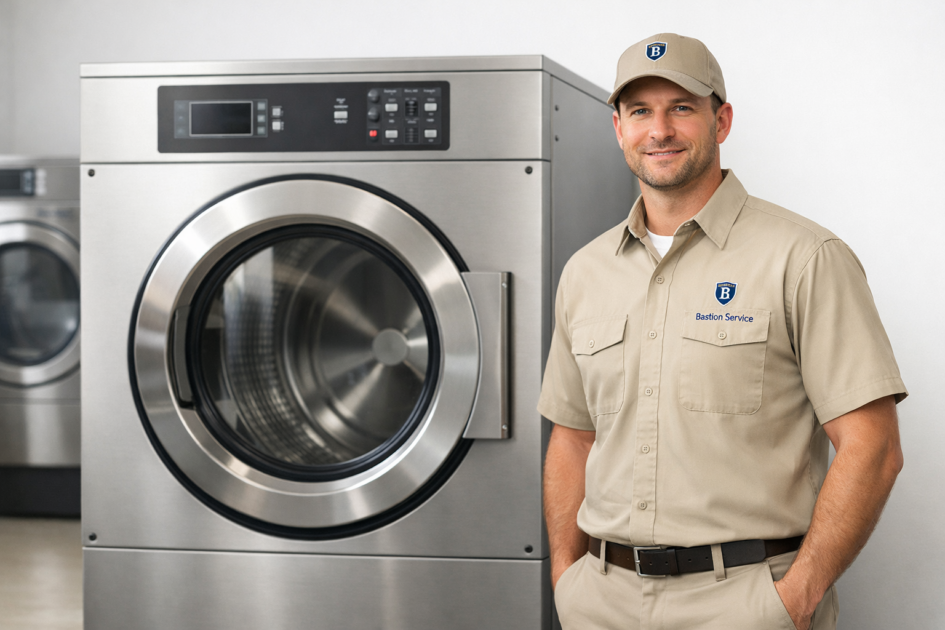
Dryer problems can interrupt load turnover fast, especially when one Wascomat unit starts holding up staff, tenants, or customer-facing laundry flow. For businesses in Hawthorne, the most useful next step is service that matches the exact symptom pattern, checks the heating and airflow systems, and identifies whether the problem is isolated to one component or affecting overall machine performance. Bastion Service handles Wascomat dryer issues with a repair-focused approach that helps operators decide what should be fixed now, what may be contributing to the failure, and whether the unit should stay out of service until repairs are completed.
Related commercial service paths in Hawthorne include Wascomat Commercial Repair in Hawthorne, Commercial Dryer Repair in Hawthorne, and Wascomat Washer Repair in Hawthorne.
What common Wascomat dryer symptoms usually point to
Many dryer complaints sound similar at first, but the cause can vary widely. A unit that runs without heat, a dryer that takes too long, and a machine that shuts down before the cycle ends may each involve different systems. Looking at the symptom closely helps narrow the repair path and avoids approving parts based on guesswork.
Runs but does not heat
If the drum is turning but loads are still wet, the problem may involve the heating circuit, thermostats, ignition-related components, safety devices, wiring, or control problems. In some cases, the dryer is producing heat but not moving air correctly, which can make the machine appear to have a heat failure. This is why no-heat complaints need both heating and airflow checks before repairs are approved.
Long dry times
When loads eventually dry but take much longer than normal, the issue often points to restricted airflow, partial heat loss, sensor problems, lint buildup in key pathways, or declining component performance. This symptom is easy to tolerate for too long because the machine still appears usable. In practice, it reduces throughput, increases energy use, and creates repeated reruns that affect labor and scheduling.
Stops before the cycle finishes
A dryer that starts normally and then shuts off may be reacting to overheating, motor strain, electrical faults, failing safety controls, or board-related issues. If the unit starts again after cooling down and repeats the same pattern, that usually indicates a condition that should not be ignored. Repeated shutdowns can turn a manageable repair into a broader failure if the machine stays in use.
Drum does not turn or turns unevenly
When the dryer powers on but does not tumble properly, likely causes include belt problems, motor issues, worn rollers, idler assembly wear, bearing trouble, or related drive system faults. Uneven tumbling can also leave loads damp in spots and create extra wear on fabrics. Thumping, squealing, scraping, or grinding noises are often important clues that the problem is mechanical rather than strictly electrical.
Overheating, burning odor, or excessive cabinet heat
These symptoms often suggest airflow restriction, lint accumulation in problem areas, failing support parts, or temperature-control issues. A dryer that is running excessively hot should be treated as a priority service issue. If staff notice abnormal heat or a persistent burning smell, taking the machine out of service is often the safer decision until the cause is confirmed.
Error codes or control problems
Display errors, nonresponsive buttons, inconsistent cycle selection, or random behavior can point to sensor faults, board failures, communication problems, or unstable power conditions. Error codes help narrow the diagnosis, but they do not replace testing. The code may point to the affected system without identifying the underlying reason the fault developed.
Why heating and airflow problems are often connected
One of the most common repair mistakes is treating a no-heat or slow-dry complaint as a single failed part without checking the full drying path. Wascomat dryers depend on both proper heat production and proper air movement. If one side is compromised, drying performance drops and components may begin to fail under added stress.
Examples of connected problems include:
- Restricted airflow causing overheating and repeated high-limit trips
- Weak heat output leading to extended cycle times and poor moisture removal
- Sensor inaccuracies causing loads to stop too early or run too long
- Lint accumulation contributing to temperature imbalance and shutdowns
- Drive issues reducing normal tumble action and leaving loads unevenly dried
When a dryer complaint is approached as a system issue rather than just a single symptom, the repair plan is usually more accurate and repeat callbacks are less likely.
When a Wascomat dryer should be scheduled for service
It makes sense to schedule repair when the machine is no longer matching normal cycle expectations, even if it still starts and runs. Businesses in Hawthorne often wait because the dryer is technically operating, but reduced performance usually means the fault is already affecting efficiency, workflow, or component wear.
Common signs that service should be scheduled include:
- Loads staying damp after a normal cycle
- Dry times getting longer over several days or weeks
- Frequent resets or mid-cycle shutdowns
- Unusual noise from the drum or drive system
- Temperature that seems too low or too high
- Intermittent starting problems
- Controls that respond inconsistently
- Staff rerunning loads to compensate for poor performance
Those workarounds may keep laundry moving temporarily, but they usually indicate that the machine needs direct repair attention.
When continued use can make the problem worse
Some dryer issues are inconvenient but manageable for a short period. Others can escalate quickly if the unit remains in operation. If the machine is overheating, producing a burning smell, making heavy mechanical noise, shutting off repeatedly, or failing to tumble correctly, continued use can add strain to surrounding components.
That can mean a problem that began with one failed part starts affecting belts, rollers, bearings, motors, heat controls, or safety devices. For Hawthorne businesses trying to protect uptime, removing one unstable dryer from service can be the better decision than risking a larger repair and a longer interruption later.
Why symptom-based diagnosis matters before parts approval
Dryer symptoms often overlap. A no-start complaint may be electrical, control-related, or tied to a safety condition. A long-dry complaint may involve heat loss, airflow restriction, moisture sensing, or drum movement. A shutdown issue may be caused by overheating, a weak motor, or a failing control system.
Approving parts without verifying the cause can waste time, increase expense, and leave the original issue unresolved. A symptom-based diagnosis helps answer the questions that matter most:
- What system is actually failing?
- Is there one fault or several related issues?
- Is the unit safe to keep using before repair?
- Will the proposed repair likely restore normal operation?
- Are there contributing conditions that should be corrected at the same time?
That is especially important for sites managing multiple machines, where one unit’s failure may also reveal airflow, maintenance, or wear patterns that affect reliability across the equipment lineup.
Repair or replacement: how to think about the decision
A serious dryer symptom does not automatically mean the machine should be replaced. In many cases, repair remains the practical option when the cabinet and major structure are still sound and the failure is limited to serviceable components. Replacement becomes more relevant when the dryer has repeated major breakdowns, multiple systems failing at once, or a downtime pattern that no longer fits the demands of the operation.
The better decision usually comes after the fault is identified. Once the repair scope is known, it becomes easier to compare expected reliability, cost exposure, and the operational impact of keeping the unit in service versus planning for replacement.
What to prepare before a service visit
A little preparation can make the appointment more productive and help shorten the time it takes to confirm the fault. If possible, have staff note the exact symptom rather than only stating that the dryer is not working. Small details often matter.
Helpful information includes:
- Whether the drum turns
- Whether the unit heats at all
- Whether the problem happens every cycle or intermittently
- Any unusual noises, smells, or overheating signs
- Error messages or display behavior
- Whether the dryer shuts off at a consistent point in the cycle
- How long the problem has been getting worse
If the dryer has obvious overheating, a burning odor, or severe mechanical noise, it is usually best not to keep testing it repeatedly before service arrives.
Service focused on uptime and repair decisions
For businesses in Hawthorne, the goal is not just to get a Wascomat dryer running for one more load. The goal is to identify why performance changed, determine whether the machine should remain out of service, and move toward a repair that supports normal day-to-day operation. When a dryer is no longer heating correctly, taking too long, shutting down, or developing drum and airflow issues, timely diagnosis and repair scheduling can reduce downtime and help prevent a smaller fault from becoming a more expensive interruption.


