
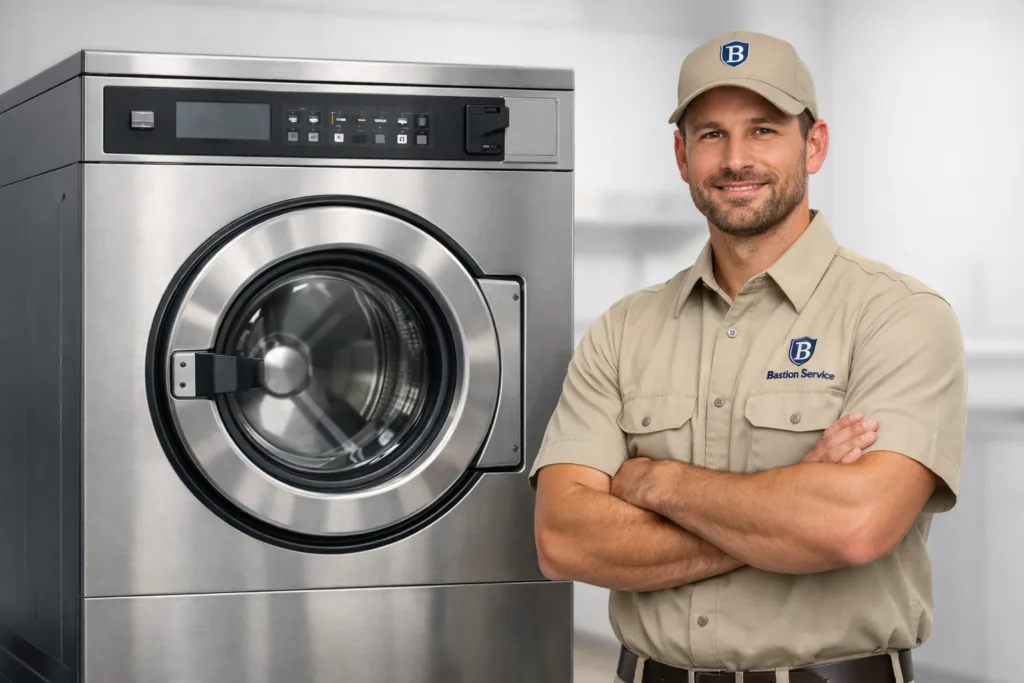




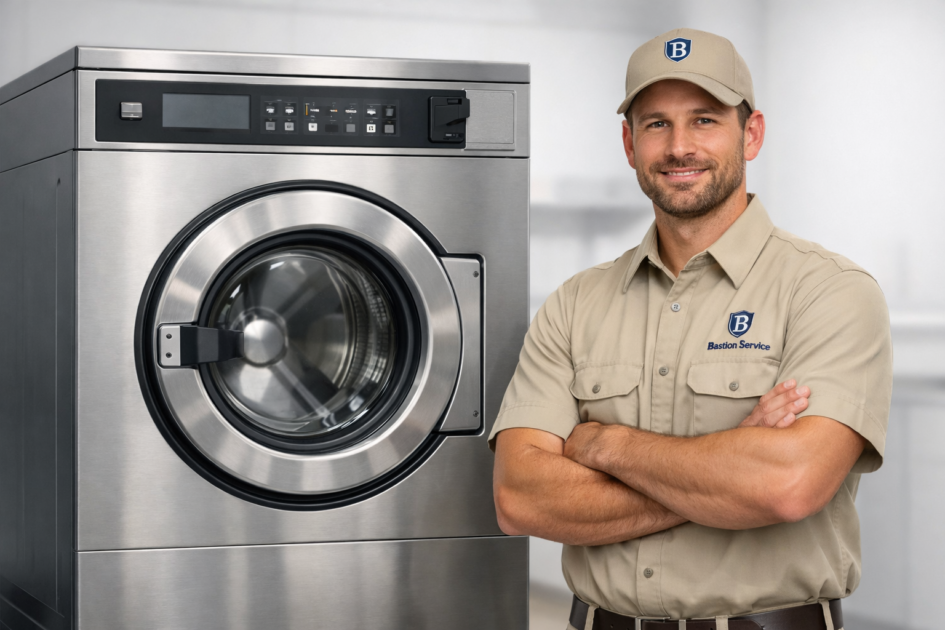
Washer problems can disrupt staffing, delay linen turnover, and create avoidable bottlenecks in laundry rooms that depend on steady throughput. When a Wascomat unit starts stopping mid-cycle, draining poorly, leaking, or finishing with wet loads, the most useful next step is service based on the exact failure pattern rather than trial-and-error part replacement. Bastion Service works with businesses in Cheviot Hills to identify the source of washer problems, explain the likely repair path, and help determine whether the machine should stay in rotation, be limited to certain use, or be taken offline until service is completed.
Related commercial service paths in Cheviot Hills include Wascomat Commercial Repair in Cheviot Hills, Commercial Washer Repair in Cheviot Hills, and Wascomat Dryer Repair in Cheviot Hills.
How Wascomat washer problems are typically diagnosed
A washer symptom only tells part of the story. A machine that will not spin may actually be dealing with a drain restriction, an imbalance condition, a door-lock fault, or a control issue that prevents normal extraction. A washer that will not start may have a power input problem, an interlock issue, a failed interface component, or a board communication fault.
That is why the operating stage matters. Service is usually guided by when the failure appears:
- At startup: no response, delayed response, lock failure, or immediate fault display
- During fill: slow fill, no fill, overfill, or repeated pauses
- During wash: unusual noise, shutdowns, poor turnover, or inconsistent heating
- During drain: standing water, long drain times, or drain-related fault codes
- During spin: vibration, aborted extraction, loud mechanical noise, or wet loads
- At cycle end: incomplete cycles, door unlock problems, or intermittent resets
Following that sequence helps narrow down the likely system involved and reduces the chance of approving unnecessary repairs.
Common Wascomat washer symptoms that call for service
Washer not starting or not completing the cycle
If the washer does not respond when started, locks the door but does not proceed, or stops before the programmed cycle is complete, the problem can involve the door-lock assembly, user controls, main control communication, power supply irregularities, or sensor input that prevents the next step in the cycle. In some cases, the machine may appear to fail randomly even though the interruption is tied to a repeatable stage such as filling, heating, draining, or spin authorization.
This kind of failure usually deserves prompt attention because staff often try to work around it by restarting the machine, changing cycle selections, or unloading and reloading partially processed items. That adds labor time and can make the failure seem less severe than it really is.
Drainage problems and wet loads
When water remains in the drum, drain time becomes unusually long, or loads come out much wetter than normal, attention usually turns to the drain system and the extraction sequence. Pump performance, restrictions in the drain path, level sensing problems, and control-side interruptions can all cause similar complaints.
Wet loads are not just a washer issue. They also increase drying time, reduce throughput, and create backup across the rest of the laundry process. If operators are separating loads, repeating cycles, or avoiding one machine because it leaves water behind, service should be scheduled before the slowdown affects the rest of the room.
Leaks during fill, wash, or drain
Water on the floor may come from fill hoses, valves, door area sealing components, drain connections, internal hoses, or overflow conditions that only occur during a specific stage. A leak that appears small at first can become a bigger operational problem once the machine is run back-to-back.
In business settings, leaks also create cleanup demands and can affect surrounding equipment and flooring. If the source is not obvious, it is important to note whether the water appears at the start of the cycle, during agitation, while draining, or after the machine sits idle, because that timing helps narrow the repair direction.
Vibration, banging, or machine movement
Excessive movement during extraction is often linked to balance detection, suspension wear, mounting issues, support problems, or drive-related stress. Some units will repeatedly attempt to rebalance before spin, while others will enter spin but vibrate hard enough to force shutdown or cause concern for nearby equipment.
A washer that is shaking more than usual should not be treated as normal wear. Continued operation can increase strain on internal components and turn a manageable repair into a larger one.
Fill problems and water temperature complaints
Slow fill, no fill, overfilling, or incorrect temperature can point to inlet valve problems, water supply restrictions, sensor concerns, or control faults affecting the fill sequence. Inconsistent temperature can also interfere with wash quality and chemical performance, especially when cycles depend on specific programmed conditions.
If cycle times are stretching without a clear reason, or the washer repeatedly pauses during the early portion of the program, the fill system should be evaluated instead of assuming the issue is only with the selected cycle.
Error codes and intermittent shutdowns
Some Wascomat washers display stored or active faults that help identify the system involved, but the code alone does not always confirm the failed part. Intermittent shutdowns are especially important to evaluate in context. A machine may run multiple loads and then fail under a specific condition such as higher extraction demand, longer drain time, or a repeated lock command.
Recording when the shutdown occurs, what the machine was doing at the time, and whether the issue is recoverable with a restart can make the service call more efficient.
What businesses should check before scheduling washer repair
Basic observations from staff can help speed diagnosis without turning the visit into guesswork. Before service is scheduled, it helps to note:
- Whether the washer fails at the same point in every cycle
- Whether the drum still contains water after stopping
- Whether the problem affects all cycle selections or only certain programs
- Whether there is visible leaking, unusual odor, or overheated smell
- Whether the machine is louder than normal during drain or spin
- Whether fault codes are recurring or changing from load to load
- Whether the issue began suddenly or worsened over time
These details can help distinguish between a single failed component and a broader operating pattern that may involve multiple systems.
When continued use may make the repair worse
It is usually better to pause operation when the washer is leaking, failing to drain, making strong mechanical noise, stopping repeatedly during extraction, or moving excessively. Running the unit in that condition can place added stress on the pump system, motor and drive components, locking hardware, and controls.
Continued use is also risky when staff are bypassing the problem with manual restarts or partial loads just to keep production moving. Those workarounds may keep one machine active for the moment, but they often lead to larger delays once the unit drops out completely.
Repair decisions based on symptom pattern, not just age
Not every washer issue points to replacement. Many problems are still worth repairing when the machine has a defined fault, the frame and major structure remain sound, and the unit still fits the daily workload. The more important question is whether the current problem is isolated or part of a growing pattern of repeated stoppages, unstable controls, worsening vibration, or frequent downtime.
For businesses in Cheviot Hills, that decision often comes down to operational impact. If one repair can return the washer to stable performance, repair is often the practical path. If failures are stacking up and the machine can no longer be trusted for normal production, then replacement becomes a more serious consideration.
Preparing for a washer service visit
To make service more efficient, it helps to have the model information available, note any displayed fault codes, and identify the most recent loads or cycles where the problem appeared. Staff should also mention whether the machine still powers on, whether the door remains locked after failure, and whether the issue has affected nearby workflow such as dryer loading or linen turnaround timing.
If the washer can still run, it is useful to decide in advance whether the goal is temporary limited operation until repair is completed or full return to normal service. That helps align the repair recommendation with actual operating needs.
Service-focused next steps for Wascomat washer issues
When a Wascomat washer starts causing recurring interruptions, the best next move is to schedule service around the specific symptom, the cycle stage where it fails, and the effect it is having on daily output. Whether the problem involves draining, spin performance, leaks, control faults, fill issues, or cycle shutdowns, a targeted diagnosis helps you avoid wasted downtime and make a more informed repair decision for your Cheviot Hills operation.


