
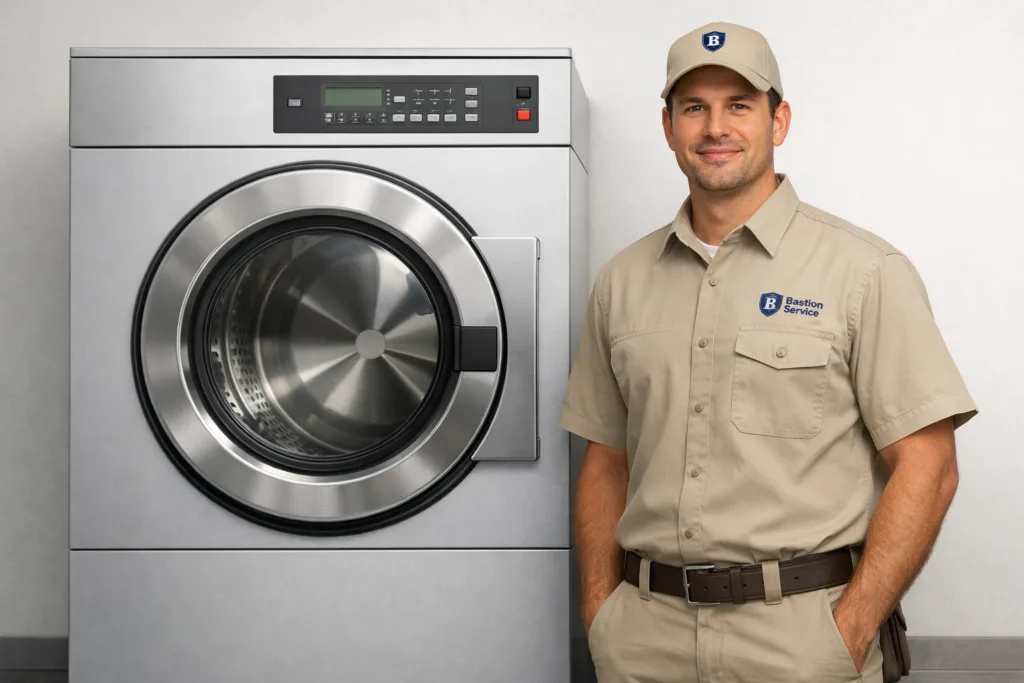




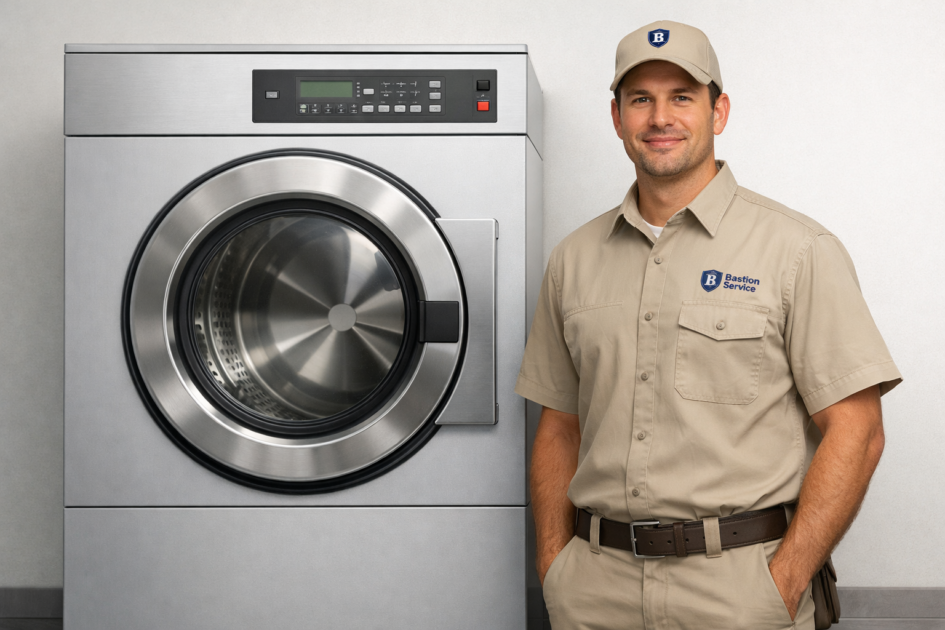
When a Wascomat dryer slows down, overheats, stops tumbling, or leaves loads damp, the impact shows up quickly in workflow, turnaround time, and labor. Accurate diagnosis matters before parts are ordered or repair decisions are made, because the same symptom can come from airflow restriction, heat-control failure, drive issues, sensor problems, or electrical faults. Bastion Service helps businesses in Westwood identify the actual cause, reduce repeat downtime, and decide whether repair is the right next step.
Related commercial service paths in Westwood include Wascomat Commercial Repair in Westwood, Commercial Dryer Repair in Westwood, and Wascomat Washer Repair in Westwood.
Wascomat Dryer Service Built Around Downtime and Daily Operations
Dryers used in laundromats, hotels, housing facilities, and other busy laundry environments are expected to keep loads moving without interruption. When a Wascomat unit starts underperforming, service should focus on how the machine behaves under real operating conditions rather than on guesswork. That usually means checking heat output, drum rotation, exhaust performance, controls, timing, safety cutoffs, and signs of wear together.
For managers and operators in Westwood, the immediate concern is usually not just the failed dryer itself. One machine running poorly can create load backups, push other units harder, increase labor time, and affect customer experience or internal operations. Early repair scheduling often helps limit secondary damage and keeps a smaller problem from turning into a larger outage.
Common Wascomat Dryer Symptoms and What They Can Mean
Dryer runs but clothes stay damp
If the drum turns but loads still come out wet or need extra time, the issue may involve restricted airflow, weak heat, cycling problems, or a moisture-sensing fault. In a high-use setting, long dry times can also point to a venting problem that is forcing the dryer to work harder than it should. This kind of symptom often looks minor at first, but it can raise utility costs and slow the entire laundry process.
No heat or inconsistent heat
Why is my Wascomat dryer not heating or finishing the cycle? Common causes include failed heating components, thermostat problems, safety-limit interruptions, ignition faults on gas models, control issues, or power-supply problems. Inconsistent heat can be especially disruptive because the dryer may appear functional while still failing to dry loads on schedule. If temperatures swing too low or the cycle never reaches proper drying conditions, repair should be scheduled before the machine causes ongoing delays.
Drum not turning
If the dryer powers on but the drum does not move, possible causes include a broken belt, worn rollers, idler failure, motor trouble, or a control-related interruption. A non-turning drum should be addressed quickly, since heat without proper drum movement can create additional stress inside the unit and may increase the risk of more expensive repairs.
Unusual noise, vibration, or burning smell
Thumping, squealing, scraping, or grinding often points to worn support parts, loose components, motor strain, or internal obstruction. A burning smell can indicate slipping drive parts, overheating, lint buildup, or an electrical issue. These symptoms should not be treated as normal wear. In business settings, repeated operation after noise or odor appears can turn a repairable issue into wider damage.
Unexpected shutdowns or cycle interruptions
If the dryer starts and then stops, shuts down before the load is dry, or behaves inconsistently between cycles, the problem may involve overheating protection, restricted exhaust, door-switch failure, control board issues, or unstable incoming power. Intermittent faults usually require direct testing during service because the visible symptom does not always identify the failed part.
Why Proper Diagnosis Comes Before Repair Approval
Dryer systems often show one symptom while the actual failure is located somewhere else. Poor drying can be blamed on a heating issue when airflow is the real problem. Repeated high-limit trips may seem like a thermostat failure when the root cause is a blocked exhaust path or overheating condition. A service visit should confirm the source of failure, identify any related wear, and separate urgent repair items from maintenance-related concerns.
This matters even more when a Wascomat dryer has been operating with reduced performance for a while. A machine that has been running too hot, cycling too long, or vibrating through multiple shifts may need more than one part addressed to return to stable operation. Looking only at the most obvious symptom can lead to repeat service calls and more lost time.
Signs It Is Time to Schedule Service
It is usually best to schedule repair when dry times increase, heat becomes inconsistent, controls stop responding normally, or new noise appears even if the dryer is still technically running. Waiting can lead to longer outages, higher operating cost, and additional wear on motors, rollers, belts, heating components, and controls.
- Loads regularly need extra cycles to finish
- The dryer tumbles but does not produce enough heat
- The machine stops mid-cycle or shuts down unexpectedly
- The drum will not turn or starts with difficulty
- There is a burning smell, overheating, or repeated safety shutdown
- Controls, sensors, or timing functions are inconsistent
For businesses in Westwood, these symptoms usually affect more than one load at a time. They change staffing patterns, slow turnover, and can create avoidable pressure on the rest of the laundry equipment.
Repair or Replace: What Usually Makes Sense?
Replacement is not always necessary when a Wascomat dryer develops a problem. Many failures involving belts, rollers, thermostats, sensors, igniters, switches, motors, and certain control-related parts can often be repaired when the machine is otherwise in solid condition. If the dryer still fits the workload and the issue is isolated, repair is often the more practical choice.
Replacement becomes more likely when there are repeated major breakdowns, multiple system failures at once, severe cabinet or drum wear, persistent control issues, or repair costs that no longer support keeping the machine in service. The best decision usually depends on outage history, overall machine condition, and whether the unit can return to reliable operation after service.
What a Service Visit Should Evaluate
A useful dryer repair visit should do more than confirm that the machine is not working. It should review the complaint, test the operating sequence, inspect wear points, verify heat and airflow performance, and check whether continued operation could cause further damage. That gives owners and managers a clearer basis for approving repair, planning around downtime, and deciding how urgently the issue needs to be handled.
If your Wascomat dryer is not heating, is taking too long to dry, is making noise, or is shutting down during use in Westwood, the most effective next step is to schedule service before the problem spreads into broader equipment disruption. Timely diagnosis helps narrow the fault, prepare for the right repair, and get the machine back into dependable daily use.



