
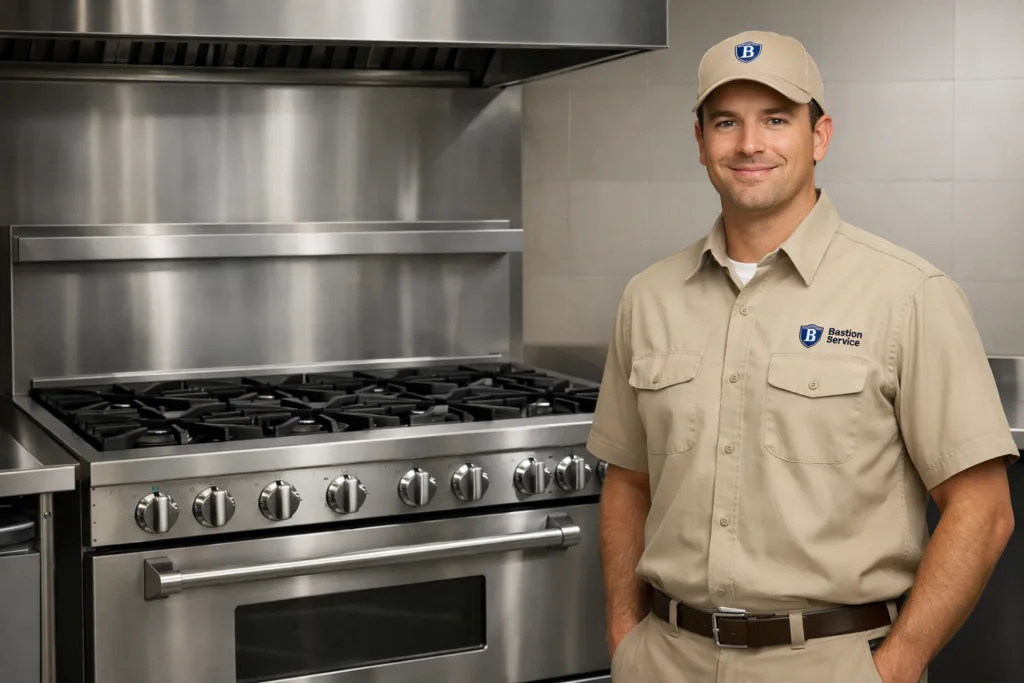





Range problems can interrupt prep, slow service, and force staff to work around equipment that no longer responds the way it should. For businesses in Manhattan Beach, Vulcan range repair is most effective when the symptom is tied to the actual failed component, the risk of continued use is weighed realistically, and service is scheduled around how the kitchen operates. Bastion Service works with businesses in Manhattan Beach to troubleshoot Vulcan range issues, identify what is affecting burner performance or oven heat, and move toward the right repair decision without guesswork.
Related commercial service paths in Manhattan Beach include Vulcan Commercial Repair in Manhattan Beach, Vulcan Oven Repair in Manhattan Beach, and Vulcan Fryer Repair in Manhattan Beach.
Common Vulcan range symptoms that call for service
Most range failures do not start as a complete shutdown. They usually begin with a pattern: a burner that lights late, an oven that runs cooler than the dial suggests, flame that changes during use, or controls that no longer feel accurate. Paying attention to that pattern helps narrow the issue faster and helps determine whether the unit can stay in limited use or should be taken out of service.
Burners not lighting or taking too long to ignite
If a top burner or oven section is slow to ignite, lights intermittently, or does not light at all, the fault may involve the ignition system, burner obstruction, gas flow problems, or worn ignition-related parts. Delayed ignition is more than an annoyance. It affects speed at the line and can signal a problem that should be addressed before normal use continues.
Weak flame, uneven flame, or burners dropping out
When one burner runs lower than the rest, flame looks inconsistent around the ring, or heat output changes during cooking, the cause may be restricted ports, regulator issues, valve wear, or imbalance in fuel delivery. In day-to-day kitchen use, this often shows up as pans heating unevenly, slower recovery between orders, or staff avoiding specific burners because results are unreliable.
Oven section not reaching or holding temperature
A Vulcan range oven that runs cold, overshoots temperature, or cycles unpredictably can affect batch consistency and timing. Possible causes include thermostat or control issues, ignition trouble, sensor-related faults, or heat-delivery components that are no longer working correctly. If product quality changes from one run to the next, the problem is already affecting operations even if the oven still appears to be functioning.
Clicking, failed ignition attempts, or inconsistent startup
Repeated clicking, burners that light only after several tries, or startup that changes from shift to shift often points to an ignition problem that needs inspection. In some cases the issue is isolated to one section of the unit. In others, moisture, wear, contamination, or an electrical fault can affect broader ignition performance.
Knobs or controls not matching burner response
If controls feel loose, unusually stiff, or no longer match flame changes accurately, the problem may be within the valve or control assembly. This can make it difficult for staff to repeat settings, maintain stable cooking temperatures, or trust the equipment during busy periods.
Why symptom-based diagnosis matters
Range complaints often overlap. A burner that will not stay lit can look like a bad igniter when the real issue is gas delivery or contamination. An oven temperature complaint can sound like a thermostat problem even though the actual fault is tied to ignition behavior or heat transfer. That is why symptom-based diagnosis matters: the repair needs to solve the source of the failure, not just the most visible effect.
For Manhattan Beach businesses, this also helps with planning. Once the fault is identified, it becomes easier to decide whether the range can remain in partial operation, whether service should be expedited, and whether the issue is isolated enough to justify repair versus broader equipment replacement.
Signs the range is affecting production more than it seems
Some kitchens keep working around a faulty range longer than they should because the unit is not completely down. In practice, partial failures can be just as disruptive as a full outage. Service is worth scheduling when you notice patterns like these:
- Staff consistently avoid one or more burners
- Recipes are being adjusted to compensate for poor heat
- Cook times have become harder to predict
- The oven needs frequent monitoring to avoid undercooking or overcooking
- Startup problems are becoming more frequent instead of occasional
- One issue has started to affect adjacent sections of the range
These are often signs that the equipment is no longer supporting normal workflow, even if it still powers on and produces some heat.
When continued use can turn into a bigger repair
Running a range with unstable ignition, poor flame quality, or drifting oven temperature can increase wear on related components. What begins as one serviceable fault may spread into additional control, valve, or heating problems if the unit is pushed through daily use without correction. That is especially true when staff have to over-adjust settings or repeatedly relight sections of the range just to keep production moving.
If there is a strong or persistent gas smell, stop using the unit and address safety first. Appliance repair should wait until the immediate gas concern has been handled appropriately.
Repair or replace?
Repair is often the right move when the chassis and primary structure of the Vulcan range are still in solid condition and the problem is limited to components such as igniters, controls, valves, or temperature-related parts. Replacement becomes a more serious consideration when the unit has recurring failures across multiple systems, significant wear, or a repair history that suggests downtime will continue.
The decision usually comes down to a few practical questions:
- Is the current failure isolated or part of a broader pattern?
- How much daily production depends on this specific unit?
- Has performance been declining across several sections of the range?
- Will repair restore stable operation, or only buy a short amount of time?
Looking at those points helps businesses in Manhattan Beach decide whether a targeted repair makes sense or whether the equipment has reached a stage where further investment is harder to justify.
How to prepare for a service visit
A little information from the kitchen can make diagnosis faster and more accurate. Before scheduling service, it helps to note which section is failing, whether the issue is constant or intermittent, what staff observe during startup, and whether the symptom appears only under heavier use. If the oven is involved, noting whether it runs hot, cool, or fluctuates can also help narrow the problem.
Useful details include:
- Which burners or oven sections are affected
- Whether the problem started suddenly or got worse over time
- Any clicking, delayed ignition, or loss of flame
- Temperature inconsistency during baking, roasting, or holding
- Changes in knob feel or burner response
- Whether the issue appears at opening, during peak use, or all day
Service focused on restoring kitchen function
For a business in Manhattan Beach, range repair should lead to an actionable next step: diagnose the fault, determine how it affects safe use and throughput, and schedule the repair that best fits the equipment condition. Whether the issue involves burner ignition, flame performance, oven heat, or failing controls, the goal is to get the Vulcan range back to stable operation with a repair plan that supports the kitchen rather than forcing the kitchen to keep adapting around the equipment.


