
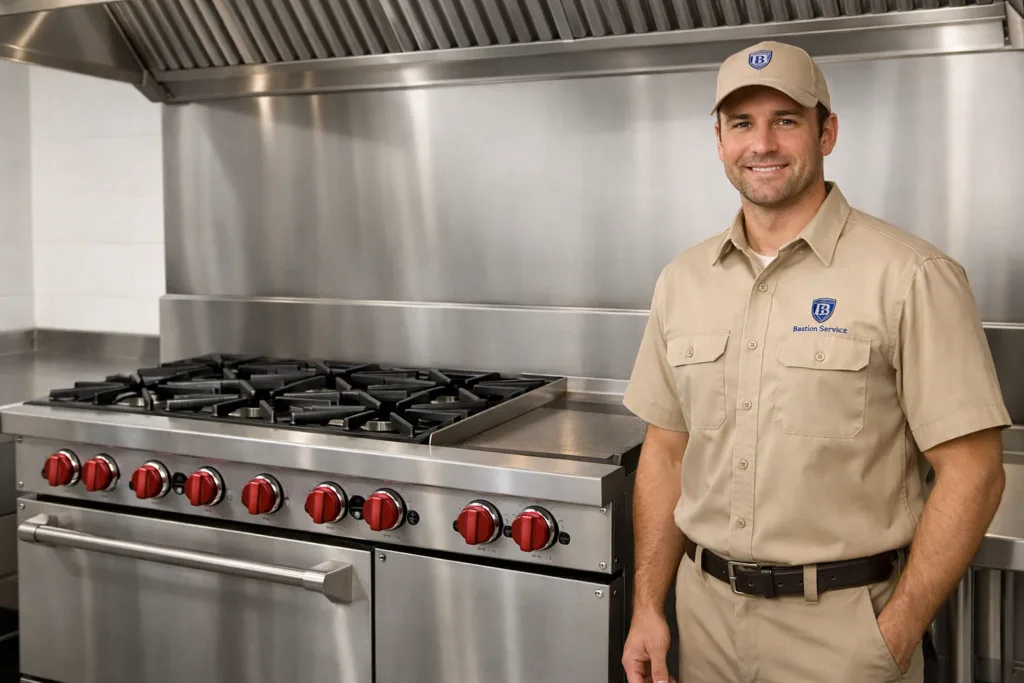




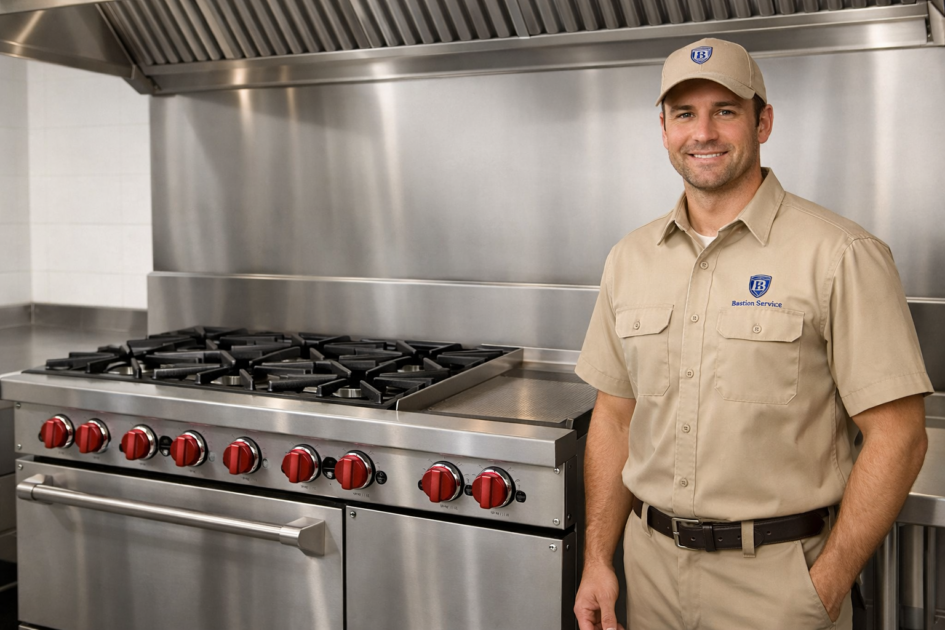
When a Vulcan fryer, oven, or range begins missing temperature, failing to ignite, or slowing production, the most useful next step is service that identifies the actual fault and what it means for continued operation. For businesses in Manhattan Beach, repair decisions often need to happen quickly: determine whether the unit can stay in limited use, whether shutdown is the safer choice, and how to schedule repair around active kitchen demand.
For specific equipment paths in Manhattan Beach, review Vulcan Oven Repair in Manhattan Beach, Vulcan Range Repair in Manhattan Beach, and Vulcan Fryer Repair in Manhattan Beach.
Bastion Service works with Manhattan Beach businesses to troubleshoot Vulcan cooking equipment problems that interrupt output, food quality, and service flow. That includes symptom-based diagnosis for ovens, ranges, and fryers, along with repair planning based on burner performance, ignition behavior, controls, safeties, and heat recovery.
What Vulcan cooking equipment problems do you troubleshoot?
Most service calls start with a symptom the staff can see right away: inconsistent heating, delayed ignition, no flame, slow preheat, poor recovery, unexpected shutdowns, or controls that do not respond as they should. Those symptoms may look similar during a shift, but the repair path can be very different depending on whether the problem comes from the ignition system, burner assembly, gas flow, sensing components, wiring, or a failing control.
- Temperature that runs too hot, too cold, or drifts during use
- Burners that click, hesitate, or fail to light
- Units that shut down during operation or after startup
- Fryers that recover too slowly between loads
- Ovens that preheat slowly or bake unevenly
- Ranges with weak flame, inconsistent burner output, or oven-base issues
- Control problems affecting setpoint accuracy or normal cycling
In a busy kitchen, these are not minor inconveniences. They affect ticket times, consistency, labor flow, and the ability to keep up with service without workarounds that create more strain on the equipment.
Heating and temperature issues that point to repair needs
Oven temperature drift and uneven cooking
If an oven overshoots, undershoots, or cycles erratically, the result is usually visible in the product before anyone sees a hard failure. Food may cook unevenly, batches may need extra time, and staff may start adjusting settings to compensate. That pattern can point to sensor faults, thermostat or control problems, ignition issues, relay trouble, or burner performance problems that prevent stable heat.
Repair becomes important when the oven is no longer predictable. A unit that technically still heats but no longer holds a usable temperature can create waste and force slower production all day.
Fryer heat loss and slow recovery
Fryers often show trouble through slower-than-normal recovery between loads, inconsistent oil temperature, failure to reach setpoint, or repeated shutdowns. These symptoms may involve burner issues, control faults, sensing problems, or components affected by heat exposure and ongoing use. In a working kitchen, slow recovery quickly turns into a throughput issue, especially when staff have to wait longer between batches.
If baskets are taking longer to finish or product quality changes during peak periods, that is usually the point where a repair visit makes more sense than continuing to push the unit.
Range burner inconsistency
On ranges, heating complaints often show up as weak flame, burners that do not respond normally, uneven output from one section to another, or oven-base heating problems on combination units. Since ranges are used continuously for prep and line work, even one unstable burner can disrupt how the rest of the kitchen operates. A proper diagnosis helps determine whether the issue is isolated or part of a broader ignition, gas, or control problem.
Ignition failures, burner problems, and repeated restarts
Ignition issues are some of the most disruptive cooking equipment problems because they create uncertainty every time the unit is needed. A Vulcan oven, range, or fryer may fail to light, light late, require repeated attempts, or shut off shortly after ignition. In some cases, staff begin restarting the equipment several times a day just to keep the line moving, which can hide how serious the problem has become.
Common causes can include worn igniters, pilot problems, flame sensing faults, burner contamination, wiring issues, switch failures, or gas valve response problems. The key service question is not just whether the unit lights once, but whether it starts reliably under normal kitchen conditions.
Warning signs that should not be ignored include:
- Delayed ignition or audible clicking without proper startup
- Burners that light inconsistently from one cycle to the next
- Flame dropout during operation
- Repeated manual restarting by staff
- Intermittent shutdowns that return after cooldown
When those symptoms are present, continued use can turn one failing part into a larger repair event.
Equipment-specific symptom patterns
Vulcan fryer repair
Fryer service is often driven by slow recovery, poor temperature control, ignition trouble, no heat, or nuisance shutdowns. Because fryers operate under heavy heat load, small control or burner issues tend to show up quickly in production. If the fryer falls behind during normal demand, struggles to maintain temperature, or stops unexpectedly, a repair evaluation can help determine whether the issue is a targeted component failure or part of wider wear affecting multiple systems.
Vulcan oven repair
Oven problems commonly involve slow preheat, uneven cooking, no heat, unstable temperature, control errors, or shutdowns during a cycle. For kitchen managers, the main issue is often consistency. Even when the oven still runs, unreliable heating can alter timing, create product variation, and force extra monitoring from staff. Service helps confirm whether the fault is tied to sensing, ignition, burner operation, controls, or another heating-related failure.
Vulcan range repair
Range calls often center on top burners that will not ignite properly, inconsistent flame, weak heating, or oven-base problems on units that combine multiple functions. Since range use tends to be constant throughout the day, intermittent issues can have a larger impact than they first appear to. Diagnosis helps separate a single-burner issue from a broader problem affecting ignition performance or control response across the unit.
When continued use may cost more than early repair
Some equipment failures are obvious, but many kitchens keep using a unit in reduced capacity long after the warning signs are clear. That can make sense temporarily in limited situations, but it can also increase wear when the equipment is repeatedly cycled, restarted, or pushed to compensate for poor heating performance. A fryer that lags behind, an oven with unstable temperature, or a range with unreliable burners can all create hidden costs before a full outage happens.
It is usually time to schedule service when:
- Food quality is changing because temperature is no longer stable
- Ticket times are increasing due to slow recovery or slow preheat
- Staff are adjusting procedures to work around the equipment
- The unit trips safeties or shuts down without warning
- Ignition problems are becoming a daily occurrence
At that stage, repair is not only about restoring operation. It is also about preventing avoidable downtime and making better decisions about scheduling, parts, and whether the equipment should remain in service at all.
Repair versus replacement considerations
Not every Vulcan problem points to replacement, and not every repair is the best long-term investment. The right choice depends on the condition of the unit, how often it has been breaking down, the severity of the current fault, parts condition, and how central the equipment is to daily output. A single failed ignition component or control part may support a straightforward repair. Repeated shutdowns, chronic temperature instability, or multiple system failures may suggest that replacement deserves serious consideration.
For businesses in Manhattan Beach, the practical goal is to compare the repair scope with the expected return in uptime and performance. Once the symptom pattern is confirmed, it becomes easier to decide whether to repair now, limit use temporarily, or plan for equipment changeout before service disruption gets worse.
Scheduling service for Vulcan equipment in Manhattan Beach
Vulcan cooking equipment repair in Manhattan Beach is most helpful when it moves the kitchen from uncertainty to action. If an oven is drifting off temperature, a range is showing burner trouble, or a fryer is slowing production, the next step is to schedule diagnosis, confirm the cause, and set a repair plan that fits the urgency of the problem and the realities of daily operation.


