
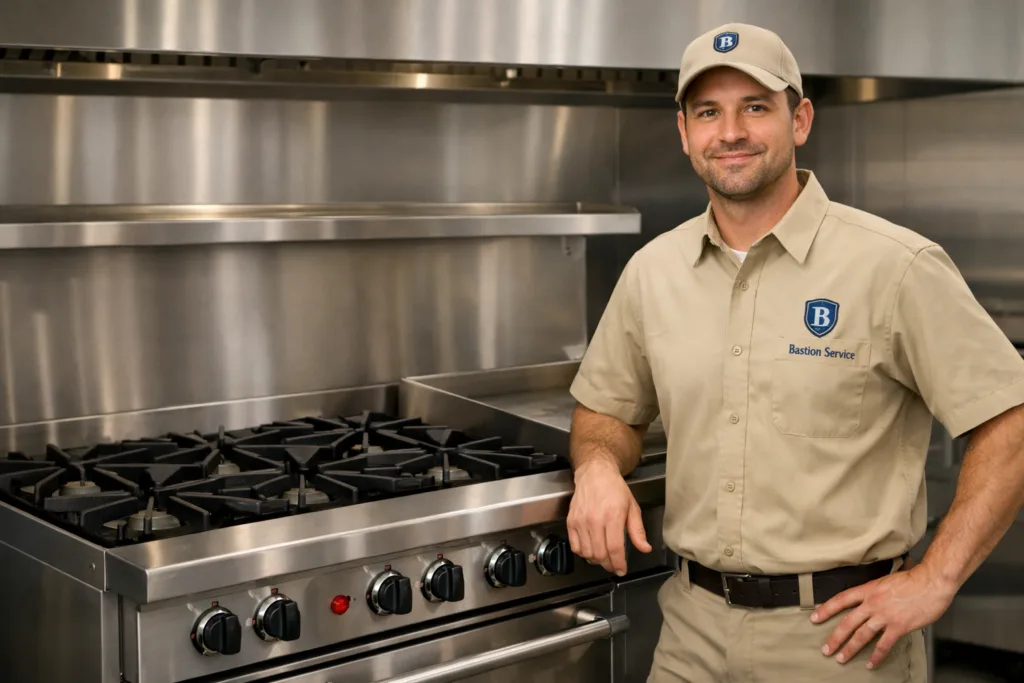




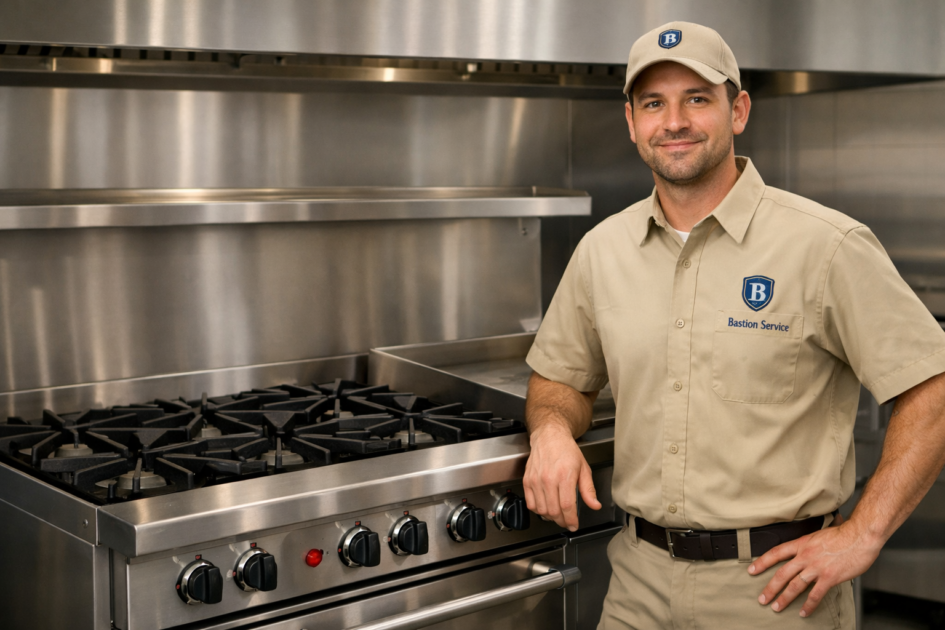
When a Vulcan oven, range, or fryer starts disrupting kitchen flow in Del Rey, the fastest way back to stable production is to treat the symptom pattern as a repair issue, not just an inconvenience. Heat loss, ignition trouble, slow recovery, erratic controls, and mid-shift shutdowns can all look similar from the line, but they often come from different causes. A service visit focused on diagnosis helps determine whether the unit can stay in limited operation, needs immediate repair, or should be taken offline to prevent bigger interruptions.
For specific equipment paths in Del Rey, review Vulcan Oven Repair in Del Rey, Vulcan Range Repair in Del Rey, and Vulcan Fryer Repair in Del Rey.
Bastion Service works with Del Rey food-service businesses that need repair scheduling around active kitchen demands. That means looking at how the equipment is failing in real use, what risk it creates for output and consistency, and what repair path makes the most sense for restoring dependable operation without unnecessary delay.
What Vulcan cooking equipment problems usually need service?
Most service calls begin with a change in performance rather than a complete breakdown. A fryer may take too long to recover between batches. An oven may drift above or below the set temperature. A range burner may light unevenly or produce weak flame during peak use. These are often early signs of trouble with burners, ignition components, gas flow, sensors, controls, thermostatic systems, safety circuits, or wiring.
For business operators, the key question is not only what the equipment is doing, but how the problem affects ticket times, food consistency, staffing, and daily throughput. A unit that still turns on may still require prompt repair if it is overheating, cycling unpredictably, failing to hold temperature, or dropping out under load.
Temperature problems that affect food quality and timing
Oven heat that runs hot, cold, or uneven
Vulcan oven performance problems often show up as uneven baking, longer cook times, scorched product, or batches that do not finish consistently from one rack position to another. Possible causes can include sensor issues, thermostat drift, ignition faults, gas valve problems, airflow restrictions, or door-related heat loss. In a busy kitchen, even a small temperature error can create compounding delays and waste.
Repair becomes more important when staff start adjusting recipes or rotating product more aggressively just to compensate for the equipment. That kind of workaround may keep service moving temporarily, but it usually signals that the oven needs attention before consistency drops further.
Fryer recovery that slows down service
A Vulcan fryer with slow recovery can affect every batch after the first one. Oil that takes too long to return to cooking temperature, overshoots the set point, or fails to hold steady may point to burner problems, control faults, sensor issues, high-limit concerns, or ignition-related failures. In practical terms, that means slower ticket times, product variation, and more strain on the kitchen during rush periods.
If fryer heat has become unreliable, early repair is often the better decision. Continued use with unstable temperatures can increase oil waste, create uneven results, and put added wear on related components.
Range burners with weak or inconsistent flame
On a Vulcan range, weak burner output, uneven flame pattern, delayed lighting, or burners that will not respond normally can interfere with line timing and station reliability. These issues may involve clogged or damaged burner components, valve trouble, ignition faults, regulator concerns, or control-related problems. Because ranges are used constantly during service, even one underperforming burner can slow an entire station.
When staff begin shifting pans around to find usable heat or avoiding certain burners entirely, it is usually time to schedule repair rather than wait for a full failure.
Ignition and startup failures
Ignition problems are among the most disruptive cooking equipment issues because they tend to get worse with repeated attempts to start the unit. A fryer that will not light consistently, an oven that clicks but does not ignite properly, or a range burner that lights only part of the time may have a failing igniter, burner issue, gas-flow problem, sensor fault, or control failure.
Intermittent ignition is especially risky during busy periods because staff may lose time restarting equipment instead of preparing orders. If startup has become unreliable, the safer and more efficient choice is usually to schedule repair before repeated retries lead to a complete outage or added component damage.
Control faults and unexpected shutdowns
Some of the hardest problems to manage are the ones that appear only after the unit has been running for a while. A Vulcan cooking unit may preheat normally, then shut down mid-use, lock out, stop heating, or fail to respond to controls. These issues often involve safety devices, control boards, switches, temperature sensors, wiring, or heat-related component failure that shows up only during longer operation.
Shutdowns are costly because they interrupt production without warning. If a piece of cooking equipment is dropping offline during active use, losing flame, or requiring resets to continue running, it makes sense to treat that as a priority repair issue rather than something to monitor casually.
Signs the equipment should not stay in normal use
Not every problem requires immediate removal from service, but some symptoms should raise concern right away. A fryer that overheats, an oven that cannot regulate temperature, a range burner that ignites unpredictably, or controls that cut in and out under load can all create operational and safety concerns. In those cases, continued use may increase wear, worsen damage, and make the final repair more involved.
- Repeated ignition attempts before the burner lights
- Heat that swings far above or below the set temperature
- Burners dropping out during active cooking
- Slow fryer recovery that affects batch timing
- Control panels that stop responding or reset unexpectedly
- Frequent shutdowns after preheat or during heavy use
If staff are compensating with longer preheats, reduced batch sizes, partial burner use, or constant manual adjustments, that is usually a sign the problem is no longer minor.
How repair decisions are usually made
For most businesses, the decision is not simply whether the equipment can still operate. The real question is whether it can operate predictably enough to support daily service. Repair planning typically depends on fault severity, equipment age, parts condition, repeat failure history, and the cost of downtime compared with the cost of repair.
Many Vulcan cooking equipment problems are worth repairing when caught early, especially burner, ignition, sensor, and control-related issues that have not yet caused broader damage. When symptoms have been ongoing for too long, however, one failure can begin affecting other systems. That is why it helps to evaluate the problem while the unit is still partially functional instead of waiting for a total shutdown.
Repair coverage for ovens, ranges, and fryers
Because kitchens rely on different equipment for different stations, the repair approach should match how the unit is actually used in daily operations.
Oven repair concerns
Oven service often centers on temperature accuracy, uneven heat, failed ignition, poor recovery, door sealing problems, and controls that do not respond correctly. These issues matter most when they start affecting consistency across repeated cooks or make timing unpredictable during prep and service.
Range repair concerns
Range service commonly involves burner ignition trouble, weak or uneven flame, valve issues, unstable heat, and performance problems that slow active cooking. A range problem may look small at first, but it quickly becomes operational when stations cannot depend on steady burner output.
Fryer repair concerns
Fryer service usually focuses on heat recovery, oil temperature stability, ignition problems, burner operation, high-limit issues, and shutdown behavior. Because fryer output is tied directly to speed and batch consistency, even moderate performance changes can create visible service delays.
Scheduling service in Del Rey
If your Vulcan cooking equipment is showing heating, ignition, burner, control, or shutdown problems, the next step is to schedule service based on the current impact on production. Early attention can reduce unplanned downtime, help protect food quality, and make it easier to decide whether the unit should remain in limited use or be repaired before the next busy shift. For kitchens in Del Rey, timely repair is often the most practical way to keep ovens, ranges, and fryers working the way daily operations require.


