
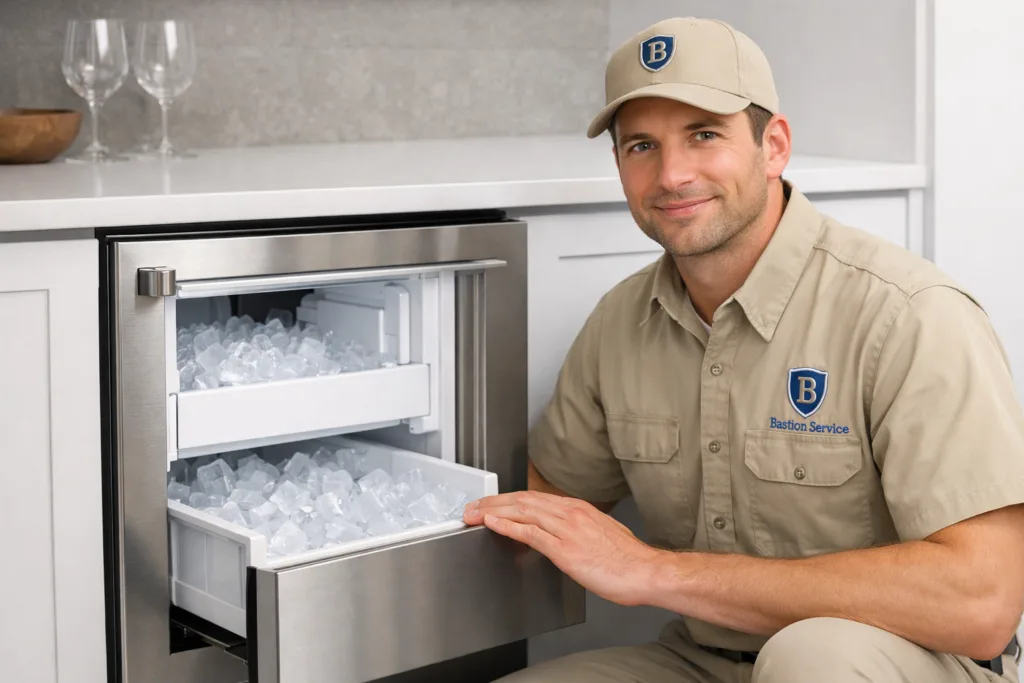




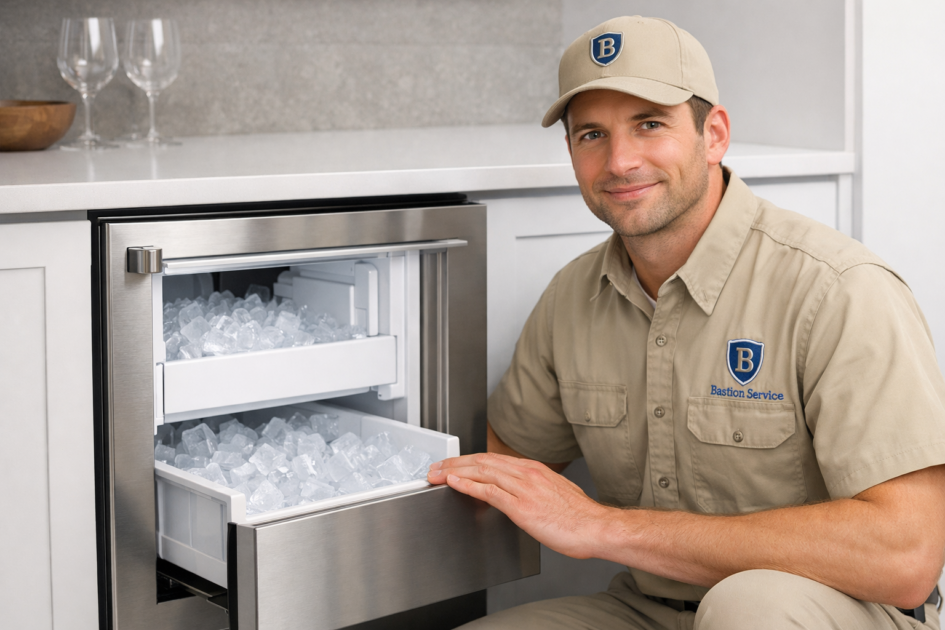
U-Line appliances are often chosen for compact kitchen layouts, built-in installations, and specialty cooling, so their problems do not always look the same as issues in a standard full-size unit. A wine cooler that seems only slightly warm, an ice maker that slows down, or a refrigerator that runs longer than usual can all point to different underlying faults. The most useful first step is to look at the full symptom pattern rather than guessing at a single failed part.
For specific U-Line appliance paths in Pico-Robertson, review U-Line Refrigerator Repair in Pico-Robertson, U-Line Freezer Repair in Pico-Robertson, and U-Line Ice Maker Repair in Pico-Robertson.
How U-Line cooling problems usually show up
Many household complaints start with one of a few patterns: temperature drift, unusual noise, moisture, frost buildup, or controls that behave inconsistently. In Pico-Robertson homes, those signs often become more noticeable in built-in spaces where ventilation is tighter and performance changes are easier to miss until food, ice production, or stored beverages are affected.
Because U-Line units are commonly designed for undercounter or specialty use, small changes in airflow, sealing, drainage, or sensing can have a larger effect than homeowners expect. A machine may still seem partly operational while already struggling with a fan issue, defrost problem, water supply restriction, or control fault.
Refrigerator symptoms that deserve attention
A U-Line refrigerator does not need to stop completely to need service. Common warning signs include:
- Fresh food compartments running warmer than normal
- Items cooling unevenly from shelf to shelf
- Condensation inside the cabinet
- Puddles or dampness near the unit
- Long run times or constant cycling
- New humming, buzzing, or fan noise
Sometimes the cause is relatively straightforward, such as restricted airflow, dirty coils, or a worn door gasket. In other cases, the problem may involve the evaporator fan, thermistor, defrost system, control board, or sealed cooling components. If the compartment temperature is drifting enough to raise food safety concerns, it is better not to wait.
Freezer issues that can worsen quickly
Freezer problems tend to become expensive when they are ignored. Soft food, frost accumulation, poor door sealing, or a unit that seems to run without catching up can all point to trouble that spreads over time. What starts as an air leak or defrost problem can lead to heavier ice buildup, blocked airflow, and added strain on the cooling system.
Homeowners should pay close attention when they notice:
- Ice crystals forming on stored food
- Frost collecting around drawers or door edges
- Repeated clicking during startup
- A warmer-than-normal interior despite continuous operation
- A door that no longer closes firmly
These symptoms may relate to gasket wear, fan trouble, sensor issues, defrost failure, or compressor-related problems. Even if the freezer still cools somewhat, partial performance often means the unit is working harder than it should.
Ice maker problems are not always just a water issue
When a U-Line ice maker stops producing normally, many homeowners assume the problem is simply the water line. Sometimes that is true, but slow production, hollow cubes, no harvest cycle, leaks, or sheets of ice can also come from scale buildup, inlet valve failure, drain trouble, bin sensing issues, or an internal cooling problem.
Signs worth taking seriously include:
- Very small or misshapen cubes
- Ice output that drops off gradually
- Water leaking under or around the machine
- Frozen clumps or slabs instead of separate cubes
- No ice production even though the unit has power
Leaking matters more than many people realize. In a residential kitchen or bar area, even a minor drip can affect surrounding flooring, trim, or cabinetry if it continues unnoticed.
Wine cooler performance problems are often gradual
Wine coolers usually fail more subtly than refrigerators or freezers. Instead of a full shutdown, owners may notice inconsistent temperature, interior moisture, excess vibration, or a display reading that does not match actual cabinet conditions. Because wine storage depends on stability, a modest change can still be meaningful.
A U-Line wine cooler may need attention when:
- The cabinet feels warm even though the display appears normal
- Different shelves feel noticeably different in temperature
- The unit vibrates more than before
- Moisture forms on bottles, shelving, or interior walls
- The system cycles too often or seems to run without stabilizing
Those symptoms can point to airflow issues, sensor problems, sealing trouble, control faults, or cooling system wear. Catching the issue early can prevent larger repair decisions later.
What certain symptom groups can indicate
It helps to think in symptom clusters instead of isolated complaints. That makes it easier to understand why one visible sign may not be the real cause.
Cooling loss
When temperatures rise, likely causes include blocked airflow, fan failure, thermostat or sensor problems, defrost trouble, refrigerant loss, or compressor strain. Cooling loss that comes and goes is still important, because intermittent faults can become permanent.
Water and moisture
Puddles, condensation, or damp interiors may point to clogged drains, loose water connections, poor door sealing, excess humidity entering the cabinet, or ice maker fill problems. Moisture is often a secondary symptom of a larger operating issue.
Noise changes
Grinding, rattling, repeated clicking, buzzing, or louder fan sounds can indicate a failing motor, blade interference, loose hardware, compressor stress, or a machine overworking because of restricted airflow or frost buildup.
Frost or ice accumulation
Heavy frost usually suggests a door seal problem, defrost failure, humidity intrusion, or control-related cycling issues. Frost is not just cosmetic; it can reduce airflow and make the whole system less efficient.
Control and display symptoms
Blank panels, erratic readings, unresponsive buttons, or inconsistent cycling may involve sensors, door switches, wiring, or electronic control faults. A display that lights up does not always mean the cooling system is functioning correctly.
When waiting is likely to make the problem worse
Some issues can be watched briefly, but others should move up in priority. Service is usually worth scheduling sooner when the appliance is no longer maintaining temperature, leaking, building heavy frost, tripping power, or making new mechanical noises. A unit that still partly works can be misleading, since partial operation often leads to delayed action even while the underlying problem spreads.
This matters even more with built-in U-Line equipment. When a unit is enclosed in cabinetry, heat buildup, poor ventilation, and hidden moisture can add stress or cause secondary damage around the appliance.
Repair or replacement depends on the actual failure
Many U-Line problems are still good repair candidates, especially when the issue is limited to a fan motor, sensor, valve, drain system, gasket, control component, or other serviceable part. In those cases, restoring normal operation may be straightforward if the cabinet and main cooling system are otherwise in good shape.
Replacement becomes more likely when there are multiple overlapping issues, a long pattern of repeat failures, advanced sealed-system trouble, or repair cost that is too high for the age and condition of the unit. For homeowners in Pico-Robertson, the real question is usually not whether a machine can be repaired at all, but whether the repair will restore reliable everyday use.
What to note before scheduling service
If your U-Line appliance is acting up, a few observations can make diagnosis more accurate:
- Whether the temperature problem is constant or intermittent
- Whether any water is visible inside or around the unit
- Whether the issue started after a power interruption or cleaning
- Any recent change in sound, cycling, or display behavior
- Whether doors close and seal normally
- How long the problem has been getting worse
That information often helps separate a simple airflow or seal issue from a deeper cooling or control problem. It also helps determine whether continued use is reasonable or whether the appliance should be shut down until it is inspected.
A practical household approach in Pico-Robertson
For refrigerator, freezer, ice maker, and wine cooler issues, symptom-based evaluation is usually the fastest way to a useful answer. Instead of replacing parts by guesswork, it is better to match the behavior of the unit to the systems that commonly cause that pattern. That approach gives homeowners in Pico-Robertson a more realistic sense of urgency, expected repair scope, and whether the appliance is still worth investing in.


