
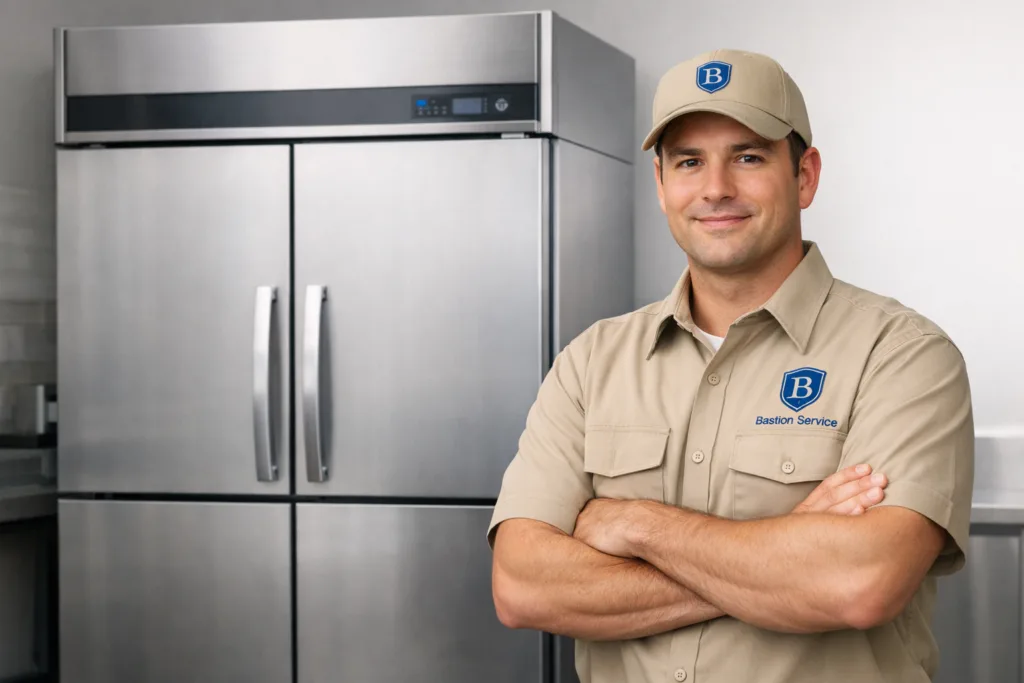





Temperature drift, frost buildup, leaking water, and nonstop run cycles can disrupt daily operations fast when a Turbo Air refrigerator starts falling behind. The most useful next step is service built around the exact symptom pattern, because warm storage, airflow loss, and icing do not all come from the same failure. In Rancho Park, businesses often need to know not only what is wrong, but whether the unit can stay in use, whether product should be moved, and how quickly repair should be scheduled to reduce downtime.
Related commercial service paths in Rancho Park include Turbo Air Commercial Repair in Rancho Park, Commercial Refrigerator Repair in Rancho Park, and Turbo Air Freezer Repair in Rancho Park.
Bastion Service works with businesses in Rancho Park to troubleshoot Turbo Air refrigerator issues based on cabinet behavior, recovery time, airflow, control response, and signs of component stress. That approach helps separate smaller repair needs from more serious cooling failures before the problem spreads into inventory loss, workflow delays, or a full shutdown of the refrigerator.
Common Turbo Air refrigerator symptoms and what they may mean
Not holding temperature
If the refrigerator is running but product temperature stays high or fluctuates through the day, the cause may be restricted condenser airflow, evaporator fan trouble, sensor or control problems, worn door gaskets, or sealed-system performance loss. In a business setting, this usually should not wait, especially if the cabinet struggles to recover after normal door openings or feels unevenly cooled from top to bottom.
Frost or ice buildup inside the unit
Heavy frost on the evaporator area, ice along interior panels, or blocked airflow often points to a defrost failure, door sealing problem, fan issue, or repeated warm air intrusion. Once ice starts interfering with circulation, the refrigerator may still appear to run normally while cabinet temperature slips out of range. That combination often leads to longer run times and more strain on major components.
Water leaks, puddles, or excess condensation
Water under the cabinet or inside the refrigerator can come from a clogged drain, defrost drainage problem, sweating caused by warm air leaks, or melting ice linked to inconsistent cooling. Beyond the refrigeration issue itself, leaks can create cleanup problems and safety concerns in work areas, so they are worth addressing before they become a larger interruption.
Noisy operation or constant running
Clicking, rattling, fan noise, buzzing, or a compressor that seems to run without reaching the set temperature can indicate dirty condenser conditions, failing motors, start component problems, loose parts, or deeper cooling-system trouble. A refrigerator that runs nearly nonstop is often compensating for an underlying efficiency or airflow issue rather than simply working harder by design.
Intermittent cooling or control problems
If the display seems inaccurate, settings change unexpectedly, alarms appear without a clear pattern, or cooling comes and goes, the issue may involve sensors, wiring, boards, or unstable control response. Intermittent faults are easy to dismiss at first, but they often become full failures with little warning once the system can no longer recover on its own.
Why Turbo Air refrigerators stop holding temperature
Temperature problems are one of the most urgent refrigerator complaints because they can point to anything from routine airflow restriction to a major cooling-system fault. A dirty condenser can reduce heat transfer and push the system into long run cycles. A failed evaporator fan can prevent cold air from moving through the cabinet. A weak door seal can let in enough warm air to create both temperature loss and frost buildup.
Sensor and control issues can also cause the refrigerator to overshoot, short cycle, or run at the wrong time. In other cases, the cabinet may cool somewhat but never truly reach target holding range. That pattern can suggest more involved refrigeration performance loss, especially when airflow and door sealing have already been ruled out.
For businesses in Rancho Park, the important question is not only why the temperature is off, but how quickly the condition is getting worse. Slow recovery after loading, warm spots in one section of the cabinet, or a unit that runs all day and still cannot stabilize are strong signs that repair should be scheduled promptly.
When service should be scheduled right away
Some refrigerator issues can be observed briefly while a service visit is arranged, but others should be treated as urgent. Immediate scheduling makes sense when:
- The refrigerator is no longer maintaining a safe storage range
- The evaporator area is icing over enough to restrict airflow
- Water leakage is recurring or spreading beyond the unit footprint
- The compressor is repeatedly clicking, attempting to start, or shutting down
- The cabinet has stopped cooling altogether
- Recovery after normal door openings has become noticeably slower
In these situations, continued operation may increase product risk and put additional stress on motors, controls, or the compressor. Repeated resetting or adjusting the temperature lower usually does not solve the underlying failure.
How frost, airflow loss, and door problems affect performance
Turbo Air refrigerators depend on proper airflow to keep cabinet temperatures stable. When frost builds up around the evaporator section or a fan stops moving air correctly, the refrigerator may still sound active while the stored product warms. That is why an iced-up unit can be especially misleading during busy operating hours.
Door gaskets, hinges, and alignment matter more than many operators expect. Even a small sealing issue can pull in warm, humid air throughout the day. That extra moisture can create frost, increase run time, and make the refrigerator appear to have a deeper cooling problem than it actually does. Identifying whether the main issue is air intrusion, circulation loss, or defrost failure is a key part of choosing the right repair.
When continued use can make the repair worse
Trying to keep a struggling refrigerator in service is understandable, but some symptom patterns carry a higher risk if ignored. Running a unit with blocked condenser airflow, heavy interior icing, failing fan movement, or a leaking door seal can push the system into longer cycles and greater wear. What starts as a repair involving airflow or controls can become a larger failure if the refrigerator is forced to compensate for too long.
Ongoing use is also risky when temperatures drift in and out of range instead of failing all at once. That kind of intermittent operation often delays service because the refrigerator seems to recover temporarily. In practice, those temporary recoveries can hide worsening electrical, sensor, or cooling-system issues.
Repair or replace?
Many Turbo Air refrigerator problems are repairable, especially when the issue involves fans, sensors, controls, door hardware, gaskets, drainage, or isolated electrical components. If the cabinet is structurally sound and the unit otherwise fits the needs of the business, repair is often the sensible path.
Replacement becomes a more serious consideration when the refrigerator has repeated cooling failures, severe cabinet wear, a history of major breakdowns, or repair costs that no longer match the remaining value of the equipment. The real decision is not only the next invoice, but how often the unit is interrupting staff, storage planning, and daily workflow.
A good service visit should help clarify whether the problem is a targeted fix, a broader reliability issue, or a sign that replacement planning makes more sense before the next outage occurs.
What to expect from a symptom-based service call
Useful refrigerator service starts with the actual complaint: warm cabinet, frost, water, noise, poor recovery, or intermittent shutdown. From there, diagnosis typically focuses on operating temperature, airflow conditions, fan operation, door sealing, control response, defrost behavior, and signs of compressor or electrical stress. That process helps narrow the fault instead of guessing at parts based only on one visible symptom.
For businesses in Rancho Park, the value of service is often in the next-step decision making as much as the repair itself. Can the refrigerator stay in limited use? Should inventory be moved? Is the problem likely confined to airflow or controls, or does it suggest a more serious cooling issue? Answering those questions early helps reduce avoidable downtime and supports better repair planning.
If your Turbo Air refrigerator is running warm, icing up, leaking, cycling constantly, or cooling inconsistently, scheduling service sooner is usually the safest move. Early attention can protect inventory, limit added component strain, and make the repair path clearer before a manageable issue turns into a full equipment outage.



