
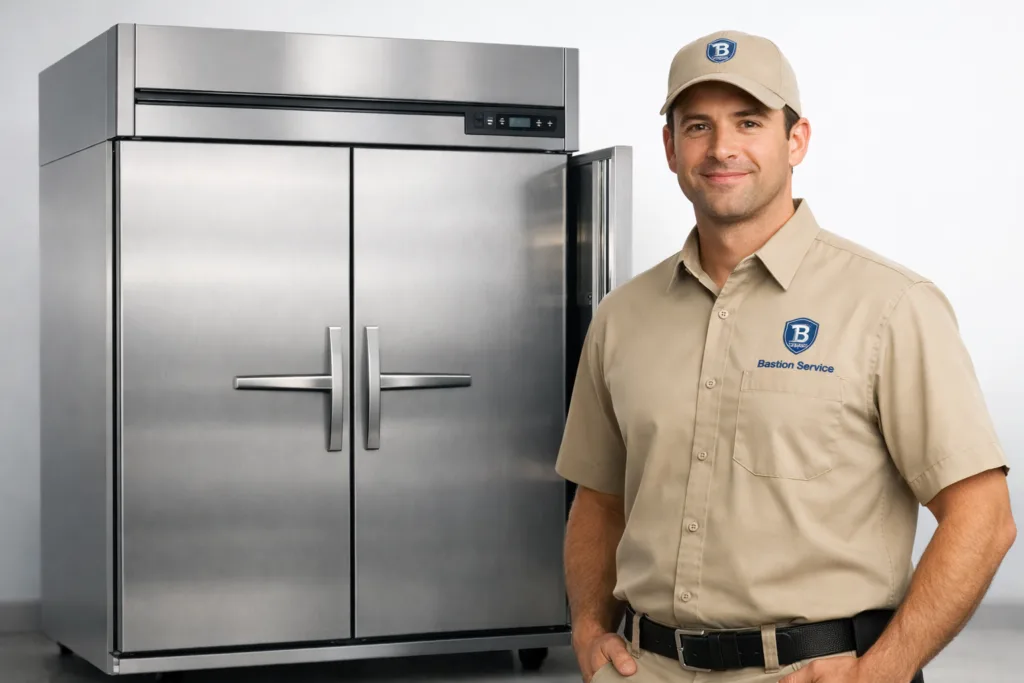




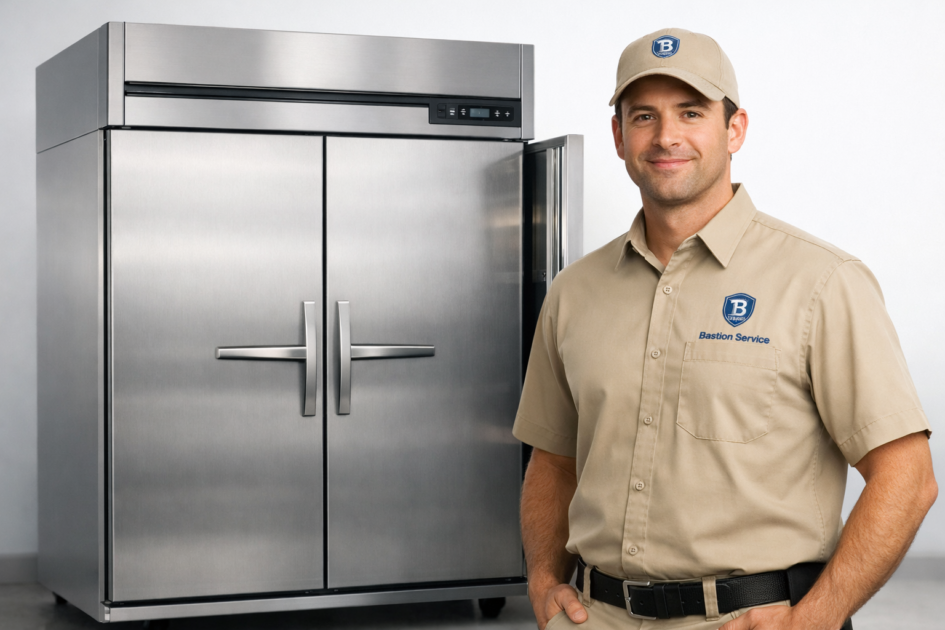
When a Turbo Air refrigerator starts running warm, building ice, or short-cycling during business hours in Mid-Wilshire, the best next step is service focused on the actual failure rather than assumptions about parts. Refrigeration problems often overlap, and the same symptom can come from airflow restrictions, controls, fan failure, defrost issues, door sealing problems, or a sealed-system concern. A repair visit should identify what is happening now, how it affects operation, and what action makes sense for the unit.
Related commercial service paths in Mid-Wilshire include Turbo Air Commercial Repair in Mid-Wilshire, Commercial Refrigerator Repair in Mid-Wilshire, and Turbo Air Freezer Repair in Mid-Wilshire.
For businesses in Mid-Wilshire, that usually means checking reported temperature problems against real cabinet conditions, fan operation, frost pattern, drain performance, door condition, and electrical response. Bastion Service helps businesses sort out whether the problem is a targeted repair, an urgent shutdown risk, or a sign that the refrigerator needs a broader decision about continued use.
Common Turbo Air refrigerator symptoms and what they often mean
Not holding temperature
If product temperature is rising even though the unit is powered on, the cause may be more than one issue at once. Dirty condenser coils, weak fan motors, poor door sealing, sensor or control faults, refrigerant-side problems, and restricted internal airflow can all reduce cooling. In a busy kitchen, prep area, market, or storage room, this symptom needs prompt attention because the refrigerator may continue running while failing to protect inventory.
Frost or ice buildup inside the cabinet
Ice on the evaporator cover, heavy frost inside, or recurring freeze-up usually points to a defrost problem, air movement issue, or moisture entering where it should not. A damaged gasket, frequent door openings, or a fan that is no longer moving air correctly can all contribute. As frost builds, airflow drops further, and that often leads to uneven temperatures or a section of the cabinet going warm first.
Water leaking onto the floor or pooling inside
Water leaks often come from a clogged or frozen drain line, defrost runoff not clearing properly, or ice accumulation melting in the wrong place. A leak may seem minor at first, but it can signal an internal problem that is already affecting cooling performance. In work areas with frequent foot traffic, leaks also create cleanup and safety concerns that should not be left unresolved.
Noisy operation or repeated clicking
Buzzing, grinding, rattling, or clicking sounds can point to fan motor wear, loose mounting hardware, compressor starting trouble, or vibration caused by components under strain. If the sound is new and appears with temperature drift, it usually means the refrigerator is working harder than normal and should be checked before the failure becomes more disruptive.
Constant running or frequent cycling
A refrigerator that rarely shuts off may be struggling to remove heat because of dirty coils, airflow loss, warm air entering through bad gaskets, or a refrigeration problem that reduces capacity. Frequent on-and-off cycling can suggest controls, sensors, electrical issues, or an unstable operating condition. Either pattern can increase wear and usually means the unit is no longer operating efficiently.
Why a warm Turbo Air refrigerator is not always the same repair
One of the biggest mistakes with refrigeration equipment is assuming every warm cabinet needs the same fix. A refrigerator that is a few degrees high during peak use may have a very different issue than one that is completely failing to cool. Some units have recoverable airflow or defrost problems. Others show signs of compressor stress, control failure, or deeper system trouble.
That is why testing matters before parts are replaced. Proper diagnosis helps confirm whether the problem is tied to electrical components, refrigeration performance, door condition, fan operation, drainage, or icing at the evaporator. It also helps prevent wasted time on parts that do not solve the original complaint.
Signs the problem is affecting daily operations
Many refrigerator failures become obvious before the unit fully stops cooling. Businesses often notice the impact in workflow first. Watch for signs such as:
- Staff moving product to another unit to protect temperatures
- Long recovery time after the door is opened
- One shelf or section staying colder than another
- Condensation, sweating, or frost around the door area
- Setpoint changes that no longer improve performance
- Manual ice clearing becoming part of routine operation
- New sounds during startup or while the unit is running
These are useful clues because they help narrow the cause and show whether the problem is isolated or progressive. They also tell you when delaying service may increase downtime risk.
When to schedule repair instead of waiting
Schedule service when the refrigerator cannot maintain normal temperatures, when frost keeps returning, when water leaks begin, or when the unit starts making unfamiliar noises. Waiting is especially risky if the refrigerator is still running but clearly struggling, because that can place extra load on the compressor and related components.
Service should also be prioritized if the cabinet trips power, clicks without starting cleanly, runs hot around the machine compartment, or shows uneven cooling between sections. These symptoms often get worse under normal business use rather than stabilizing on their own.
Problems that can worsen with continued use
Running a refrigerator with reduced cooling capacity can turn a manageable repair into a much larger interruption. Restricted airflow can lead to heavier icing. Fan problems can reduce heat removal and create temperature swings. Door gasket leaks force longer run times. Hard-start conditions can increase strain on electrical and compressor components.
If the cabinet is not holding safe temperatures, repeatedly resetting controls or lowering the setpoint usually does not solve the cause. It may only mask the symptom while the underlying fault continues to develop.
Repair versus replacement considerations
Many Turbo Air refrigerator issues are still worth repairing when the cabinet structure is sound and the fault is limited to components such as fans, controls, gaskets, sensors, drains, or parts of the defrost system. In those cases, repair can restore stable operation without the disruption of replacing the entire unit.
Replacement becomes more relevant when the refrigerator has recurring failures, major sealed-system trouble, extensive cabinet deterioration, or repair costs that no longer align with the unit’s reliability. For businesses in Mid-Wilshire, the real question is not just parts cost but how the decision affects uptime, product risk, and confidence in daily operation.
How to prepare for a service visit
Helpful details from staff can speed up diagnosis and make the visit more productive. If possible, note:
- Current cabinet temperature and whether it changes through the day
- Whether the issue affects the whole cabinet or one section
- Any alarms, flashing displays, or error behavior
- When leaks, frost, or unusual sounds first appeared
- Whether the problem is constant or more noticeable during heavy use
- Any recent cleaning, movement, loading changes, or power interruptions
Even simple observations can help separate a control issue from an airflow or refrigeration problem and support a faster repair decision.
Service-focused next steps for Mid-Wilshire businesses
If your Turbo Air refrigerator is running warm, icing over, leaking, or struggling to recover during the workday, the most useful next step is to schedule diagnosis before the problem affects more product or interrupts more of your operation. For businesses in Mid-Wilshire, good service means identifying the fault, explaining the repair path, and helping you decide whether the unit should be repaired now, monitored briefly, or taken out of use before a larger failure develops.


