
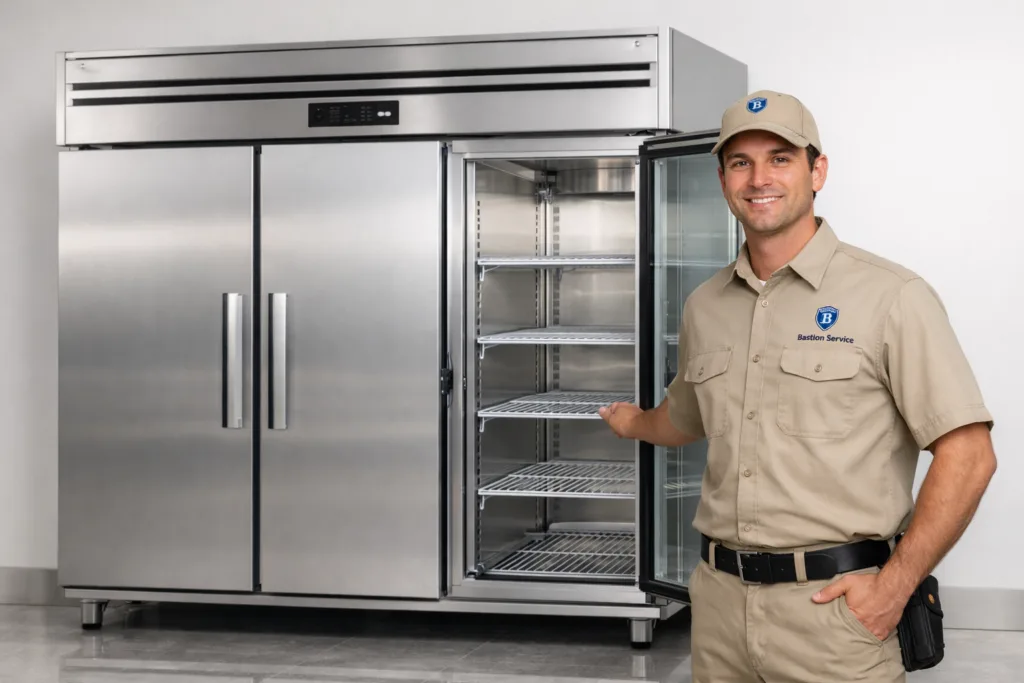




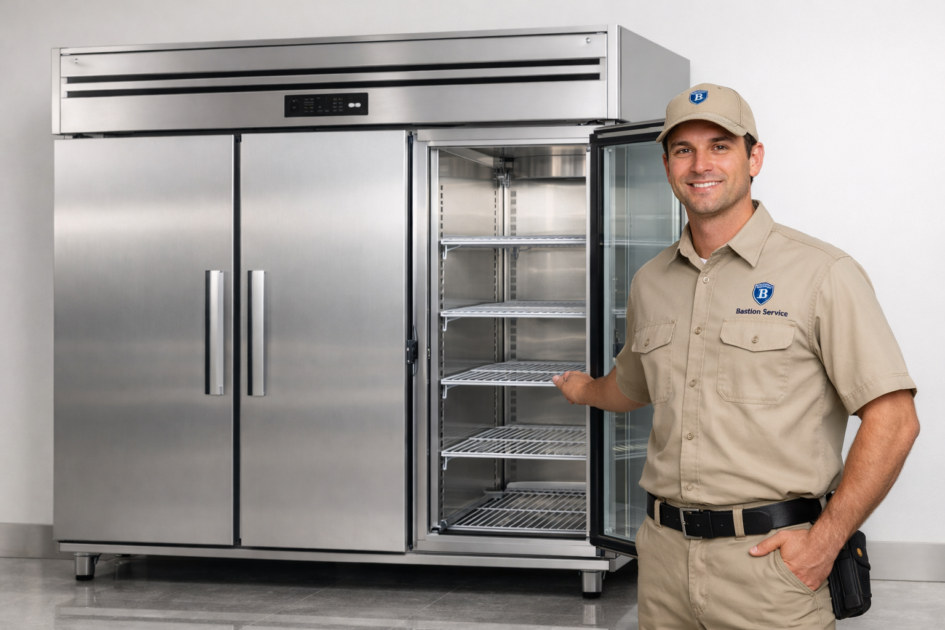
Restaurants, markets, cafés, and other food-service businesses in Cheviot Hills often need repair support when Turbo Air refrigeration equipment starts affecting storage conditions, prep flow, or product protection. Bastion Service works with local operators to inspect symptom patterns, identify the actual fault, and schedule repair based on urgency, equipment condition, and downtime impact rather than guesswork.
For specific equipment paths in Cheviot Hills, review Turbo Air Refrigerator Repair in Cheviot Hills, Turbo Air Freezer Repair in Cheviot Hills, and Commercial Appliance Repair in Cheviot Hills.
That matters because a refrigerator running warm, a freezer building frost, or a cabinet leaking water can each stem from several different causes. What looks like a simple cooling problem may involve airflow restrictions, fan failure, door sealing problems, defrost issues, sensors, controls, drainage, or deeper refrigeration-system trouble. A service visit helps determine whether the issue is repairable on a targeted basis or whether broader planning is needed.
Turbo Air refrigerator and freezer symptoms that usually need service
Business-use refrigeration equipment rarely fails without warning. More often, performance starts slipping in ways that show up during receiving, storage, line setup, or end-of-day checks. When those signs appear repeatedly, service is usually the better next step than waiting for a full shutdown.
Warm cabinet temperatures and slow recovery
If a Turbo Air refrigerator is no longer holding a stable food-safe range, or a freezer takes too long to pull temperature back down after the door is opened, the problem may be related to airflow, evaporator performance, condenser condition, controls, door gaskets, or a failing fan motor. In some cases, the unit still appears to run normally, but recovery becomes slower and product temperature starts drifting during busy hours.
This kind of symptom is important because the equipment may continue operating while quietly losing reliability. For businesses, that can mean stock movement, extra temperature checks, and mounting risk before the unit stops cooling altogether.
Frost buildup, ice formation, and blocked airflow
Frost inside a freezer or around interior panels is often linked to defrost failure, air leaks, door-closing problems, or poor circulation. In refrigerators, excess condensation or isolated ice can point to similar issues. As frost builds, vents can become restricted, shelves may cool unevenly, and the system may run longer trying to maintain set temperature.
Manual clearing may provide short-term relief, but if frost returns quickly, the underlying cause still needs attention. Repeated icing is a sign that repair should be scheduled before airflow loss creates a larger cooling failure.
Water leaks and drainage problems
Water under or inside Turbo Air refrigeration equipment can come from blocked drains, defrost drainage issues, melting ice caused by warm-air intrusion, or condensation problems tied to poor sealing. In a business environment, leaks create more than inconvenience. They can interrupt workflow, create slip hazards, and cause damage around the equipment footprint if ignored.
When leaking happens alongside frost buildup or temperature complaints, those symptoms should be evaluated together. They are often connected.
Uneven temperatures from shelf to shelf
One common complaint is that product in one area stays colder than product in another. That usually points to an airflow issue rather than a simple thermostat problem. Blocked vents, fan problems, frost accumulation, cabinet loading patterns, or sensor issues can all create uneven holding conditions.
For operators, inconsistent cooling is hard to manage because the display may look close to normal while actual cabinet performance is not. If staff are rotating product to compensate for warm zones, service is worth arranging.
How these problems affect day-to-day operations
Refrigeration equipment issues do not just affect temperature. They affect labor, inventory handling, service speed, and confidence in storage conditions. A cooler that no longer recovers properly may force frequent door checks and product shuffling. A freezer with recurring frost may reduce usable space and slow access during peak periods. A leaking unit can create cleanup demands that pull staff away from other tasks.
For businesses in Cheviot Hills, the repair decision is usually tied to operational impact as much as the symptom itself. If the equipment supports core storage, prep, or display functions, even a moderate performance problem can justify faster scheduling.
Signs the equipment should not be left in normal use
Some issues can be monitored briefly until a service window opens, but others tend to worsen with continued operation. Running the equipment while temperatures drift, ice spreads, or fans strain can increase wear on other components and raise the chance of product loss.
- Cabinet temperature is rising or fluctuating during normal use
- The unit runs constantly or cycles in an unusual pattern
- Frost returns soon after being cleared
- Doors are not sealing tightly or closing correctly
- Water leakage is recurring
- Cooling is uneven across the cabinet
- The freezer is no longer keeping product solid
When several of these symptoms appear together, the issue is less likely to resolve on its own and more likely to affect broader system performance.
What a repair visit helps determine
With Turbo Air refrigerators and freezers, the main goal is to identify whether the fault is isolated or part of a larger pattern of decline. Many problems are repairable when addressed early, especially those involving fans, sensors, controls, gaskets, drains, defrost components, or airflow restrictions. More serious concerns can include repeated cooling loss, persistent temperature instability, or signs that major refrigeration components are under stress.
A proper assessment helps business operators understand:
- What symptom is causing the operational problem
- Whether the issue is likely limited to one component group
- How urgently the equipment should be repaired
- Whether short-term continued use is realistic
- Whether replacement planning should also be considered
Repair decisions for older or repeatedly failing equipment
Not every service call leads to the same recommendation. If the equipment has a recent history of recurring failures, repeated temperature complaints, or long periods of unreliable performance, the decision may involve more than the immediate symptom. Businesses often need to weigh repair cost against future interruption, especially when refrigeration equipment is central to daily output.
On the other hand, many issues that seem severe from the outside are still manageable repairs once the fault is confirmed. That is why symptom-based evaluation is useful. It separates a gasket, fan, control, or defrost problem from a more significant refrigeration failure and gives managers a clearer basis for action.
Service support for businesses in Cheviot Hills
When Turbo Air refrigeration equipment in Cheviot Hills starts running warm, building frost, leaking, or losing airflow, the most useful next step is to arrange service before the problem spreads into a larger outage. A repair appointment gives you a direct path to identify the fault, understand the likely repair scope, and decide how to protect operations while the unit is being addressed. For businesses that rely on refrigerator and freezer performance every day, acting early is often the best way to limit downtime and avoid preventable loss.


