
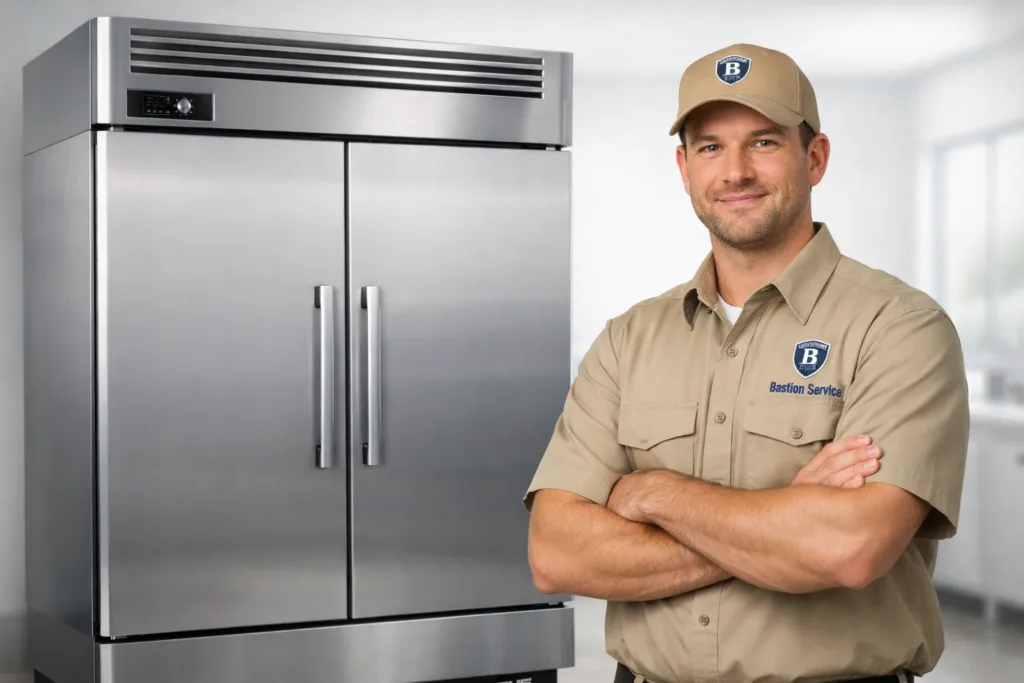




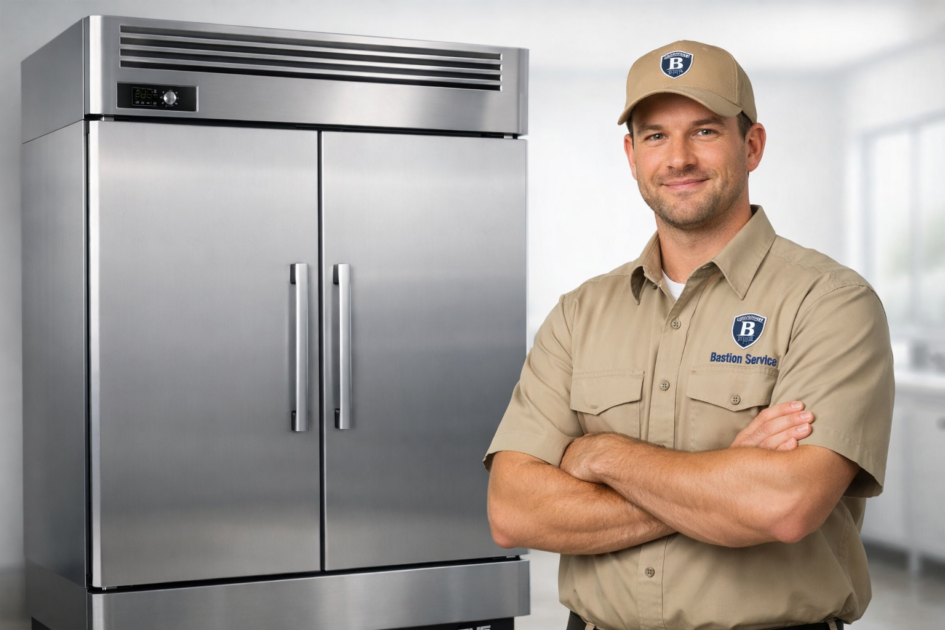
When a True freezer starts losing temperature, building ice, or making unusual noise, the service priority is figuring out which system is actually failing and how quickly the problem could affect stored product. A freezer that still appears to be cooling can still be heading toward a harder shutdown, especially when airflow, defrost, controls, or door sealing are already compromised. Bastion Service handles True freezer repair for businesses in Culver City with attention to symptom pattern, equipment condition, repair timing, and the practical next step needed to reduce downtime.
Related commercial service paths in Culver City include True Commercial Repair in Culver City, Commercial Freezer Repair in Culver City, and True Refrigerator Repair in Culver City.
Common True freezer problems that interrupt daily operations
Most freezer failures do not begin with a total stop. In many cases, staff first notice slower pull-down, uneven cabinet temperature, frost on product, water near the unit, or longer run times than usual. Those early symptoms matter because the source may be very different from what it first appears to be.
On True freezers, the same complaint of “not freezing properly” can come from restricted airflow, sensor or control issues, door gasket leakage, defrost trouble, fan motor problems, or a refrigeration fault. Correcting the right cause early can help prevent inventory loss and additional wear on major components.
Freezer not staying cold enough
If the cabinet is running warm, recovering slowly after the door opens, or allowing product to soften, the issue may involve condenser heat rejection, evaporator airflow, control inaccuracies, sensor failure, or declining refrigeration performance. Some units hold temperature overnight but struggle during active use, which can point to airflow or door-related heat gain rather than an immediate total cooling failure.
This is one of the most important symptoms to schedule quickly because a freezer that cannot reliably maintain target temperature may run almost constantly while still falling behind.
Frost or ice buildup inside the cabinet
Frost accumulation often points to warm air entering where it should not, or to a defrost process that is no longer clearing the evaporator area properly. Worn gaskets, poor door closure, sensor problems, failed defrost components, and airflow restrictions can all contribute.
As ice builds, the freezer may lose usable space, air circulation may weaken, and temperature consistency may drop. What starts as a visible frost issue can become a cooling problem if left in place too long.
Freezer runs all the time or short cycles
A True freezer that seems to run nonstop is often trying to overcome heat gain, dirty coil conditions, poor airflow, or a cooling system that is struggling to reach setpoint. Short cycling can suggest unstable controls, sensor misreading, or electrical component problems that interrupt normal operation.
Either pattern deserves service attention because both can increase wear and make the unit less predictable during busy operating periods.
Fan noise, clicking, buzzing, or intermittent alarms
Changes in sound are often useful clues. Rattling, buzzing, clicking, or scraping may come from fan motors, loose hardware, relays, ice interference, or stressed components. Intermittent alarms can be even more important because they may reflect a problem that appears only under certain load or temperature conditions.
When the freezer behaves differently at different times of day, it usually helps to note whether the issue appears after loading, after repeated door openings, or after a defrost cycle.
Water leaks or moisture where it should not be
Water around a freezer does not always mean the unit is cooling normally. It can indicate drainage problems, defrost-related issues, excess condensation from air leaks, or ice buildup melting in the wrong place. In a business environment, that creates both equipment concerns and safety concerns, so it should be addressed before it turns into a larger interruption.
Why accurate diagnosis matters on True freezer equipment
True freezers are built around specific airflow paths, control logic, and cabinet layouts, so symptom-based testing matters. A warm cabinet is not automatically a sealed-system issue. Heavy frost is not automatically “just a gasket.” A noisy unit is not always a failing compressor. Good service starts by matching the symptom to the most likely system involved, then confirming the cause with testing rather than assumption.
That matters for repair approval and scheduling. Businesses in Culver City often need to know whether the problem looks like a targeted parts repair, a larger cooling-system issue, or a condition problem that has been building over time. The answer affects urgency, downtime planning, and whether temporary product relocation is the smarter move.
Symptoms that should not be ignored
- Product softening or cabinet temperature drifting above normal
- Ice buildup on interior panels, product, or around the evaporator area
- Doors not sealing tightly or gaskets that appear torn, loose, or compressed
- Fan noise, repeated clicking, or operation that sounds different than usual
- Long run times, nonstop running, or repeated restarting
- Water near the unit or signs of moisture inside the cabinet
- Alarm conditions or inconsistent performance during normal use
These signs often show up before a complete failure. Acting while the freezer is still partially operating can sometimes limit added damage and reduce the risk of wider temperature loss.
What businesses should note before service
A few details can make the service visit more efficient and help narrow the likely cause faster. If possible, note when the problem started, whether it is constant or intermittent, and whether one section of the freezer is performing differently than another.
- Has the freezer been running longer than usual?
- Is frost light and even, or heavy in one area?
- Does the problem appear after busy periods or frequent door openings?
- Are doors self-closing properly and sealing fully?
- Is the unit noisy all the time or only during certain cycles?
- Has there been any recent cleaning, loading change, or prior repair attempt?
Those observations help distinguish a control issue from an airflow problem, a door leak from a defrost failure, or a general cooling complaint from a more specific component fault.
When continued use may make repair more difficult
Continuing to operate a freezer that is already running warm, icing over heavily, or showing signs of fan or compressor strain can turn a contained repair into a broader one. Restricted airflow can cause the system to work harder than normal. Door seal problems can force longer run times. Defrost problems can allow ice to build until circulation is blocked and temperatures become unstable throughout the cabinet.
If product temperature is no longer dependable, it is better to treat the issue as active equipment failure rather than waiting to see if the freezer recovers on its own. That is especially true when the cabinet is losing ground during normal daily use in Culver City.
Repair or replace?
Not every True freezer problem means replacement is necessary. Many issues involving gaskets, fan motors, sensors, controls, or defrost components can often be addressed without replacing the cabinet. On the other hand, repeated cooling failures, heavy wear, multiple overlapping faults, or major refrigeration-system problems may change the cost-benefit decision.
The most useful service outcome is not just “it can be fixed,” but whether the repair makes sense based on age, condition, repair history, and the role the freezer plays in your operation. For businesses that depend on stable frozen storage, that distinction matters as much as the repair itself.
Scheduling service for a True freezer in Culver City
If the freezer is not holding temperature, developing unusual frost, leaking, alarming, or sounding different than normal, scheduling service sooner usually gives you more options. Early intervention may allow a more focused repair before performance drops further or stored inventory is put at risk.
For businesses in Culver City, the practical next step is to arrange service while documenting the main symptoms, recent changes in performance, and any visible issues with doors, frost, or drainage. That helps move the repair process forward with less guesswork and a better chance of restoring stable freezer operation without unnecessary delay.


