
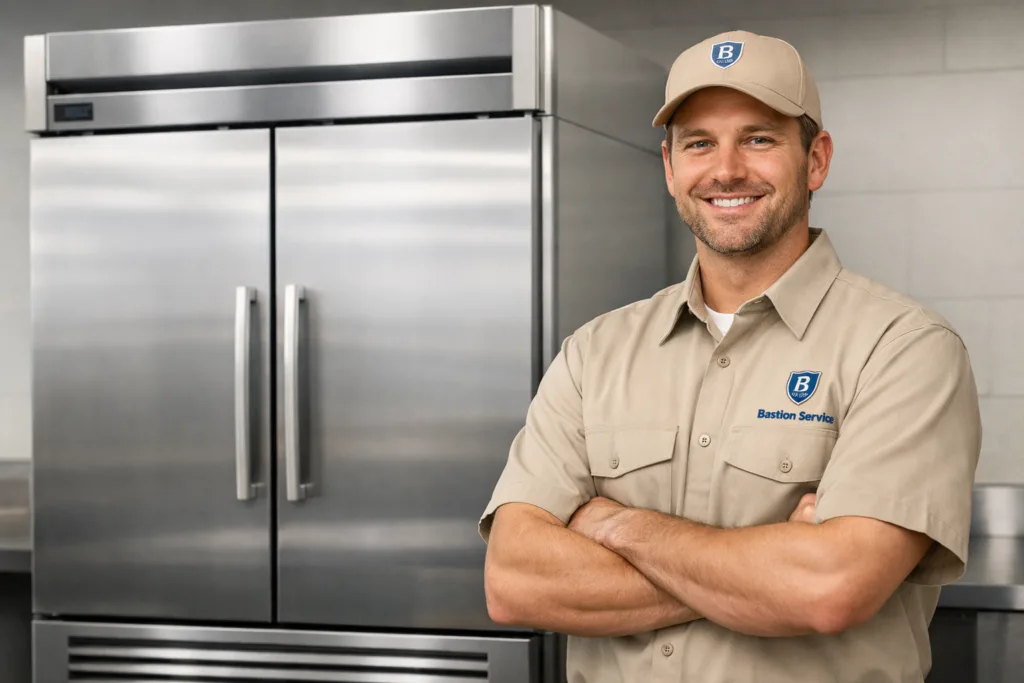




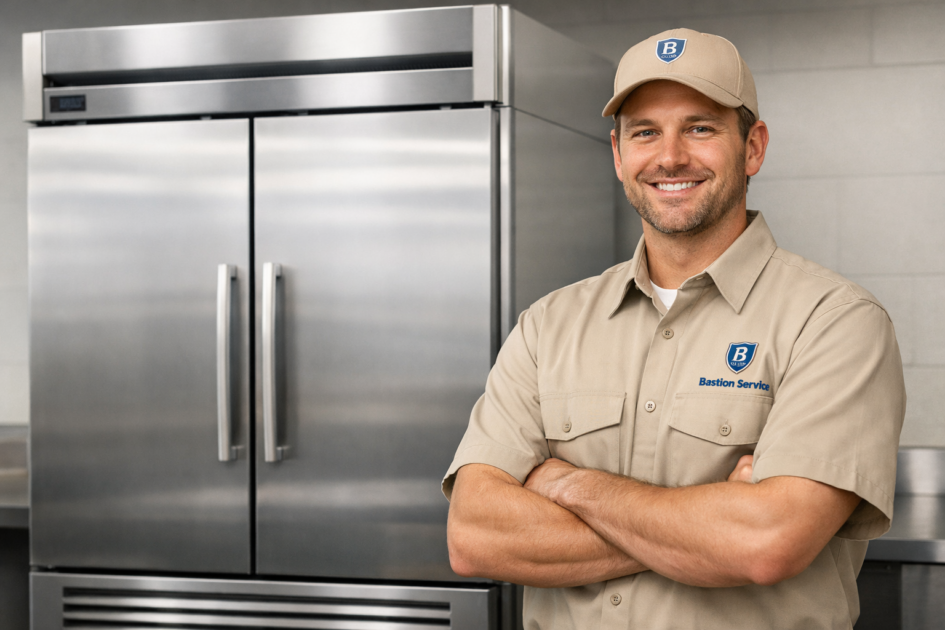
For restaurants, food-service businesses, markets, bars, prep kitchens, and other operators in Culver City, refrigeration equipment problems can interrupt service quickly. A warm cabinet, slow freezer recovery, recurring frost, or unexplained leaking usually points to a fault that needs more than surface-level troubleshooting. Bastion Service provides True equipment repair support by identifying the failed system, prioritizing the urgency of the issue, and helping businesses move from symptoms to a repair decision with minimal disruption.
For specific equipment paths in Culver City, review True Refrigerator Repair in Culver City, True Freezer Repair in Culver City, and Commercial Appliance Repair in Culver City.
Because True refrigerator and freezer equipment is often used continuously, small performance changes deserve attention early. Units may still run while temperatures drift, airflow weakens, or moisture builds up, but that does not mean the equipment is operating safely or efficiently. Service is most useful when the symptom pattern is reviewed in context, including cabinet temperature behavior, product load, recovery time, fan operation, door sealing, and any signs of defrost or control trouble.
True refrigerator and freezer problems that commonly need service
Many equipment issues begin with a symptom the staff can see before the underlying cause is obvious. Two units can show the same complaint while needing very different repairs, so the goal is to connect what the cabinet is doing with the system that is actually failing.
Warm refrigerator sections and rising product temperatures
If a refrigerator is running but not holding the expected range, the cause may involve condenser blockage, failing fan motors, sensor or control problems, poor door sealing, evaporator frost, or sealed-system trouble. In a business setting, a warmer cabinet is not just a convenience issue. It can affect food safety, prep timing, and inventory confidence. When staff begin adjusting settings repeatedly or moving product away from warm spots, the unit usually needs inspection rather than continued trial-and-error.
Freezers that cannot recover or stay consistently frozen
Freezer problems often appear as soft product, long recovery after door openings, partial thawing, or temperature swings during busy periods. These symptoms can be tied to airflow restrictions, defrost faults, ice accumulation, weak fan performance, control issues, or compressor-related strain. A freezer that only works acceptably during light use may already be operating with reduced capacity, which is why early repair planning matters before it becomes a complete no-cool failure.
Frost buildup, ice formation, and defrost concerns
Frost on product, interior walls, shelves, or around the evaporator area usually means moisture is entering the cabinet or the unit is not completing defrost correctly. Worn gaskets, door alignment problems, frequent door opening, sensor issues, and defrost component failures can all contribute. In freezer equipment, heavy frost also restricts airflow and can eventually interfere with fan movement, making cooling performance worse over time.
Airflow problems and uneven cabinet performance
When the top of a cabinet seems colder than the bottom, one section performs differently from another, or product near the door warms faster than expected, airflow should be evaluated. Fans, blocked returns, overpacking, frost buildup, and damaged gaskets can all create uneven cooling. This is a common reason businesses think a unit has a major cooling failure when the issue may be more specific and repairable.
Leaks, water inside the cabinet, or moisture on the floor
Water under a refrigerator or freezer can come from a blocked drain line, defrost drainage issue, excess condensation, door sealing problems, or melting ice caused by an underlying cooling fault. Even when the unit still appears cold, recurring moisture should not be ignored. Floor hazards, sanitation concerns, and hidden performance problems often travel together, so leak complaints are best treated as refrigeration service calls rather than housekeeping issues alone.
Constant running, short cycling, or unusual noise
A unit that runs nonstop, clicks repeatedly, shuts off unexpectedly, or suddenly sounds louder than normal may be signaling stress in the compressor circuit, fan system, electrical components, or controls. These symptoms are important because they often show up before total cooling loss. A noisy fan or repeated restart problem may seem minor during service hours, but it can turn into an overnight temperature failure if left unresolved.
What these symptoms often mean for repair decisions
Business operators usually do not need a theory lesson; they need to know whether the equipment can stay in use, whether stored product is at risk, and how quickly repair should be scheduled. That is why symptom-based diagnosis matters. A warm cabinet may be caused by something relatively contained, such as airflow restriction or a fan issue, or it may point to a larger system problem. The same is true for frost, leaks, or inconsistent temperatures.
Good repair planning answers practical questions:
- Is the issue isolated to one component or affecting the overall cooling system?
- Can the refrigerator or freezer remain in limited use while service is arranged?
- Is inventory transfer recommended to reduce spoilage risk?
- Has one failure created stress on related parts?
- Does the unit appear repairable, or is replacement planning becoming more realistic?
When a service call should not wait
Some issues can be scheduled promptly without taking the unit offline immediately, but others should be treated as urgent. A refrigerator that cannot hold temperature, a freezer with product softening, repeated icing that blocks airflow, or a cabinet that shuts down intermittently can escalate quickly. Continued operation under these conditions may increase strain on major components and make recovery less likely.
It is usually time to arrange service as soon as possible when:
- Stored product temperatures are no longer stable
- Frost returns soon after being cleared
- The cabinet runs continuously but does not cool normally
- Leaks or interior moisture keep coming back
- Fans stop, drag, or become noticeably louder
- Staff are changing settings often just to keep the unit usable
How refrigerator and freezer issues affect daily operations
True equipment problems rarely stay limited to the cabinet itself. In kitchens and service environments, refrigeration problems create ripple effects across prep flow, line organization, receiving, storage rotation, and closing procedures. Staff may spend time shifting product, monitoring hot spots, wiping up leaks, or keeping doors closed longer than normal just to maintain acceptable conditions. These workarounds reduce efficiency and can hide the fact that the unit is no longer operating the way it should.
For businesses with multiple refrigeration units, one underperforming refrigerator or freezer can also put pressure on the rest of the equipment. Product gets redistributed, doors open more often on backup units, and available cold storage becomes tighter during peak hours. That is why timely repair is not just about fixing one machine; it is about protecting the overall flow of daily operations.
Repair versus replacement for aging True equipment
Not every older unit should be replaced, and not every repair makes sense simply because the equipment still powers on. The better decision depends on the type of failure, the condition of the cabinet, prior breakdown history, parts involved, and how critical that specific unit is to the business. A fan motor repair, control issue, gasket problem, or drain-related correction is very different from a larger cooling-system failure in an already unreliable cabinet.
For many operators, the most useful question is whether the equipment can return to stable service without becoming a repeated interruption. If the answer is likely yes, repair may be the practical path. If the same refrigerator or freezer has a pattern of recurring failures, poor temperature consistency, or increasing downtime, replacement planning may be the smarter long-term move.
True repair support for businesses in Culver City
Businesses in Culver City often need refrigeration service that accounts for operating hours, product protection, access limitations, and the real cost of equipment downtime. Whether the issue is a refrigerator running warm, a freezer struggling to recover, persistent frost buildup, airflow imbalance, or water around the unit, the next step is to schedule service so the problem can be confirmed and the repair path can be based on the actual condition of the equipment.
If your True refrigeration equipment is affecting storage reliability or daily workflow, arranging diagnosis early can help limit product loss, reduce avoidable strain on the unit, and set a realistic timeline for repair.


