
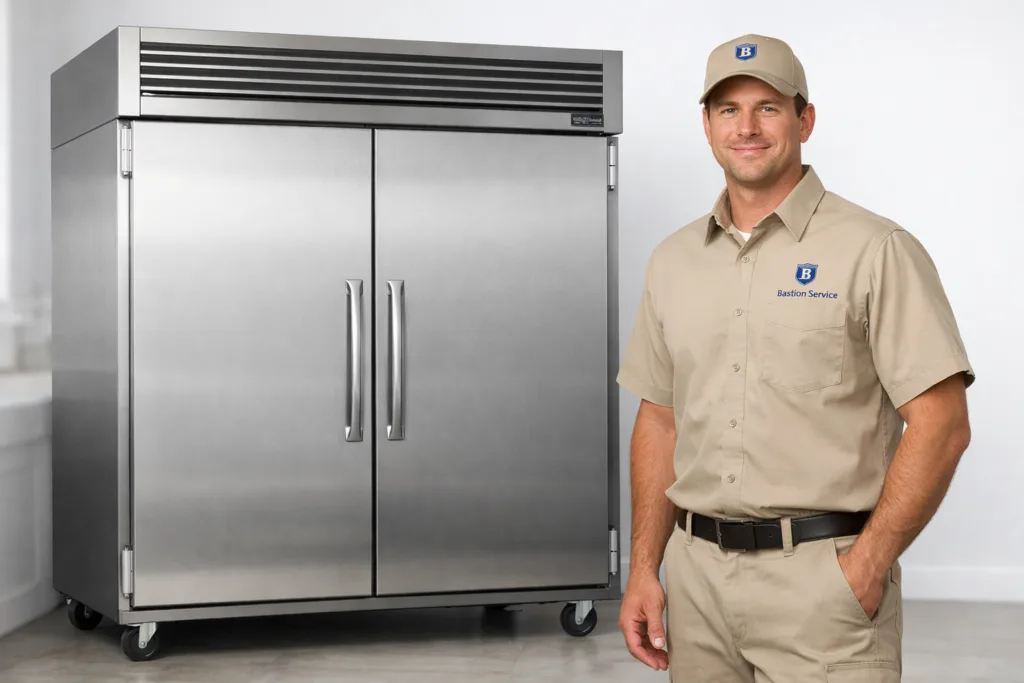




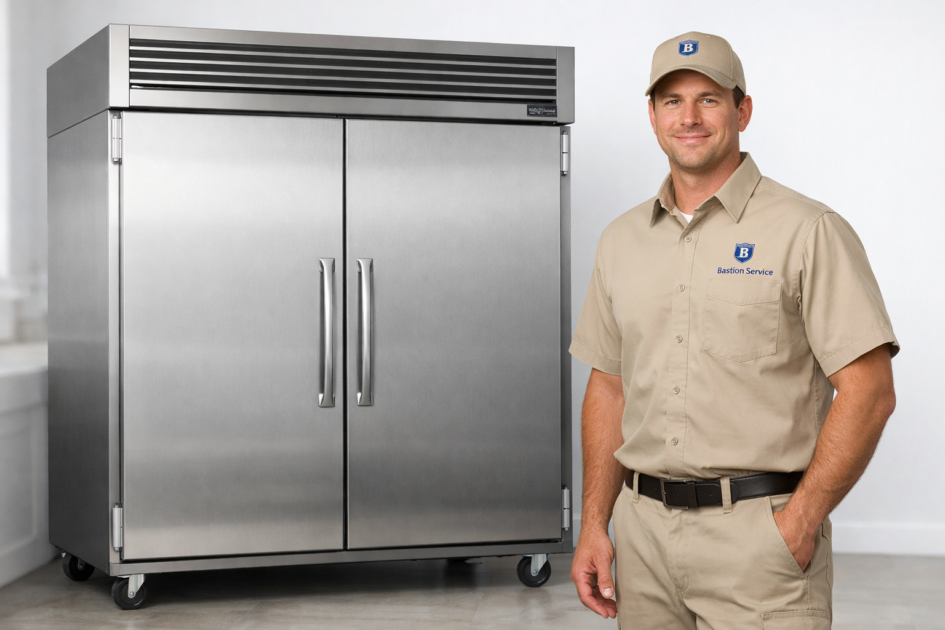
True refrigeration equipment problems can disrupt storage, prep timing, product protection, and daily workflow, so the best next step is a service visit focused on the actual symptom pattern. For businesses in West Los Angeles, repair decisions often depend on whether the issue is causing temperature loss, stressing major components, or creating a risk of a full equipment stoppage during normal operations. Bastion Service provides True refrigeration equipment repair with diagnosis, repair planning, and scheduling based on the condition of the unit and the urgency of the problem.
For specific equipment paths in West Los Angeles, review True Refrigerator Repair in West Los Angeles, True Freezer Repair in West Los Angeles, and Commercial Appliance Repair in West Los Angeles.
True refrigerator and freezer symptoms that should be evaluated
True refrigerator and freezer equipment is built for steady operation, but small changes in performance often point to larger system issues. A cabinet that still runs is not always a cabinet that is operating correctly. When cooling becomes inconsistent, frost starts spreading, or recovery slows down, it is important to identify whether the problem involves airflow, controls, door sealing, fan operation, defrost components, or a developing sealed-system fault.
Warm cabinet temperatures and weak cooling
If a refrigerator is no longer holding food-safe temperatures or a freezer is softening product, the issue may involve condenser buildup, fan failure, sensor problems, thermostat faults, refrigerant loss, or compressor-related performance decline. Warm-cabinet complaints usually need prompt attention because continued operation under poor cooling conditions can increase product risk and put additional strain on the rest of the system.
Slow recovery after door openings
Some units appear normal during light use but struggle to recover once the doors are opened repeatedly. In busy kitchens and food-service environments, that symptom can indicate weak airflow, evaporator icing, failing fans, control issues, or declining refrigeration performance. Slow recovery matters because the equipment may fall behind during peak periods even if it seems acceptable during quieter hours.
Uneven temperatures inside the cabinet
Hot spots, partially frozen sections, or inconsistent conditions from top to bottom often point to airflow restrictions or circulation problems. This can be caused by fan issues, frost buildup around evaporator areas, blocked internal air movement, or a control problem that is affecting how the unit cycles. Uneven cabinet conditions are especially important to address when staff members are rotating product frequently and relying on predictable storage performance.
Frost buildup and ice formation
Frost inside a refrigerator or freezer is more than a cosmetic issue. It can reduce airflow, interfere with normal temperature control, and lead to longer run times. Common causes include damaged gaskets, poor door closure, defrost failures, moisture intrusion, or air movement problems. If ice is building quickly or returning soon after manual clearing, the equipment should be inspected before the restriction becomes worse.
Water leaks, condensation, and moisture around the unit
Water on the floor, interior dripping, or persistent condensation can come from blocked drains, defrost-related problems, door-seal issues, or cabinet-condition changes caused by cooling faults. Some moisture complaints seem minor at first but end up affecting sanitation, slip risk, and temperature stability. When leaks appear alongside cooling complaints, both symptoms should be treated as related until inspection confirms otherwise.
What these symptoms often mean for repair planning
Business-use refrigeration equipment should be evaluated based on operating impact, not just whether it still powers on. A True unit that runs constantly, short cycles, develops frost repeatedly, or misses target temperatures may still be functioning in a limited sense, but it is no longer operating in a stable way. That matters when deciding whether the equipment can remain in service, needs immediate repair, or should be taken out of regular use until the problem is resolved.
Repair planning typically includes confirming the failed system, checking whether related parts have been affected, and determining if one repair is likely to restore normal performance or if broader wear is contributing to the complaint. This helps businesses in West Los Angeles make informed decisions about downtime, product transfer, and scheduling around the repair window.
When continued operation can make the problem worse
Some refrigeration problems worsen quickly when equipment stays in use. A refrigerator that is running warm may force longer compressor cycles. A freezer with heavy frost may lose airflow until the cabinet can no longer recover. A unit with unstable controls may alternate between overcooling and undercooling, creating inconsistent storage conditions and additional wear on fans, controls, and refrigeration components.
It is usually wise to schedule service sooner when you notice any of the following:
- The cabinet is missing temperature targets during normal use
- Frost or ice returns shortly after clearing
- The unit runs almost constantly or sounds different than usual
- Cooling performance drops during busy hours
- There is standing water, recurring condensation, or unexplained moisture
- Stored product is being moved because the equipment is no longer trustworthy
These signs suggest more than a minor nuisance. They often indicate a system that needs inspection before a partial performance problem turns into a complete outage.
Balanced support for refrigerator and freezer equipment
Refrigerator and freezer complaints are related, but they do not always fail in the same way. Refrigerator issues are often first noticed through warm product zones, inconsistent holding temperatures, or excess condensation. Freezer issues more commonly show up as frost accumulation, soft product, slow pull-down, or poor temperature recovery after the door is opened. Looking at these symptom groups separately helps determine where the fault is starting and how urgent the repair has become.
For businesses in West Los Angeles, that distinction matters because the service response may depend on whether the cabinet is still usable in a limited way or whether continued use creates too much risk for stored inventory and daily operations.
When repair versus replacement enters the discussion
Not every difficult refrigeration problem means the unit should be replaced. In many cases, a focused repair restores stable performance and extends useful service life. Replacement becomes a more realistic consideration when the equipment has repeat failures, the repair scope is unusually broad, or the condition of the cabinet suggests additional downtime is likely even after the immediate issue is corrected.
The most useful comparison usually includes the current symptom pattern, overall equipment condition, prior repair history, and the likelihood that one repair will solve the problem versus temporarily delay another interruption. That conversation is most productive after inspection, when the decision is based on confirmed faults rather than assumptions.
What to do next if your True equipment is acting up
If a True refrigerator or freezer in West Los Angeles is running warm, building frost, leaking, or showing inconsistent cooling, the next step is to schedule service and review repair options based on what the equipment is actually doing on site. Early diagnosis helps reduce avoidable downtime, supports better operating decisions, and clarifies whether the unit should stay in service, be monitored closely, or be removed from use until repairs are completed.


