
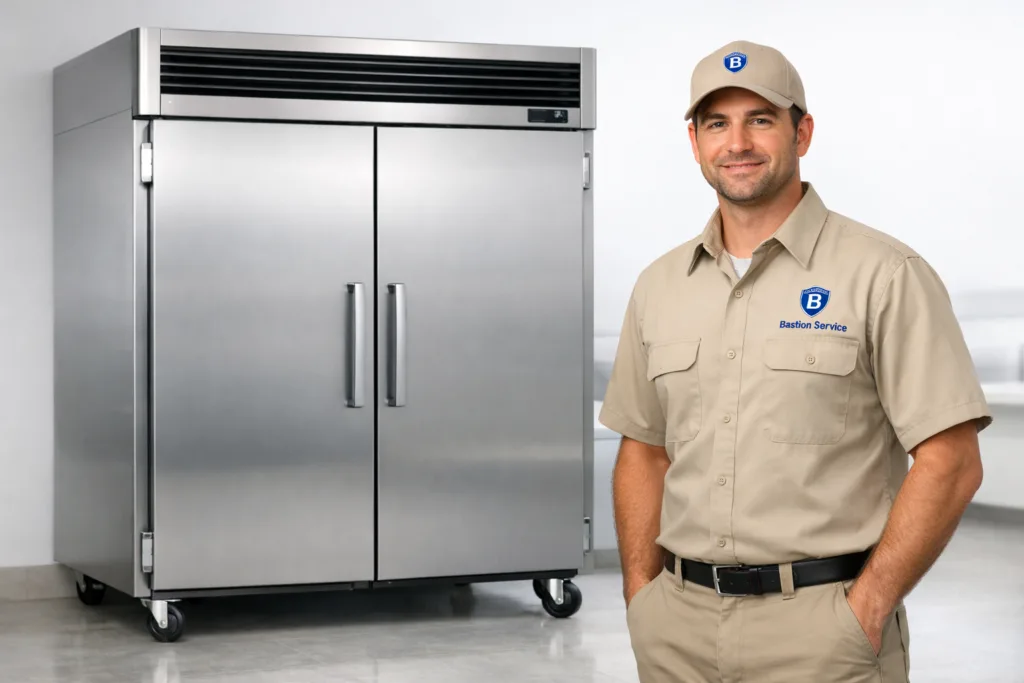




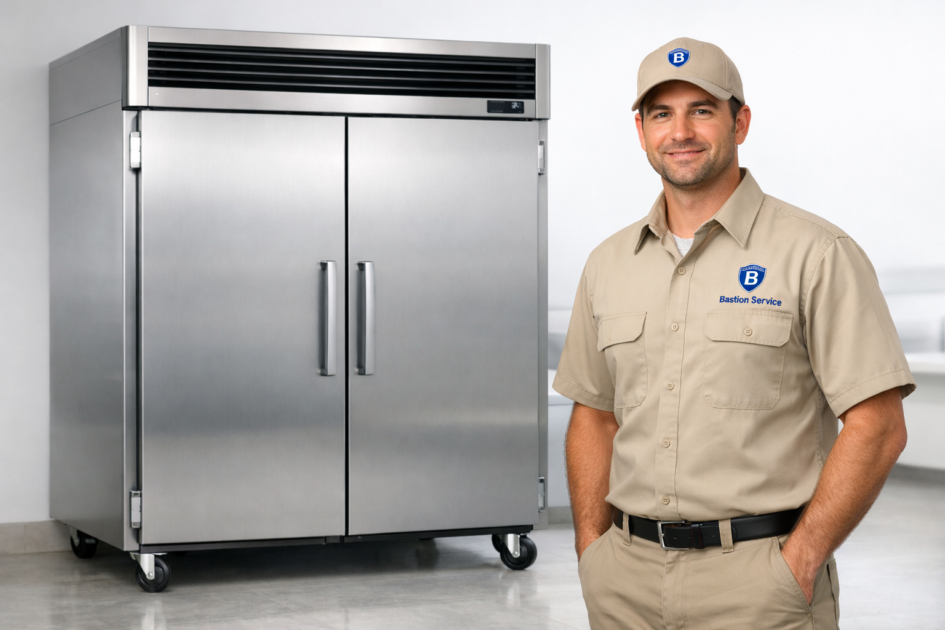
When a True refrigerator or freezer begins running warm, building frost, leaking, or cycling erratically, the next step should be service centered on the actual operating symptom and the effect on daily business activity. For businesses in Rancho Palos Verdes, repair decisions often affect stored product, prep flow, staffing, and whether equipment can remain in use while parts and scheduling are arranged. Bastion Service provides True refrigeration equipment repair for businesses that need fault isolation, repair planning, and a realistic path to restoring reliable operation.
For specific equipment paths in Rancho Palos Verdes, review True Refrigerator Repair in Rancho Palos Verdes, True Freezer Repair in Rancho Palos Verdes, and Commercial Appliance Repair in Rancho Palos Verdes.
What True refrigeration equipment problems usually need repair service?
True refrigeration equipment can develop issues tied to airflow, controls, fan operation, door sealing, defrost performance, drainage, electrical faults, or refrigeration system stress. In practice, many symptoms overlap. A freezer with heavy frost may also have poor airflow. A refrigerator that seems warm may actually have a failed fan or sensor. That is why symptom-based diagnosis matters before deciding whether the unit can continue operating safely or should be taken offline.
Warm cabinet temperatures and weak cooling
If a refrigerator is struggling to hold temperature or a freezer is no longer recovering properly after door openings, service should be scheduled promptly. Weak cooling can be related to dirty coils, fan motor failure, control faults, sensor problems, ice blocking airflow, failing start components, or deeper refrigeration circuit issues. Temperature instability tends to worsen under load, especially when the unit runs longer than normal without reaching the target range.
For business operators, the main concern is not just that the cabinet feels warm. The more important question is whether the equipment is protecting product consistently throughout the day. A service visit helps determine whether the fault is limited and repairable or whether the problem is placing the unit under damaging strain.
Frost buildup and restricted airflow
Frost on interior panels, around the evaporator area, or across stored product usually points to a problem that should not be ignored. Common causes include defrost failure, door gasket wear, frequent moisture intrusion, fan issues, or blocked air circulation. In freezers, frost buildup reduces efficiency quickly and can interfere with both storage capacity and temperature consistency.
When airflow becomes restricted, the equipment may still seem to be running normally from the outside while cooling performance drops inside the cabinet. That mismatch often leads to delayed service calls and more severe downtime later. Inspection helps confirm whether the issue is primarily a door-sealing problem, an electrical defrost issue, or a broader cooling failure.
Water leaks, ice melt, and drainage problems
Water under or inside a True unit often starts with a drain blockage, condensation issue, or defrost-related drainage problem, but it can also be connected to unstable cabinet temperature or excess ice melt. Leaks matter for more than equipment performance. They also create slip hazards and can affect surrounding work areas.
If the same leak returns after cleanup, it usually means the underlying problem has not been resolved. Repeated water accumulation can indicate that the unit is not managing moisture correctly or that a cooling issue is causing recurring melt and refreeze patterns.
Constant running, short cycling, and unusual noises
A True refrigerator or freezer that runs almost nonstop, shuts off too quickly, clicks repeatedly, buzzes, rattles, or produces changing fan noise should be checked before the symptom turns into a full cooling outage. These patterns can point to fan motor wear, loose components, relay issues, overheating, control problems, or compressor stress.
Constant running generally means the equipment is struggling to satisfy demand. Short cycling can indicate a control-related interruption or an overheating condition. Both patterns deserve attention because they often show that the unit is operating inefficiently and under added load.
How symptom patterns help guide repair decisions
Effective repair planning starts with matching the complaint to the most likely system involved. A refrigerator that warms during busy periods but recovers overnight may be dealing with airflow or condenser performance problems. A freezer that never fully pulls down to temperature may have frost restriction, fan failure, sensor trouble, or a refrigeration issue. A cabinet that leaks and runs long may be showing a combination of drain trouble and temperature instability rather than one isolated fault.
For Rancho Palos Verdes businesses, this kind of troubleshooting matters because it shapes the repair timeline and the operating decision. Some units can remain in limited use while service is scheduled. Others should be emptied or removed from active duty to avoid product loss and additional equipment damage.
When continued operation can make the problem worse
Not every symptom requires immediate shutdown, but some warning signs should be taken seriously. Continued use becomes riskier when cabinet temperature is drifting out of range, frost is blocking airflow, the compressor is running continuously, breakers are tripping, fans stop moving air, or the equipment shuts down without warning. Under those conditions, forcing the unit to keep operating can accelerate wear and turn a smaller repair into a larger one.
Businesses should also be cautious when doors are no longer sealing properly or when alarms, reset conditions, or recurring performance drops keep returning. Repeated symptom cycles usually mean the underlying fault is active and progressing.
Repair issues commonly seen in refrigerator and freezer operation
- Temperature fluctuation during normal use
- Cabinets that feel warm even though the unit is running
- Freezers that soften product or recover too slowly
- Heavy frost or sheet ice affecting storage space
- Evaporator or condenser fan problems
- Blocked or overflowing drains
- Door gasket wear causing air leakage
- Unusual cycling, clicking, buzzing, or vibration
- Controls or sensors not responding correctly
- Ongoing cooling failure after resets or temporary adjustments
Repair versus replacement considerations
Many True refrigeration equipment problems are repairable, especially when the fault is tied to controls, fan motors, gaskets, sensors, drains, defrost components, or other serviceable parts. Replacement becomes a more serious consideration when there are repeated major failures, extensive cabinet deterioration, costly refrigeration system problems, or downtime exposure that no longer makes sense for the business.
The right decision depends on more than equipment age alone. Condition, fault severity, parts availability, and the unit’s role in daily operations all matter. A focused service evaluation helps determine whether repair is likely to restore stable performance or whether the equipment is approaching a point where replacement planning is more practical.
Scheduling True refrigeration equipment repair in Rancho Palos Verdes
If your True refrigerator or freezer is showing warm temperatures, frost buildup, leaks, airflow problems, or unreliable cycling, scheduling service early usually gives you more control over downtime and product risk. A repair visit can identify the source of the issue, clarify whether the equipment can remain in operation, and define the most practical next step for restoring dependable performance in Rancho Palos Verdes.


