




When a True refrigerator or freezer starts losing stability, the priority is figuring out whether the equipment can keep supporting daily operations or whether repair needs to be scheduled before product loss and workflow disruption get worse. For restaurants, kitchens, markets, and other food-service businesses in Hawthorne, symptom-based service is often the fastest way to decide what is urgent, what can be monitored briefly, and what should be taken out of use.
For specific equipment paths in Hawthorne, review True Refrigerator Repair in Hawthorne, True Freezer Repair in Hawthorne, and Commercial Appliance Repair in Hawthorne.
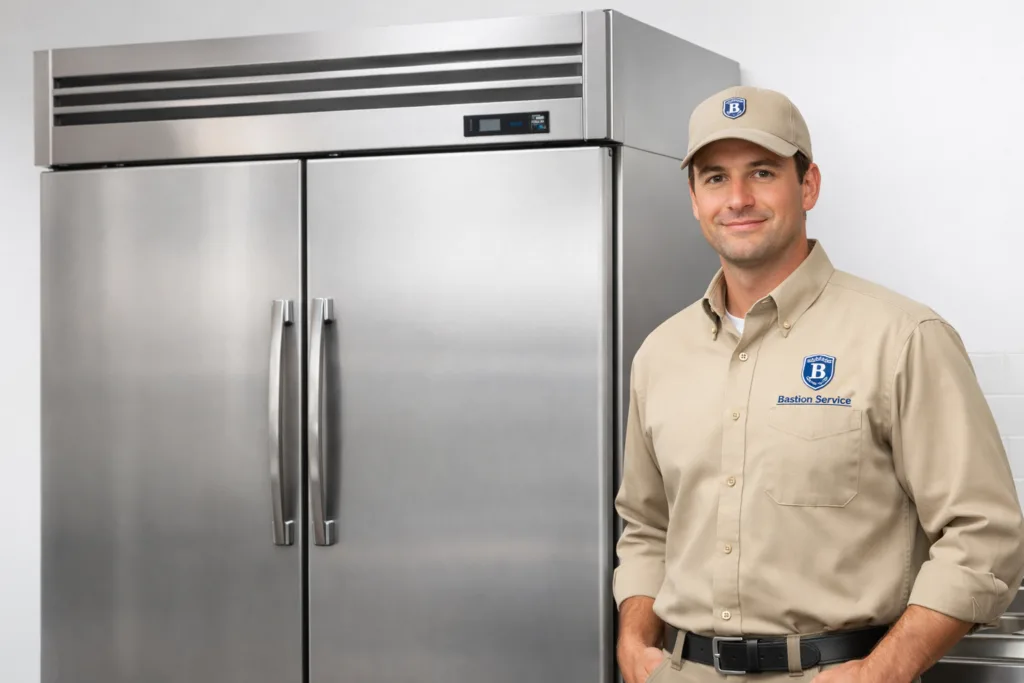
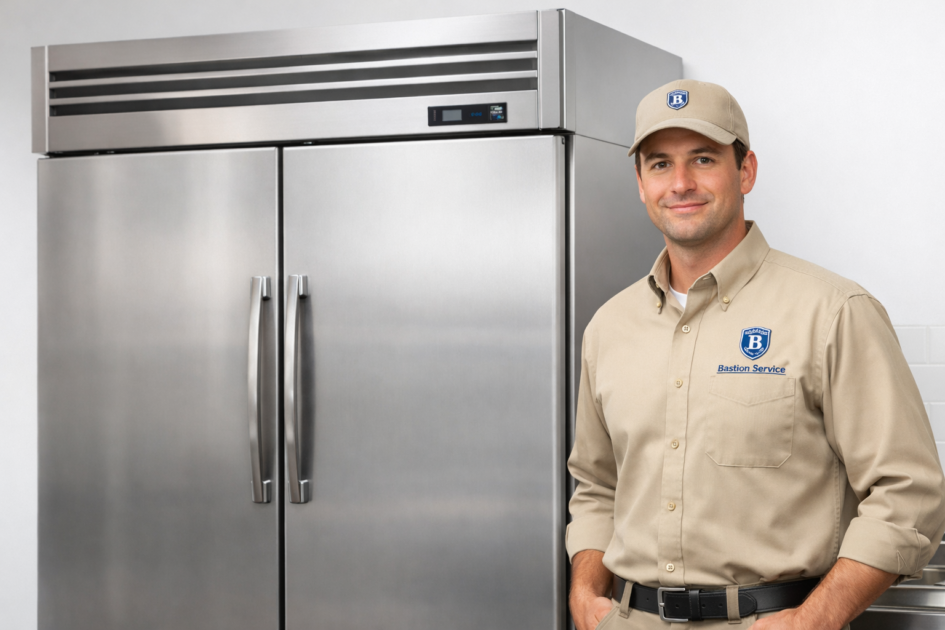
Bastion Service provides True refrigeration equipment repair for businesses that need a focused assessment of performance problems, likely failure points, and the next step for getting the unit back into reliable use. That matters when a cabinet is still running but no longer protecting inventory the way it should.
What True refrigeration equipment problems do you troubleshoot?
Service calls for True refrigeration equipment usually begin with a symptom pattern rather than a single confirmed failure. A refrigerator may run warm in the morning and seem to recover later. A freezer may hold temperature overnight but struggle after normal door traffic. In many cases, the issue involves more than one condition at the same time.
- Warm cabinets or temperature drift
- Freezers not pulling down or recovering slowly
- Uneven cooling and weak airflow
- Frost buildup on walls, coils, or product zones
- Water leaks, condensation, or drain-related moisture
- Constant running, short cycling, or intermittent shutdowns
- Noisy fan operation or changes in compressor sound
- Door seal and closing issues that affect cooling performance
The purpose of a repair visit is to identify whether the problem is tied to airflow, controls, fan operation, defrost performance, sealing, electrical components, or a larger cooling-system issue. That helps business operators make informed decisions about timing, downtime, and continued use.
Temperature problems in True refrigerators and freezers
Warm storage, unstable readings, and poor recovery
A cabinet that is running but not holding set temperature is often more disruptive than a full shutdown because staff may keep working around it while inventory quality is already at risk. In refrigerators, this can show up as inconsistent product temperatures, warmer top shelves, or repeated thermostat adjustments. In freezers, it may appear as soft product, long recovery after door openings, or a box that never fully returns to target temperature.
These symptoms can point to fan issues, dirty coils, sensor or control problems, door leakage, defrost trouble, or sealed-system performance loss. When temperature drift becomes part of the daily routine, repair should move up in priority because extended strain can affect compressors, increase frost, and make recovery harder.
Airflow issues that affect cabinet performance
Cold in one section, warm in another
True refrigeration equipment depends on consistent air movement to keep storage conditions balanced. When airflow drops, businesses may notice hot spots, slow pull-down, or product near the air path freezing while other areas stay too warm. That often leads staff to rearrange inventory or reduce loading without addressing the actual cause.
Restricted circulation may be related to evaporator fan problems, blocked passages, frost interference, control faults, or loading patterns that reveal an existing mechanical issue. Airflow problems deserve service attention early because they often show up before total cooling failure and can quietly affect product quality across the cabinet.
Frost buildup and defrost-related symptoms
When ice buildup starts interfering with normal use
Frost is not always just the result of frequent door openings. In True refrigerators and freezers, recurring frost can indicate door gasket failure, alignment issues, defrost component problems, sensor trouble, or airflow conditions that allow moisture to collect and freeze. Once buildup spreads, cooling becomes less even and the unit may need longer run times to maintain temperature.
Signs that service is needed include ice forming around fan areas, frost returning quickly after removal, doors not sealing cleanly, or a freezer that seems to work harder as buildup increases. If frost is affecting storage space, shelf access, or temperature consistency, repair is usually more effective than trying to manage around the condition.
Leaks, condensation, and moisture around the unit
Why water on the floor should not be ignored
Moisture around refrigeration equipment creates both safety and equipment concerns. Water may come from a blocked drain, excessive condensation, defrost issues, or air intrusion through worn seals. In other cases, businesses notice a combination of water, frost, and poor cooling, which can indicate a broader performance problem rather than a simple cleanup issue.
When a unit is leaving water near the cabinet, collecting excess condensation, or showing leak-like symptoms along with warming, it is worth scheduling service promptly. That helps reduce slip exposure, prevents avoidable ice buildup, and clarifies whether the equipment can remain in operation while repairs are planned.
Noise, long run times, and shutdown behavior
Symptoms that often show up before a larger failure
A True unit that suddenly sounds different should not be written off as normal wear. Rattling, fan noise, harsher compressor sound, constant operation, or repeated stopping and restarting can all signal developing problems. Businesses may first notice that the cabinet seems louder during busy periods or that it runs almost continuously without fully stabilizing.
These patterns may be tied to fan motor wear, control issues, airflow restrictions, electrical faults, or cooling-system stress. Even when temperatures still seem close to normal, a change in run behavior can be a warning that reliability is dropping and that unscheduled downtime is becoming more likely.
Door seals, alignment, and everyday usage symptoms
Some of the most important service indicators are easy to overlook because they build up gradually. Doors that do not close cleanly, torn gaskets, condensation near openings, and cabinets that need to be checked repeatedly by staff can all contribute to unstable cooling. In busy kitchens and storage areas, even small sealing issues can force the equipment to run longer and recover more slowly.
When a refrigerator or freezer starts showing these signs along with frost, warm zones, or excessive run time, the problem is no longer just cosmetic. A service inspection can determine whether the issue is limited to sealing and adjustment or whether it has already affected other components.
When continued use may increase downtime risk
Some equipment can remain in limited service until a scheduled appointment. Other symptom patterns suggest that continued use may worsen the repair outlook. This is especially true when temperatures are no longer stable, airflow is weak, frost is spreading quickly, or the cabinet is cycling erratically.
Businesses should take the situation more seriously when staff are moving product to backup storage, adjusting controls repeatedly, monitoring the unit by hand, or working around recurring moisture and performance issues. At that point, the decision is not just about fixing a part. It is about protecting product, reducing disruption, and avoiding a harder failure at the wrong time.
Repair planning for True equipment in Hawthorne
Repair decisions depend on the condition of the cabinet, the nature of the fault, part availability, operating demands, and the cost of downtime. A fan motor, control, gasket, sensor, or defrost-related repair may be straightforward when the rest of the equipment is in solid shape. If a unit has repeated cooling problems, multiple overlapping symptoms, or signs of larger system wear, the service recommendation may involve a broader discussion about reliability and next-step planning.
For businesses in Hawthorne, the value of a service call is not only getting a repair performed. It is understanding what the symptom pattern means, whether the unit is safe to keep using in the short term, and how quickly action should be taken to avoid a larger interruption.
Scheduling service for a True refrigerator or freezer
If your True refrigeration equipment is showing warm cabinet conditions, weak airflow, frost buildup, moisture, or unstable operation, scheduling service early can help limit product loss and keep a smaller issue from turning into a full outage. A symptom-focused repair visit gives your business a practical path forward, whether that means immediate repair, short-term operating adjustments, or taking the equipment out of use until the fault is corrected.


