
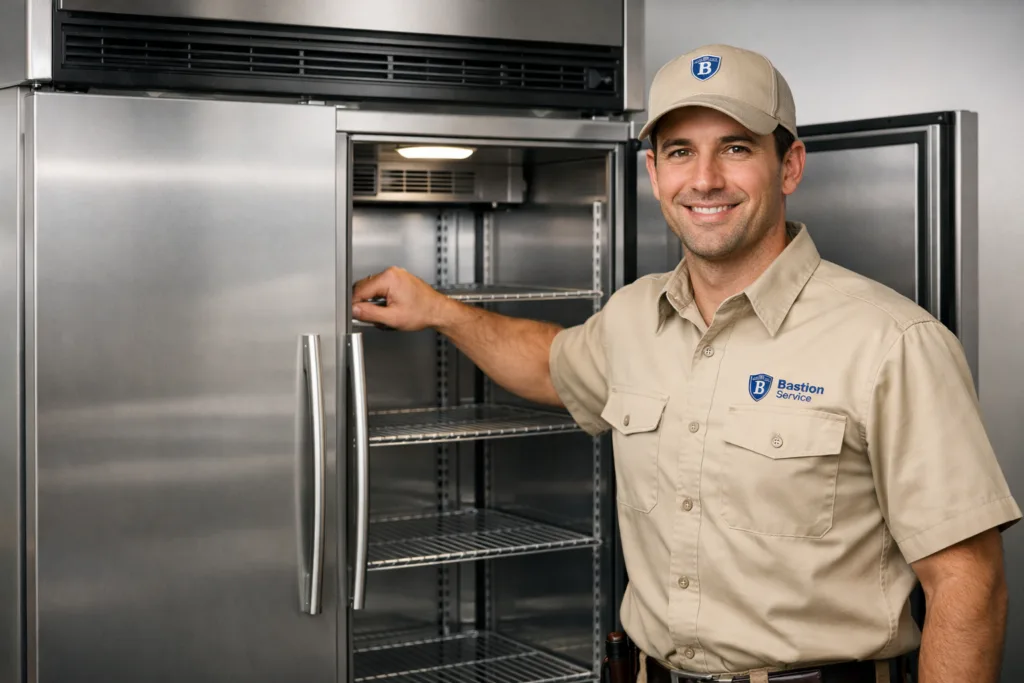




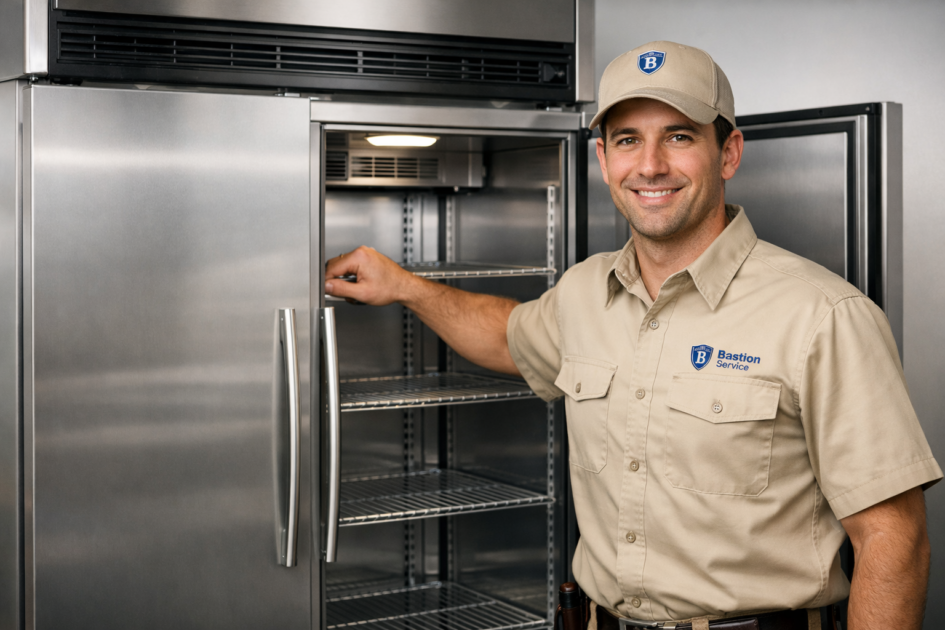
Equipment trouble rarely stays isolated to the cabinet itself. When a True refrigerator or freezer begins running warm, icing over, leaking, or recovering too slowly, the result is often product loss, prep disruption, delayed service, and staff time spent working around a unit that is no longer performing the way the kitchen or storage area needs it to. In Cheviot Hills, repair decisions are most useful when they are tied to symptom severity, equipment condition, and how much downtime the business can absorb.
For specific equipment paths in Cheviot Hills, review True Refrigerator Repair in Cheviot Hills, True Freezer Repair in Cheviot Hills, and Commercial Appliance Repair in Cheviot Hills.
Bastion Service works with local businesses that rely on True refrigeration equipment for daily operations. The goal is to identify the actual failure behind the symptom pattern, determine whether the unit can stay in limited use, and schedule the right repair path before a temperature problem becomes a larger interruption.
What symptom patterns usually mean
True refrigeration equipment can show similar outward symptoms for very different reasons. A warm cabinet does not always point to the same type of failure, and frost buildup is not always just a door-opening issue. Looking at the full pattern helps separate a minor airflow problem from a control fault, a defrost issue, or a more serious cooling-system concern.
- Warm temperatures: may involve airflow restrictions, fan failures, sensor or control issues, dirty coils, door-seal leakage, or compressor-related problems.
- Slow recovery after door openings: can suggest weak cooling performance, restricted air movement, or a system already struggling under load.
- Frost or ice buildup: often points to moisture intrusion, defrost faults, circulation problems, or poor door sealing.
- Water leaks or condensation: may come from drain issues, icing conditions, cabinet sealing problems, or unstable temperature control.
- Constant running or unusual cycling: can indicate the equipment is overworking to maintain set temperature.
For businesses, the question is not only what part failed, but whether the unit is still protecting product consistently enough to remain in operation until service is completed.
True refrigerator and freezer issues we troubleshoot
Temperature drift in refrigerators
Refrigerators that no longer hold a stable range can put ingredients, prepared items, and grab-and-go inventory at risk even before the cabinet appears fully down. Operators may notice the display reading changing throughout the day, product temperatures that do not match the control, or sections of the cabinet that feel warmer than others.
Common causes include weak evaporator airflow, condenser problems, control response issues, sensor faults, door-gasket leakage, and compressor stress. In some cases, staff compensate by lowering settings repeatedly, but that usually does not solve the root problem. If the cabinet struggles after normal door openings or warmer periods in the workday, it should be evaluated before the issue escalates.
Freezers that cannot recover properly
Freezer performance problems often become urgent faster than refrigerator problems because product condition can change quickly when recovery times lengthen. A freezer that seems acceptable early in the day but drifts after loading, defrost cycles, or frequent access may be losing capacity even if it has not stopped cooling entirely.
Symptoms worth immediate attention include softening product edges, heavy interior frost, temperature alarms, unusually long run times, and air that no longer feels consistently cold across the compartment. These patterns can point to airflow restrictions, fan trouble, moisture intrusion, control issues, or a refrigeration-system problem that is reducing pulling power.
Uneven cooling and weak airflow
One of the more misleading problems in refrigeration equipment is uneven cooling. The cabinet may still look operational, yet one shelf, corner, or section is clearly warmer than the rest. That usually means circulation is compromised or the unit is no longer distributing cold air the way it should.
Possible causes include:
- Evaporator fan problems
- Blocked interior airflow paths
- Frost restricting circulation
- Dirty coils affecting heat exchange
- Loading patterns that reveal an underlying mechanical issue
This matters because hidden warm zones can create inventory risk before anyone realizes that product temperatures are drifting in only part of the cabinet.
Frost buildup that keeps coming back
Repeated frost is usually a sign that the equipment needs service rather than repeated clearing. On refrigerators and freezers alike, frost can reduce airflow, increase run time, and force the system to work harder to maintain temperature. On freezers especially, heavy ice formation can eventually interfere with normal operation.
Recurring frost often relates to gasket problems, door alignment, defrost component faults, moisture entry, or a circulation issue that allows ice to build where it should not. If frost returns soon after clearing, the problem is no longer just cosmetic. It is a sign the underlying operating condition has not been corrected.
Leaks, pooling water, and excess moisture
Water on the floor or pooling inside the cabinet should be treated as both an equipment concern and a workplace safety issue. Moisture symptoms may be caused by a blocked or frozen drain, a defrost-related problem, door-seal leakage, or unstable cabinet temperatures that change how condensation forms and collects.
When leaking appears alongside warm temperatures or ice formation, those symptoms should be considered together rather than separately. A water issue often points to a larger operating fault that also affects cooling reliability.
Noisy operation, constant running, or short cycling
A change in sound or run behavior can be an early warning sign. Fans may become louder, the compressor may seem to run without a normal break, or the unit may start and stop more often than it used to. These issues can show up before a full cooling failure and often indicate that the equipment is under strain.
Long run times and short cycling are especially important in busy food-service settings because they suggest the cabinet is not maintaining temperature efficiently. Addressing them early can help avoid a more disruptive outage during service hours.
How repair decisions are made for business-use refrigeration equipment
Repair planning should account for more than the immediate symptom. A useful service visit looks at whether the cabinet structure is still sound, whether the issue is isolated or part of a wider pattern, how the fault affects holding performance, and whether the expected repair outcome supports continued use.
Repair often makes sense when:
- The problem is limited to a specific component or system
- The cabinet and doors are still in good condition
- Temperature performance is likely to stabilize after repair
- Past service history does not show repeated failure of multiple systems
Replacement becomes more likely when the unit has chronic performance issues, several failing components, or downtime costs that no longer justify another major repair. The most informed decision comes from diagnosis tied to actual operating behavior, not from the symptom alone.
When continued use can make the problem worse
Some units can remain in restricted use for a short service window, but that depends on verified temperature performance and the nature of the fault. Continued operation may add damage when a compressor is overworked, airflow is heavily restricted, frost is advancing, or the cabinet is no longer holding a safe and consistent range.
Warning signs that should not be ignored include:
- Product temperatures drifting despite setting changes
- Repeated alarms or resets
- Rapid frost return after clearing
- Visible leaking combined with cooling issues
- Fans running abnormally or airflow dropping sharply
- Recovery times getting longer after normal use
The fact that a unit is still powered on does not mean it is still protecting inventory properly. When symptom severity increases, delaying service can turn a manageable repair into a larger outage.
What to have ready when scheduling service
Businesses can speed up troubleshooting by noting the most useful operating details before the visit. This helps connect the symptom pattern to the likely failure and can make repair planning more accurate.
- Whether the issue affects a refrigerator, a freezer, or both
- When the problem started and whether it is constant or intermittent
- Current temperature readings and whether product temperatures match them
- Any visible frost, leaks, or condensation
- Changes in sound, cycling, or recovery time
- Whether staff have already adjusted controls or manually cleared ice
Even simple observations can help determine whether the equipment is dealing with airflow loss, a defrost problem, a control issue, or a more serious cooling failure.
Service support for Cheviot Hills businesses
When True refrigeration equipment begins affecting uptime, storage conditions, or kitchen flow in Cheviot Hills, the best next step is to schedule service while the symptoms are still active and easy to verify. That makes it easier to confirm the fault, prioritize the repair, and decide whether the unit should remain in limited use, be repaired promptly, or be taken out of service before it creates a larger operational problem.


