





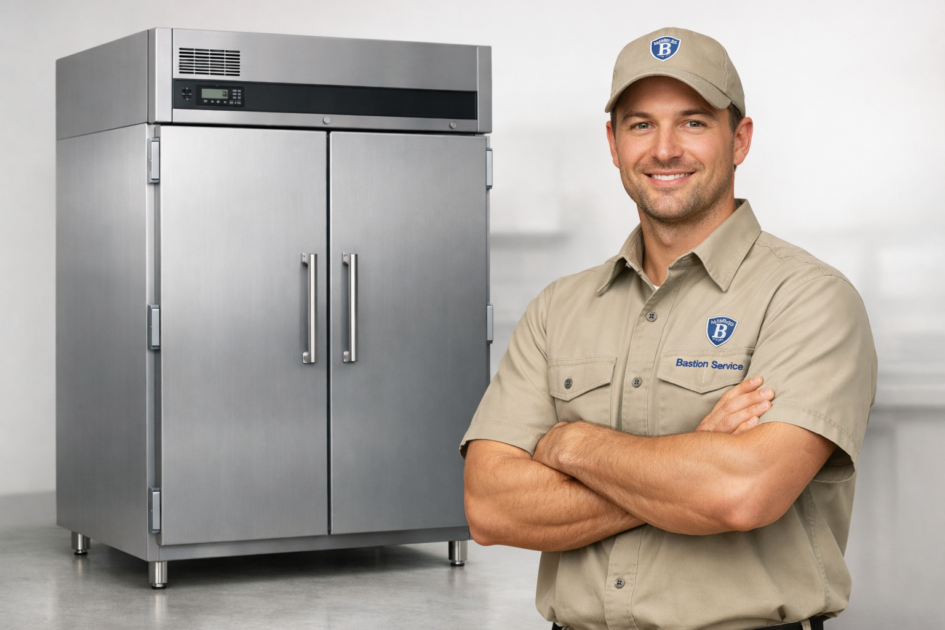
Freezer downtime can interrupt prep, storage, and daily workflow quickly, especially when temperature drift or frost buildup starts affecting product access and holding conditions. For businesses in Fairfax, the most useful next step is service that identifies the actual fault, explains how urgent the issue is, and helps determine whether the unit can stay in use until repair is completed. Bastion Service handles Traulsen freezer issues with a symptom-based approach focused on restoring stable operation and reducing avoidable downtime.
Related commercial service paths in Fairfax include Traulsen Commercial Repair in Fairfax, Commercial Freezer Repair in Fairfax, and Traulsen Refrigerator Repair in Fairfax.
Common Traulsen Freezer Problems That Need Repair
Freezer not staying cold enough
When a Traulsen freezer stops holding the expected temperature, the cause may be more complex than a simple thermostat issue. Weak cooling can come from evaporator fan problems, blocked airflow, dirty condenser coils, control failure, sensor issues, defrost faults, or sealed-system trouble. If product is softening, cabinet temperature is creeping upward, or recovery after door openings is unusually slow, the unit should be evaluated before the strain leads to a larger failure.
Frost buildup inside the cabinet
Frost on walls, shelves, or around the evaporator section usually points to warm air entering the cabinet or moisture not being cleared properly during operation. Common causes include damaged door gaskets, door alignment problems, doors not closing fully, or a defrost system that is not cycling as it should. Excess frost reduces airflow, makes the freezer run longer, and can eventually interfere with even temperature distribution.
Fan noise, buzzing, or constant running
Unusual sound often gives an early clue that a component is failing. A rattling or scraping sound may indicate fan blade obstruction or motor wear. Buzzing or clicking can point to electrical starting problems or compressor stress. If the freezer seems to run almost nonstop, that may mean it is struggling to remove heat because of airflow restriction, icing, control problems, or declining refrigeration performance.
Water leaks or ice around the base
Water on the floor near a freezer should not be ignored. It can be tied to drain blockage, defrost drainage issues, excess condensation, or sealing problems that let warm air enter repeatedly. In addition to the cooling concern, leaks can create cleanup issues and safety risks for staff moving through the area.
Why Accurate Diagnosis Matters on a Traulsen Freezer
Several different failures can create the same symptom. A warm cabinet might be caused by an iced evaporator, a weak fan motor, a control board problem, a sensor reading incorrectly, or a refrigerant-related issue. A freezer with heavy frost may need a gasket correction, a defrost repair, or airflow restoration. Without proper testing, part replacement can become expensive trial and error.
Diagnosis also helps determine urgency. Some units are still cooling enough to appear usable even though they are already operating under damaging conditions. Identifying that difference matters when a business in Fairfax is trying to protect inventory, decide whether temporary use is realistic, and schedule repair without risking a complete breakdown.
Symptoms That Usually Mean Service Should Be Scheduled Soon
It is better to arrange repair when a pattern begins rather than waiting for a total shutdown. Warning signs often include:
- Cabinet temperature rising above normal holding range
- Product partially thawing or developing soft spots
- Frost returning quickly after it has been cleared
- Door gaskets not sealing tightly all the way around
- Fans becoming louder or airflow seeming weaker than usual
- Long run times with poor temperature recovery
- Water collecting under the unit or ice forming near the base
- Repeated alarms or controls behaving inconsistently
These symptoms often start small, but they can escalate into compressor strain, heavier icing, blocked airflow, and inventory loss if left unresolved.
Why a Traulsen Freezer May Stop Freezing Properly
If the unit is running but not freezing well, the failure may involve one of several operating systems working together. Airflow problems are common, especially when evaporator coils ice over or fan motors weaken. In other cases, the cabinet may be pulling in warm air through a torn gasket or a door that is slightly out of alignment. Controls and sensors can also create misleading operation, causing the freezer to cycle at the wrong times or fail to maintain a steady cabinet temperature.
Another important factor is recovery. A freezer may seem acceptable when closed for long periods, but struggle badly during normal opening and loading. That kind of slow pull-down or poor recovery is often a sign that cooling output, airflow, or defrost performance needs attention. Looking at how the symptom appears during actual daily use helps guide the repair decision more effectively than checking the setpoint alone.
What Frost and Ice Patterns Can Reveal
The location and behavior of frost can help narrow down the cause. Light frost concentrated near the door opening may suggest warm-air intrusion from a gasket or closing issue. Thick ice behind interior panels can indicate a defrost failure or an airflow problem around the evaporator section. Ice near the drain area may point to poor drainage during defrost cycles.
These distinctions matter because the right repair depends on the source of the moisture and the reason it is not clearing normally. Simply removing the ice without correcting the cause often leads to the same symptom returning soon after.
Repair Decisions: Targeted Fix or Larger Equipment Concern
Many Traulsen freezer problems can be addressed effectively when the issue is caught before it spreads. Fan motors, controls, sensors, gaskets, drain problems, defrost components, and certain electrical faults are often repairable if the rest of the unit remains in solid condition. The key question is not just whether the freezer still turns on, but whether it can return to stable and repeatable performance after the repair.
If the unit has a history of recurring cooling problems, major component stress, or repeated service interruptions, the repair decision may require a broader look at reliability and future downtime risk. A good service visit should help clarify whether the problem is isolated or part of a longer pattern that is affecting operations.
How Businesses Can Prepare for a Service Visit
A few details can make freezer diagnosis faster and more productive. Before the appointment, it helps to note when the problem started, whether the issue is constant or intermittent, what temperatures have been observed, and whether frost, leaks, or unusual sounds appear at the same time. If the freezer cools better during slower hours but struggles during active use, that pattern is also helpful.
Useful observations may include:
- Whether one section is affected more than another
- Whether the door closes and seals normally
- How long the unit takes to recover after openings
- Any recent alarms, shutdowns, or manual defrost attempts
- Whether the same symptom has happened before
Providing that context can shorten the path from inspection to a repair recommendation.
Service Focus for Fairfax Businesses
For businesses in Fairfax, freezer repair is ultimately about restoring dependable holding conditions without unnecessary delay. The best outcome comes from matching the symptom pattern to the actual failure, understanding whether continued use is safe for the short term, and scheduling repair based on operational impact rather than guesswork. If a Traulsen freezer is warming, icing over, leaking, or making abnormal noise, prompt service helps protect inventory, reduce disruption, and move the equipment back toward stable day-to-day performance.




