





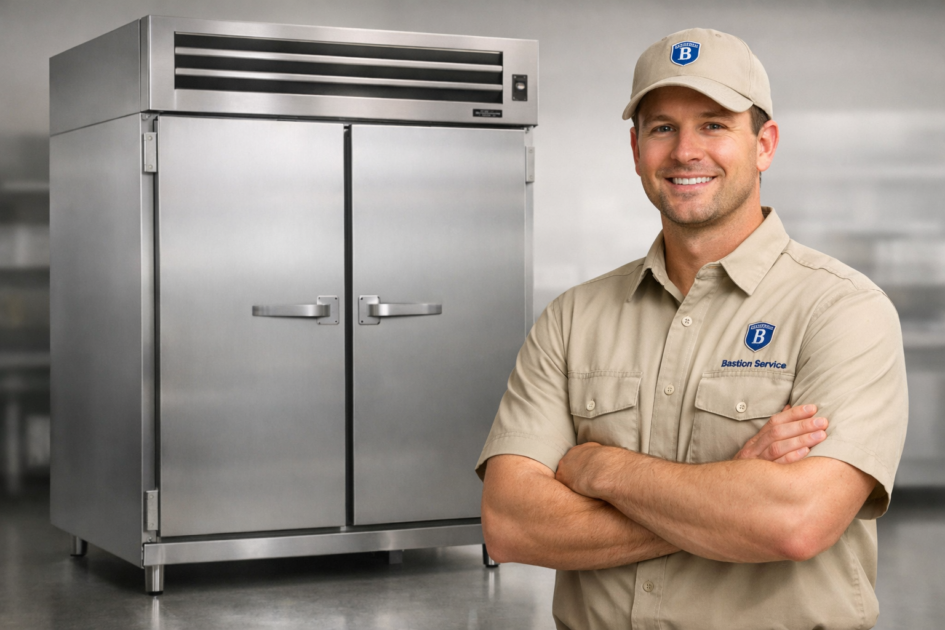
Unexpected temperature changes, frost buildup, leaks, or weak airflow can quickly disrupt kitchens, prep areas, and storage workflows. For Fairfax businesses using Traulsen refrigeration equipment, service is most useful when the visit does more than identify a symptom on the surface. The goal is to pinpoint the failed component or operating condition, explain how it affects daily use, and set repair scheduling around product protection, staffing needs, and downtime risk.
For specific equipment paths in Fairfax, review Traulsen Refrigerator Repair in Fairfax, Traulsen Freezer Repair in Fairfax, and Commercial Appliance Repair in Fairfax.
Bastion Service helps local operators evaluate refrigerator and freezer problems with attention to how the equipment is actually being used. That matters when a unit is still partially cooling, recovering slowly after door openings, or showing intermittent faults that can turn into a full no-cool event during a busy shift.
Traulsen Refrigerator and Freezer Problems Often Start With a Symptom Pattern
Traulsen refrigeration equipment is built for demanding use, but performance issues still develop over time. A warm cabinet does not always mean the same failure from one unit to the next. Similar symptoms can come from controls, airflow restrictions, door sealing problems, evaporator icing, fan motor issues, drain blockages, or sealed-system trouble.
Looking at the symptom pattern helps narrow the likely cause. For example, a refrigerator that cools unevenly may point to circulation trouble, while a freezer that holds for part of the day but softens product later may be struggling with frost accumulation, a defrost issue, or declining cooling capacity under load. Repair decisions are better when they are based on those patterns instead of assumptions.
What Traulsen Refrigeration Equipment Problems Do You Troubleshoot?
Businesses typically schedule service for one or more of the following issues:
- Refrigerators running warm or drifting above target temperature
- Freezers not maintaining frozen product consistently
- Frost or ice forming inside the cabinet or around doors
- Weak airflow, slow recovery, or uneven cooling
- Water leaks, condensation, or pooling near the unit
- Long run times, frequent cycling, or units that seem to struggle under normal use
- Cabinets that sound different than usual, including fan-related noise
- Door gasket wear or doors not sealing cleanly
These symptoms may appear gradually or show up all at once. In either case, they usually indicate an underlying fault that should be checked before product loss or a larger equipment failure develops.
Temperature Problems in Refrigerators and Freezers
Warm Refrigerator Cabinets
When a refrigerator is not holding temperature, the issue may involve airflow, sensors, controls, condenser conditions, fan performance, or another cooling-related fault. Staff may first notice warmer product, inconsistent readings, or shelves that feel colder in one area than another. In a business setting, this is usually not something to monitor for long because unstable cooling can affect inventory quality and lead to more strain on key components.
Freezers Softening Product or Recovering Slowly
A freezer that does not recover after door openings or loading may be dealing with ice buildup, airflow obstruction, control issues, or declining cooling performance. Some units still appear to run continuously while falling behind, which can create a false impression that they are working normally. If product texture changes, frost increases, or the cabinet takes too long to pull back down, service should be scheduled promptly.
Weak Airflow and Uneven Cooling
Airflow problems are common because they affect both temperature stability and recovery time. A unit may cool reasonably well in one section while another section runs warm. In refrigerator and freezer applications, that can be caused by evaporator fan issues, ice restricting circulation, blocked product loading, damaged gaskets allowing excess moisture in, or other internal air movement problems.
From an operations standpoint, airflow trouble often creates a chain reaction. The unit runs longer, temperatures become less predictable, frost may increase, and staff may start moving product around to compensate. Once that pattern starts, repair tends to be more efficient than repeated workarounds.
Frost and Ice Buildup That Keeps Returning
Frost inside a freezer or around door openings usually points to an air leak, defrost problem, or moisture-related operating issue. Light frost may seem manageable at first, but recurring buildup can interfere with airflow, reduce usable space, and make the cabinet less reliable during normal service hours.
In refrigerators, moisture and ice can also signal door sealing trouble or internal temperature imbalance. If cleaning temporarily improves the condition but frost comes back, the underlying cause likely needs part testing or adjustment. Repeated frost is a repair issue, not just a housekeeping issue.
Leaks, Condensation, and Water Around the Cabinet
Water under or inside refrigeration equipment can come from blocked drains, defrost drainage problems, excess condensation, door sealing faults, or ice melting in the wrong area of the cabinet. Even when the unit is still cooling, leaks should be addressed quickly because they can create sanitation concerns, slippery floors, and damage to nearby work areas.
Condensation on door frames or cabinet surfaces may also indicate warm air intrusion or a unit that is struggling to maintain stable conditions. If moisture appears repeatedly, a service visit helps determine whether the problem is isolated and straightforward or part of a broader cooling issue.
Signs a Unit May Be Running Beyond Normal Operating Load
Some Traulsen equipment problems show up less as a total breakdown and more as performance stress. A refrigerator or freezer may run almost constantly, cycle differently than before, or have difficulty keeping up during peak use. Those symptoms matter because they often show that the equipment is compensating for a fault rather than operating normally.
Businesses should pay attention when a unit:
- Takes noticeably longer to recover after door openings
- Feels warmer during busy periods than it used to
- Develops more frost than normal over a short period
- Needs staff attention to stay usable
- Produces recurring leak or condensation issues
These are often early warnings that repair should be scheduled before the unit becomes unreliable at a critical time.
When Continued Use Can Make the Problem Worse
Not every refrigeration problem requires immediate shutdown, but some do. If a unit is no longer holding temperature, icing over heavily, leaking persistently, or running without recovering, continued use can increase wear and raise the chance of product loss. A struggling cabinet may also place added stress on motors and cooling components while still failing to protect stored items properly.
That is why service is not just about replacing a part. It is also about deciding whether the equipment can stay in limited use until repair, whether it needs closer monitoring, or whether it should be taken out of rotation to avoid larger losses.
Repair Decisions for Fairfax Businesses
Many Traulsen refrigerator and freezer issues are repairable when the cabinet remains in good overall condition and the failure is limited to a serviceable component or operating fault. Fan motors, controls, gaskets, drains, and defrost-related parts are examples of problems that may be resolved without replacing the entire unit.
Replacement becomes a more serious consideration when a cabinet has repeated failures, advanced wear, or major cooling-system concerns that do not make sense against the unit’s remaining service life. The important step is getting a diagnosis tied to the actual symptom pattern so the repair decision reflects cost, urgency, and operational impact.
Scheduling Service With Business Downtime in Mind
For Fairfax operators, refrigeration repair is often about protecting workflow as much as restoring temperature. A delayed call can turn a manageable issue into spoiled inventory, emergency product moves, or a unit that fails during a high-demand period. Scheduling service when the first clear signs appear is often the best way to limit disruption.
If your Traulsen refrigeration equipment is running warm, building frost, leaking, or showing uneven cooling, the next step is to arrange service that confirms the fault and maps out the repair based on how urgently the unit supports daily operations.


