




When Traulsen refrigeration equipment begins running outside normal conditions, the biggest concern is usually not a single alarm or temperature swing but the effect on inventory, prep flow, and staff decisions during the day. Refrigerator and freezer problems often start with small warning signs, then turn into longer recovery times, inconsistent holding temperatures, or a full cooling failure if service is delayed. For businesses in Mid-Wilshire, the most useful repair visit is one that identifies the source of the problem, explains the urgency, and helps schedule the next step around actual operating needs.
For specific equipment paths in Mid-Wilshire, review Traulsen Refrigerator Repair in Mid-Wilshire, Traulsen Freezer Repair in Mid-Wilshire, and Commercial Appliance Repair in Mid-Wilshire.
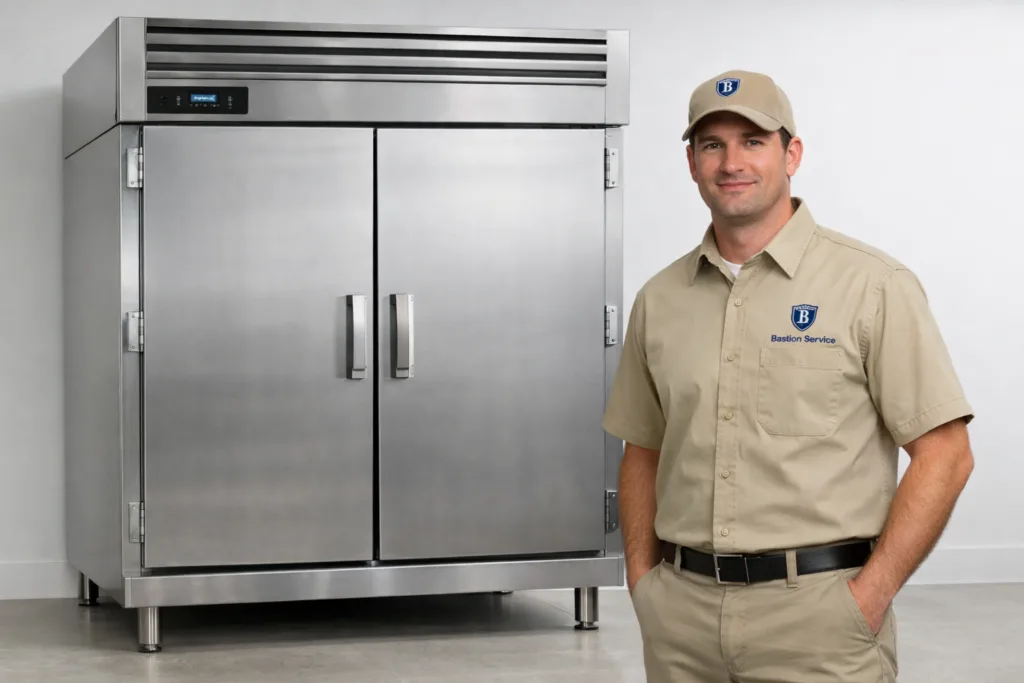
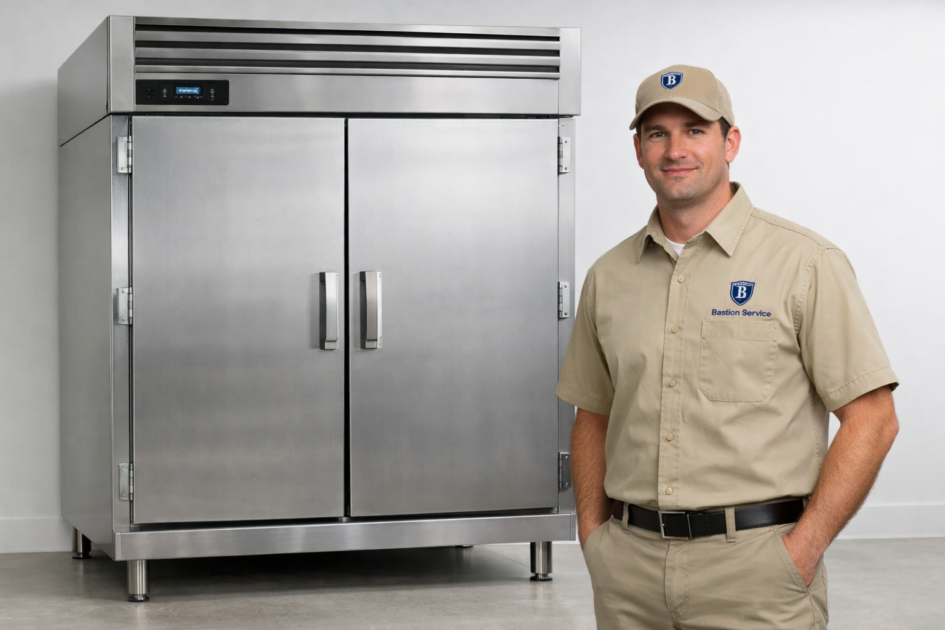
Bastion Service works with Mid-Wilshire businesses that rely on Traulsen refrigeration equipment for daily storage, holding, and kitchen workflow. Service is centered on symptom-based troubleshooting for refrigerators and freezers, with attention to whether the unit can remain in use, what conditions increase product risk, and which repairs should be handled promptly to reduce downtime.
Traulsen refrigerator and freezer symptoms that usually require service
Many equipment failures do not look dramatic at first. A cabinet may still run, fans may still operate, and the display may still show a target setting while the actual product environment is drifting out of range. That is why symptoms should be evaluated by pattern, not by one momentary check.
Common service calls involve:
- Refrigerators running warm or fluctuating through the day
- Freezers softening product or recovering too slowly after door openings
- Frost buildup on interior surfaces or around evaporator areas
- Water leaks, internal condensation, or moisture around the cabinet
- Fans running loudly, intermittently, or with reduced airflow
- Long run times, short cycling, or equipment that never seems to satisfy temperature demand
- Door gasket wear, poor sealing, or doors that do not close cleanly
These symptoms can come from airflow restrictions, fan motor issues, control or sensor faults, defrost failures, drain problems, door-related air intrusion, or declining cooling performance. Because several different faults can create similar results, repair decisions are best made after testing rather than guesswork.
Warm refrigerator and freezer performance problems
A Traulsen refrigerator that feels slightly warm may already be affecting product consistency, especially during heavy opening cycles or peak service periods. Freezers can show the same gradual decline when stored product softens before the cabinet appears fully down. In both cases, staff often try to compensate by adjusting controls, reducing loading, or moving product around inside the cabinet, but those steps rarely address the root cause.
When a refrigerator is not holding temperature
Warm cabinet conditions may be tied to blocked airflow, fan problems, damaged gaskets, dirty heat exchange surfaces, sensor issues, or a control problem that is misreading actual conditions. In some cases the refrigerator cools unevenly, leaving one section acceptable while another drifts high. That usually signals an airflow or circulation issue rather than a simple setting problem.
Service should be scheduled promptly when the refrigerator:
- Shows repeated temperature rise during normal use
- Takes too long to recover after door openings
- Feels warmer at product level than expected
- Has alarms or complaints that return after resets
When a freezer is soft or slow to recover
Freezer issues often become visible when product texture changes, ice cream softens, or staff notices that the cabinet struggles after loading. That can point to evaporator icing, poor airflow, fan failure, defrost faults, door sealing problems, or reduced system efficiency. A freezer that still runs but no longer pulls down normally should not be treated as stable just because it has not shut off completely.
Slow freezer recovery is especially important in busy operations because frequent access can expose a weak component faster. If the cabinet is already marginal, normal door openings may be enough to push temperatures out of range.
Frost buildup, airflow loss, and defrost-related trouble
Frost is more than a cosmetic issue. In Traulsen freezers and some refrigerator applications, frost accumulation can interfere with airflow, reduce heat transfer, and make temperatures inconsistent from top to bottom or front to back. Businesses may notice the symptom first as poor holding performance rather than visible ice.
What frost buildup can mean
Frost often develops because of moisture entering the cabinet or because the defrost process is not clearing ice as intended. Likely causes may include:
- Door gaskets that no longer seal well
- Doors that are misaligned, damaged, or left slightly open
- Defrost components not operating correctly
- Fans restricted by ice formation
- Drain issues that contribute to recurring freeze-up patterns
As icing gets heavier, airflow drops and the unit has to work harder to maintain temperature. That leads to longer run times, weak recovery, and eventual warming complaints. If staff are manually clearing ice on a repeating basis, the unit needs repair rather than repeated temporary intervention.
Why airflow problems matter even before a shutdown
Airflow is one of the most important factors in refrigerator and freezer performance. When circulation is reduced, some areas of the cabinet may look acceptable while others drift. That can create a false sense that the equipment is still safe to rely on. Uneven temperatures, blocked product lanes, fan noise, or frost near air passages are all signs that the unit should be evaluated before the problem spreads into a broader cooling failure.
Leaks, condensation, and moisture around the cabinet
Water under or inside refrigeration equipment should be treated as an operating problem, not just a cleaning issue. Repeated leaks can point to drain blockage, ice melt from defrost-related faults, gasket failure, or unstable cabinet conditions that are generating excess condensation.
Moisture issues deserve service attention when they:
- Return after basic cleaning
- Appear alongside frost or temperature complaints
- Create slip risk around the equipment
- Show up during heavy run cycles or after defrost periods
In business settings, leaks can also affect surrounding flooring, stored goods, and staff safety. If water is recurring, it usually means there is an underlying refrigeration, airflow, or drainage issue that should be diagnosed instead of monitored indefinitely.
Noise, long run times, and other signs of strain
Not every repair call begins with a warm cabinet. Some Traulsen units continue cooling while operating in a way that suggests a component is wearing down or compensating for another failure. These changes often provide an early warning window before a more expensive interruption occurs.
Constant running or short cycling
A refrigerator or freezer that runs nearly all the time may be trying to overcome heat gain, poor airflow, dirty coils, weak door sealing, sensor error, or declining cooling capacity. Short cycling can point to a different type of fault, including control or system problems that keep the unit from operating through a normal cycle. Either pattern should be reviewed if it is new or paired with temperature inconsistency.
Unusual fan sound or vibration
Rattling, grinding, buzzing, or airflow that sounds different than normal can indicate fan motor wear, blade interference, ice contact, loose hardware, or mounting issues. Fans are critical to cabinet performance, so unusual sound matters even if temperatures seem close to normal at first. If noise is getting worse or is accompanied by frost, weak cooling, or hot spots in the cabinet, repair scheduling should move up in priority.
How to judge urgency before the appointment
One of the most practical questions for operators is whether the equipment can stay in use until service arrives. The answer depends on the symptom pattern, product sensitivity, and whether temperatures are actually being maintained under real operating load.
A scheduled appointment may be workable if the issue is limited and cabinet performance remains stable, such as early gasket wear or a minor noise without a holding problem. Use becomes more risky when the unit is warming, leaking heavily, frosting quickly, alarming repeatedly, or failing to recover after routine access.
It is also important to avoid repeated resets, aggressive control changes, or ongoing manual defrost attempts meant to force short-term improvement. Those workarounds can mask the pattern, complicate diagnosis, and allow the actual fault to continue damaging other components.
Repair planning for Traulsen refrigeration equipment
Good repair planning is not only about replacing a failed part. It also considers the age of the cabinet, the history of the symptom, whether multiple issues are appearing together, and how much disruption another outage would cause. A unit with one isolated fan or control problem may be a straightforward repair. A cabinet with recurring warm temperatures, leaks, frost buildup, and prolonged run times may require a broader reliability discussion before the next busy period.
During service evaluation, the most useful questions usually include:
- What symptom is primary and what is secondary?
- Is the unit safe to keep using before repair is completed?
- Does the problem suggest one failed component or a wider performance decline?
- Will delaying repair increase the chance of product loss or a full shutdown?
That approach helps managers make decisions based on operational impact, not just on whether the equipment still powers on.
Scheduling Traulsen repair in Mid-Wilshire
If your refrigerator or freezer is showing temperature drift, slow recovery, airflow loss, frost buildup, leaks, or unusual operating behavior, the next step is to schedule service before a partial failure becomes a complete interruption. For businesses in Mid-Wilshire, the goal is to get the equipment evaluated around the real symptom pattern, determine whether it can remain in use, and move forward with repair planning that supports daily operations with as little disruption as possible.


