
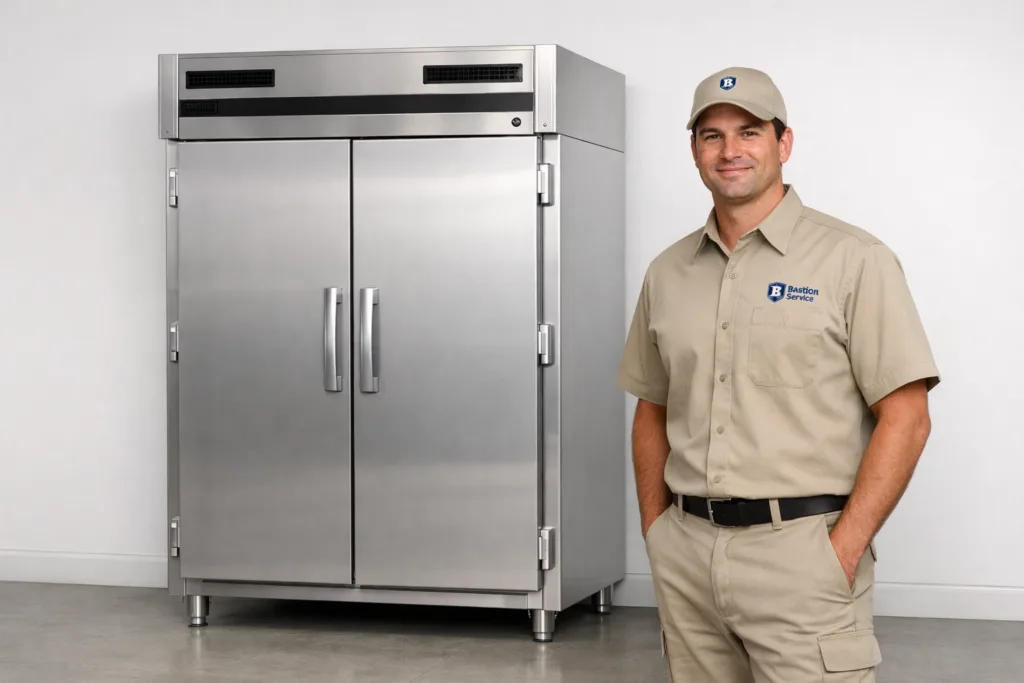




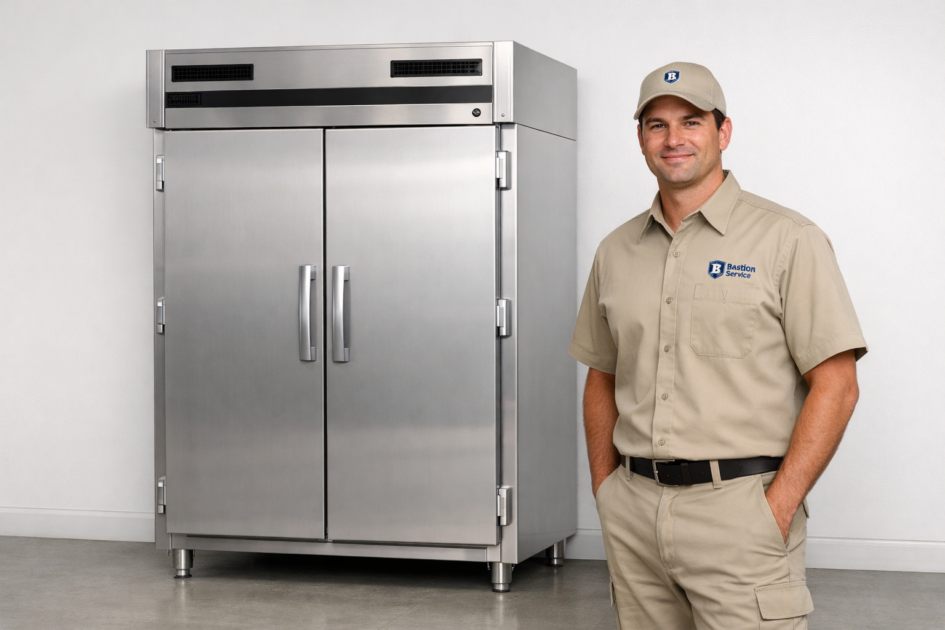
When Traulsen refrigeration equipment starts losing temperature, building frost, leaking, or running in a way that does not match normal operation, the next step should be service-oriented and specific to the symptom pattern. For businesses in Mid-City, delayed action can lead to product loss, interrupted prep or storage flow, and harder repair decisions later. Bastion Service works with businesses that need refrigerator and freezer problems diagnosed, repair scheduling prioritized, and downtime managed as practically as possible.
For specific equipment paths in Mid-City, review Traulsen Refrigerator Repair in Mid-City, Traulsen Freezer Repair in Mid-City, and Commercial Appliance Repair in Mid-City.
Whether the issue shows up as a warm cabinet, inconsistent recovery after door openings, excess condensation, or unusual run time, the goal is to identify what is failing, determine how urgent the repair is, and decide whether the unit can remain in use while service is arranged. That matters in kitchens, storage areas, and other business settings where refrigeration equipment supports daily operations.
What Traulsen refrigeration equipment problems do you troubleshoot?
Most service calls involve operating problems that affect temperature stability, airflow, food safety, or day-to-day reliability. On Traulsen refrigerators and freezers, common symptoms often include:
- Cabinets running warm or taking too long to pull down
- Freezers softening product or struggling to recover
- Frost buildup on interior surfaces or around evaporator areas
- Water leaking inside the cabinet or onto the floor
- Fans running loudly, intermittently, or not circulating air correctly
- Units running constantly or short cycling
- Door gasket wear causing air leaks and temperature drift
- Control or sensor issues that create erratic operation
These problems can come from more than one cause, so a symptom like warm storage does not automatically point to a single failed part. Proper troubleshooting helps separate airflow problems from control faults, door seal issues, defrost trouble, fan failure, drain blockage, or deeper cooling system performance loss.
Refrigerator Symptoms That Usually Need Prompt Repair
Warm Cabinet Temperatures
If a Traulsen refrigerator is not holding set temperature, there may be restricted airflow, dirty heat exchange surfaces, a weak fan motor, sensor or control problems, door sealing issues, or declining cooling performance. In a business environment, even a small temperature rise can affect inventory quality and force staff to keep checking product or moving items between units.
Service is especially important when the cabinet feels cool but not cold enough, when temperatures drift throughout the day, or when the unit appears to recover slowly after normal door use. Those are often early warnings that the problem is getting worse.
Uneven Temperatures From Top to Bottom
When one section of the refrigerator is colder than another, or when product near the door is warming faster than product at the back, airflow should be checked. Uneven temperatures can also point to loading issues, fan problems, developing frost restrictions, or a control system that is not responding correctly. This kind of inconsistency often leads to confusing staff reports because the unit may seem normal at one moment and unreliable the next.
Condensation and Moisture Inside the Box
Moisture inside a refrigerator can be tied to door gasket leaks, excessive door openings, drain problems, or air infiltration that creates sweating and unstable cooling conditions. In many cases, visible moisture is not the only issue. It can also indicate that the equipment is working harder than it should and is no longer maintaining a stable interior environment.
Freezer Symptoms That Can Escalate Quickly
Soft Product or Slow Recovery
A Traulsen freezer that no longer pulls temperature down efficiently may have airflow restriction, ice accumulation, fan trouble, control issues, or cooling performance loss. Freezer problems often become urgent faster than refrigerator issues because stored product can move out of acceptable condition before the equipment fully stops running.
If staff notice product texture changing, interior temperatures rising during normal use, or extended recovery after the door is closed, repair should be scheduled before the problem turns into a complete outage.
Heavy Frost or Ice Formation
Frost that keeps returning usually points to a reason, not just a need to remove the ice. Defrost failures, door leaks, sensor problems, blocked airflow, or fan-related issues can all contribute. In freezers, heavy frost reduces usable space, interferes with air movement, and makes the system work longer to maintain target temperature.
Repeated frost buildup should be treated as a repair issue rather than a housekeeping issue, especially when it is paired with warm spots, noise changes, or longer compressor run times.
Door Area Ice and Seal Problems
Ice around the door frame or signs that the door is not sealing tightly can allow humid air into the cabinet. That raises frost load, affects temperature stability, and increases strain on the equipment. Damaged gaskets, alignment problems, and worn closing components can all contribute to recurring freezer performance complaints.
Leaks, Noise, and Airflow Problems
Water on the Floor or Drain Overflow
Water leaks around Traulsen refrigeration equipment may come from a blocked drain, frozen drain path, condensate issue, or moisture caused by air infiltration. In busy work areas, a leak is more than a nuisance. It can create slip hazards, interrupt cleaning routines, and signal that the equipment is not managing moisture correctly.
If leaks are recurring, the repair visit should confirm whether the water problem is isolated or connected to frost buildup, defrost malfunction, or broader cooling trouble.
Fan Noise, Vibration, or Reduced Air Movement
Unusual sound is often one of the first signs that refrigeration equipment needs attention. Buzzing, rattling, fan scraping, or sudden vibration can point to worn motor components, mounting issues, ice interference, or airflow restrictions. Reduced circulation inside the cabinet can then lead to temperature variation even before the unit is reported as fully warm.
Constant Running or Rapid Cycling
A unit that runs almost nonstop may be trying to overcome poor airflow, dirty coils, sealing problems, control issues, or declining cooling capacity. Short cycling can indicate a different type of control or component problem. Either way, abnormal run patterns matter because they often show up before a more expensive failure and can increase operating stress if ignored.
How Service Diagnosis Helps With Repair Decisions
Good troubleshooting should do more than identify a symptom. It should help the business decide what to do next. For Traulsen refrigerator and freezer repair in Mid-City, that usually means confirming the likely fault, checking the overall condition of the equipment, and assessing whether continued operation is reasonable until repair is completed.
A useful diagnosis should answer questions such as:
- Is the temperature problem isolated or part of a larger performance decline?
- Can the unit stay in service temporarily without creating unacceptable risk?
- Are multiple symptoms connected to one root issue?
- Is the repair likely to restore stable operation, or is the unit showing broader wear?
- Should service be scheduled immediately or during a planned downtime window?
That kind of assessment helps managers, kitchen teams, and facility staff make decisions based on operating reality rather than trial and error.
When Continued Use Can Make the Problem Worse
Some symptom patterns should not be pushed off. If a refrigerator is drifting warm, a freezer is no longer holding product properly, frost is returning quickly, or the cabinet is leaking while performance drops, continued use may add strain to other components and increase the chance of a full shutdown.
Another warning sign is repeated thermostat adjustment by staff trying to compensate for poor performance. Frequent control changes can temporarily mask the issue while making the operating pattern harder to evaluate. If the equipment is already showing unstable behavior, it is better to have the underlying fault checked than to keep chasing the symptom from shift to shift.
Repair Versus Replacement Considerations
Not every Traulsen issue points straight to replacement. Many problems involving fans, controls, sensors, defrost components, door gaskets, drains, and certain cooling-related faults are often repairable. Replacement usually becomes a stronger consideration when the unit has repeated breakdowns, several worn systems at once, or a pattern of performance decline that no longer supports reliable daily use.
For many Mid-City businesses, the real decision is not simply repair or replace. It is whether the current problem supports a durable repair, whether a short-term fix makes sense while planning for equipment changeout, and how much downtime risk the operation can absorb.
Scheduling Repair for Mid-City Operations
Refrigeration problems rarely happen at a convenient moment, so scheduling should reflect the urgency of the symptom, the type of product being stored, and how critical the unit is to normal workflow. A refrigerator with mild but noticeable temperature drift may allow for planned service, while a freezer with soft product or fast frost return may need immediate attention.
If your Traulsen refrigerator or freezer in Mid-City is showing warm temperatures, airflow trouble, frost buildup, leaking, unusual noise, or poor recovery, the best next step is to arrange service that identifies the failure, clarifies whether the unit should stay in operation, and moves the repair forward before a manageable problem turns into a larger interruption.


