
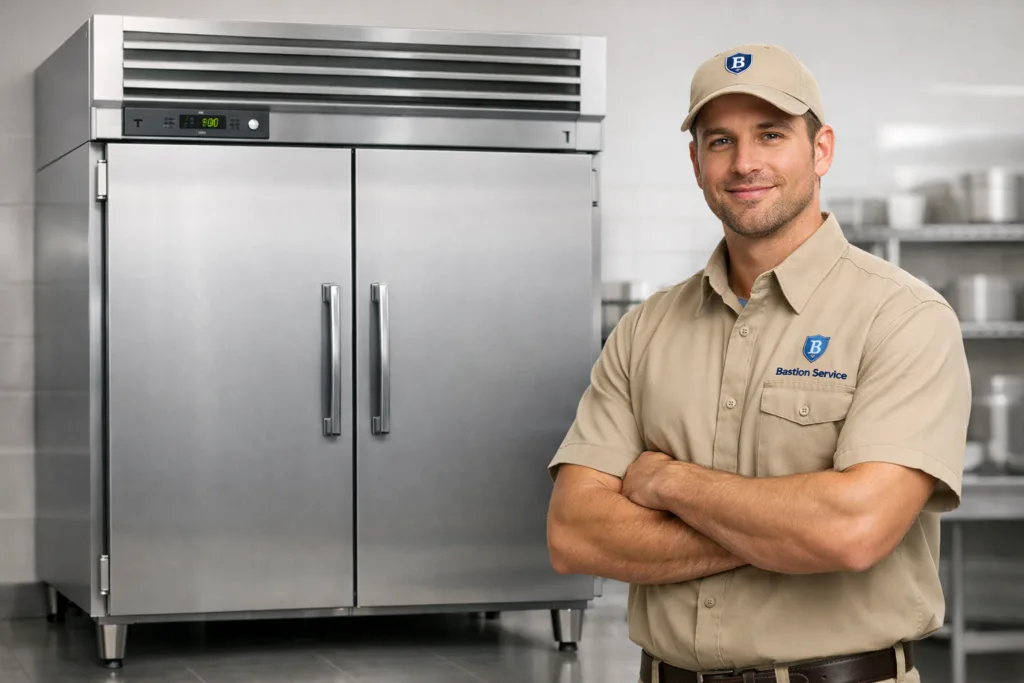




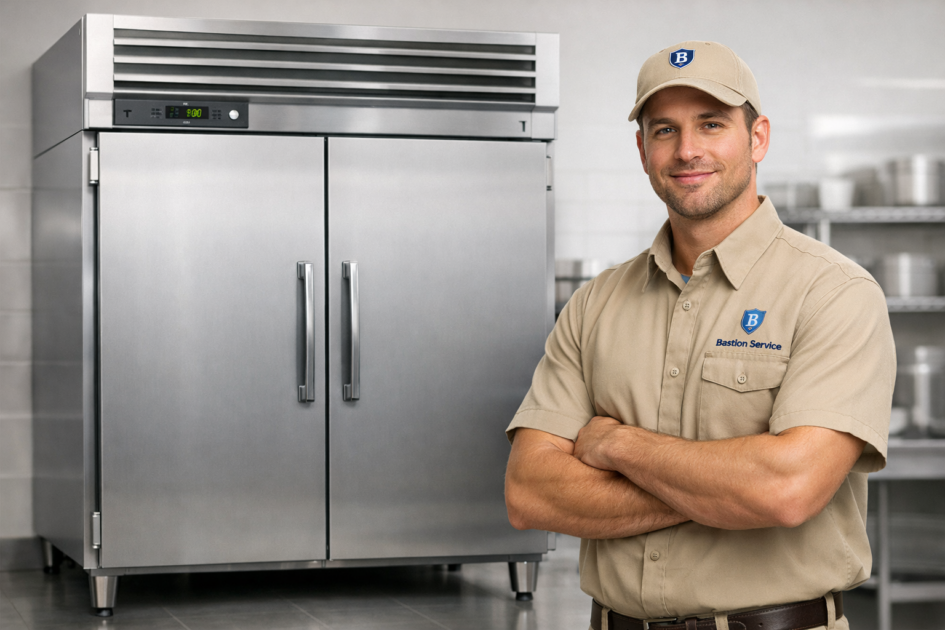
When a Traulsen refrigerator or freezer starts running warm, building frost, or cycling unpredictably, businesses in Inglewood usually need service that goes beyond a quick parts guess. The most useful first step is confirming whether the problem involves airflow, controls, defrost components, door sealing, refrigerant loss, fan operation, or compressor performance so repair decisions can be made before product loss and wider downtime develop.
For specific equipment paths in Inglewood, review Traulsen Refrigerator Repair in Inglewood, Traulsen Freezer Repair in Inglewood, and Commercial Appliance Repair in Inglewood.
Bastion Service helps businesses in Inglewood troubleshoot Traulsen refrigeration equipment problems with service-oriented diagnosis, repair scheduling, and guidance on whether a unit should remain in operation, be used only in a limited way, or be taken offline until repairs are completed.
What Traulsen refrigeration equipment problems do you troubleshoot?
Traulsen refrigeration equipment can show similar symptoms for very different reasons, so the visible problem is only the starting point. A refrigerator that runs constantly may need a different repair path than a freezer that frosts over, leaks water, or struggles to recover after repeated door openings during normal service.
Typical service calls involve:
- Cabinets running warm or drifting above set temperature
- Sections cooling unevenly from top to bottom or side to side
- Slow temperature recovery after loading or frequent access
- Frost buildup on interior panels, evaporator areas, or around doors
- Water leaks, drain issues, or heavy condensation
- Fans not circulating air properly
- Units running constantly or short cycling
- Noise changes such as buzzing, clicking, rattling, or hard starts
- Freezers that no longer hold low temperature consistently
- Alarm conditions or control behavior that does not match normal operation
These symptoms often overlap, which is why diagnosis matters. What appears to be a simple temperature issue may actually involve a door gasket, sensor fault, iced evaporator, restricted airflow, failed fan motor, or a larger cooling-system problem.
Refrigerator symptoms that often point to repair needs
Warm cabinet temperatures and product-risk conditions
If a Traulsen refrigerator is not maintaining its target range, the cause may be as simple as airflow obstruction or as involved as a failing control, sensor, fan, or sealed-system component. In many cases, staff first notice that items in one area are warmer than those stored elsewhere, or that the cabinet reaches the desired temperature only part of the time.
That pattern matters because uneven cooling usually indicates that the problem is affecting how the system moves or controls cold air rather than simply whether the unit powers on. When the cabinet still cools somewhat but cannot stay stable, service should be scheduled before the strain on the system increases and the unit shifts from performance loss to full downtime.
Constant running and poor recovery during service hours
A refrigerator that seems to run all day without settling down often signals a problem with condenser condition, door sealing, airflow, controls, or refrigerant performance. If recovery is especially slow after deliveries, prep periods, or repeated door openings, the issue may already be affecting normal daily use.
For businesses in Inglewood, this kind of symptom tends to create operational workarounds long before the equipment fully fails. Staff may start moving product between compartments, lowering settings repeatedly, or checking temperatures more often than usual. Those adjustments are a sign that the equipment is no longer performing normally and should be evaluated.
Condensation, sweating, and water inside the cabinet
Water inside a refrigerator is not always just a housekeeping issue. It can result from drainage problems, excessive moisture intrusion, door gasket wear, control problems, or cooling patterns that cause freezing and thawing where they should not occur.
If moisture returns after cleanup, appears alongside temperature drift, or collects near door openings and interior panels, the safest move is to have the source identified. Repeated water issues can affect sanitation, create slip hazards, and point to a larger repair need that will not resolve on its own.
Freezer symptoms that should not be ignored
Frost buildup that keeps coming back
Frost on a freezer door frame, interior panel, or evaporator area usually means moisture is entering the cabinet or the defrost process is not working correctly. Air leaks, failed heaters, faulty controls, sensor issues, and airflow restrictions can all produce similar frost patterns.
The practical problem is that frost rarely stays cosmetic. It reduces usable space, interferes with consistent cooling, blocks airflow, and can hide the actual source of failure until the freezer loses temperature more dramatically. If staff are chipping away ice, clearing buildup repeatedly, or noticing doors that no longer close cleanly, repair should be scheduled before the condition worsens.
Freezer warming and slow pull-down
A freezer that no longer reaches or maintains low temperature may still appear partially functional, but partial cooling is not reliable cooling. Slow pull-down after loading, softened product, warmer spots near the door, or temperatures that recover only intermittently can indicate fan issues, sensor or control problems, heavy frost restriction, condenser trouble, or more serious cooling-system faults.
Because freezers often show progressive symptoms before complete failure, early service can help determine whether the unit can stay in limited use for the moment or whether continued operation risks product loss and additional component damage.
Ice, leaks, and drainage problems around the unit
When a freezer produces water around the base, leaks during defrost periods, or creates ice where it should not, the issue can involve blocked drains, excessive frost melt, cabinet sealing problems, or temperature instability that changes how moisture moves through the unit.
In a business setting, these problems affect more than the freezer itself. Floor safety, cleanup time, and surrounding equipment conditions can all be impacted, so recurring leaks should be treated as a service issue rather than just a maintenance annoyance.
Noise, cycling, and airflow problems across refrigerator and freezer equipment
Changes in sound are often an early warning that a Traulsen unit needs attention. Buzzing, clicking, fan rubbing, rattling, hard starting, or an abrupt change in compressor behavior may point to electrical faults, fan motor wear, component stress, or restricted airflow.
Short cycling is especially important because repeated starts and stops can place added stress on major components. On the other hand, nonstop running may indicate that the equipment is struggling to satisfy the temperature demand at all. In either case, the operating pattern tells a lot about urgency and helps guide repair planning.
Airflow issues also deserve attention even when the cabinet still feels somewhat cold. If one section stays colder than another, if discharge air feels weak, or if stored product blocks circulation in a cabinet already dealing with frost or fan trouble, cooling performance can drop quickly. Service helps determine whether the issue is localized or part of a broader failure pattern.
When repair should be scheduled instead of monitored
It makes sense to schedule service when the equipment is showing persistent symptoms rather than waiting for a full outage. That includes warm cabinets, recurring frost, repeated leaks, unusual noises, controls that do not respond normally, or staff needing to compensate with repeated setting changes and extra monitoring.
In many cases, the strongest sign that repair is needed is not a complete shutdown but a change in routine. If employees are adjusting around the equipment instead of relying on it, the unit is already affecting workflow. Addressing the issue earlier can reduce interruption and keep a manageable problem from becoming an emergency call.
How repair decisions are usually made
Once the fault pattern is identified, the next step is deciding how to move forward. Some Traulsen refrigerator and freezer issues involve isolated components and can be addressed without a larger equipment decision. Others reveal repeat failures, heavy wear, or major cooling-system trouble that make the repair-versus-replacement discussion more important.
That decision typically depends on:
- The severity of the current failure
- Whether the equipment is still holding safe temperatures
- How often the same problem has returned
- The condition of related components
- How critical the unit is to daily operations
- Whether continued use is likely to worsen the damage
For business operators, the goal is not just fixing a symptom. It is understanding the likely repair path, the risk of continued use, and the fastest reasonable way to restore reliable refrigeration equipment for daily operations.
Service support for Traulsen refrigeration equipment in Inglewood
If a Traulsen refrigerator or freezer in Inglewood is warming, frosting over, leaking, short cycling, or failing to recover during normal use, the next practical step is to schedule service so the problem can be confirmed and the repair path explained. A symptom-based diagnosis helps determine what is actually failing, how urgently the unit needs attention, and whether it should remain in service, be limited in use, or be taken offline until repairs are completed.


