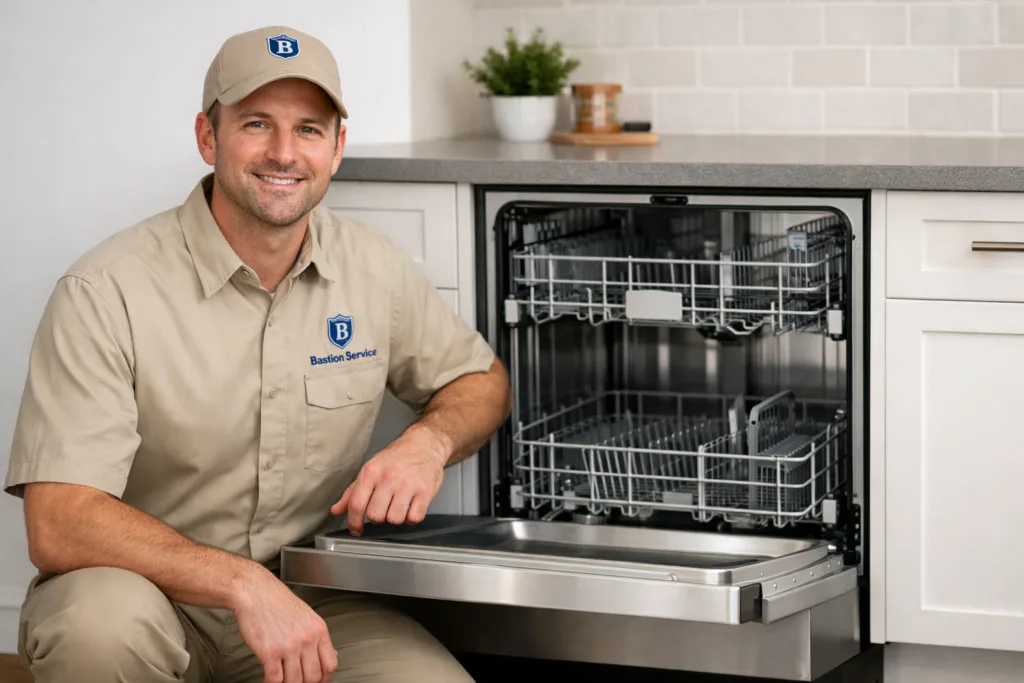
Symptoms on a Thermador dishwasher rarely point to just one failure. A machine that leaves cloudy glasses may have a wash-pressure problem, a heating problem, or a drain issue that is redepositing residue. A dishwasher that seems dead may have a latch fault, a control problem, or a power interruption at the unit. Looking at the exact pattern of the failure is the fastest way to avoid unnecessary parts replacement and to decide whether the repair makes sense.
What different dishwasher symptoms usually mean
Standing water after the cycle
Water left in the bottom of the tub usually means the dishwasher is not completing its drain sequence correctly. Common causes include a blocked filter area, restricted drain hose, drain pump trouble, or a control issue that stops the machine before full drain-out. If the water is dirty or has food debris in it, that can also indicate wash residue is being left behind because the unit is not clearing itself properly between stages.
This is a good symptom to address early. Continued use can create odors, strain the drain pump, and increase the chance of overflow or seepage under the unit.
Dishes come out dirty, gritty, or cloudy
Poor wash results often come from reduced spray pressure or incomplete heating. On a Thermador dishwasher, that may involve clogged spray arms, circulation pump wear, wash motor issues, low water fill, or a sensor problem affecting cycle performance. In some cases, the dishwasher is technically running but not moving water with enough force to clean upper and lower racks evenly.
If the problem has gradually worsened, that usually suggests a mechanical or flow-related issue rather than a one-time loading mistake. If glasses are cloudy and plates still have residue, the dishwasher may also be draining poorly and leaving soil in the system.
Leaking around the door or under the dishwasher
Leaks can start at the door gasket, lower seal area, hoses, pump seals, sump components, or internal connections. Some leaks show up only during wash circulation, while others appear after the cycle when water sits in the base. Even a small leak should be taken seriously because repeated moisture exposure can affect flooring, toe-kick materials, and nearby cabinetry.
If a leak appears with each cycle, it is usually best to stop using the dishwasher until the source is identified. A leak that seems minor at the front can still reflect pressure or sealing problems deeper in the machine.
Dishwasher will not start
When the control panel does not respond or the cycle will not begin, the problem may involve the door latch, user interface, wiring, incoming power, or the main control system. Sometimes the dishwasher powers on but refuses to run because it does not sense the door as locked. In other cases, a stored fault or failed electronic component prevents operation entirely.
This symptom is especially important to separate from a simple reset issue. A unit that intermittently starts and then stops can be more revealing than one that appears fully unresponsive.
Loud humming, grinding, or unusual wash noise
Thermador dishwashers are designed to run quietly, so a noticeable change in sound matters. Humming may point to a pump that is trying to run under strain. Grinding can indicate debris in the pump area or wear in moving components. Repetitive knocking or rattling may come from spray arm interference or loose internal parts.
Noise complaints often begin before complete failure. Catching them early can help prevent a circulation or drain problem from turning into a larger repair.
Dishes stay wet at the end of the cycle
Drying complaints can involve heating problems, control faults, rinse aid performance, or wash issues that leave too much water on dish surfaces. If the dishwasher also seems to run cooler than usual, longer than usual, or leaves detergent residue behind, drying problems may be part of a broader temperature or circulation issue rather than a drying system problem alone.
Signs the problem is getting more serious
Some dishwasher issues stay relatively stable for a while, but others tend to escalate quickly. Service becomes more urgent when symptoms move beyond inconvenience and start affecting drainage, water containment, or electrical reliability.
- Water remains in the tub after multiple cycles
- Leaks show up on the floor or inside surrounding cabinetry
- The motor hums without normal washing or draining
- The dishwasher stops mid-cycle and does not recover
- Error lights repeat along with poor cleaning or no-start behavior
- There is a burning smell, overheating, or repeated power interruption
When these signs appear together, the issue is less likely to be routine maintenance and more likely to involve a failing component or control-related fault.
How a symptom-based diagnosis helps
A useful service call starts with what the dishwasher is doing in the home, not with assumptions about a single part. The same complaint can come from different systems. For example, “not cleaning” might involve wash circulation, fill level, heating, or drain carryover. “Not starting” might be caused by the latch assembly, interface, wiring, or control board.
That is why a diagnosis-first approach matters. It helps confirm whether the repair path is straightforward or whether multiple systems are involved, which is especially important for homeowners deciding how much to invest in an older dishwasher.
Repair or replace?
For many Santa Monica households, repair is still the right choice when the dishwasher is otherwise in good condition and the problem is limited to a specific component such as a pump, latch, hose, seal, or drain-related part. A single functional failure in a well-kept machine is often worth addressing.
Replacement becomes more likely when the dishwasher has several unrelated issues at once, has a history of repeat breakdowns, or shows signs of electronic instability combined with mechanical wear. Leak damage outside the dishwasher can also change the calculation if surrounding materials have already been affected.
The important point is that age alone does not decide the answer. Condition, symptom pattern, and repair scope usually matter more than a number on the serial tag.
What to note before scheduling service
A few details can make troubleshooting faster and more accurate. Before service, it helps to note:
- Whether the problem happens every cycle or only sometimes
- Whether standing water is clean or dirty
- Whether the issue started suddenly or gradually worsened
- Whether unusual noise happens during wash, drain, or both
- Whether any lights flash or the cycle stops at the same point
- Whether leaking appears from the front, side, or underneath
These observations often help distinguish between drainage, circulation, heating, and control problems before the dishwasher is opened up.
When service is usually the right next step
If your Thermador dishwasher in Santa Monica is leaking, not draining, failing to start, washing poorly, or finishing cycles with wet dishes and inconsistent results, the most helpful next step is to identify the failed system before continuing regular use. That protects the appliance from added strain and helps you make an informed repair decision based on the actual fault rather than the symptom alone.