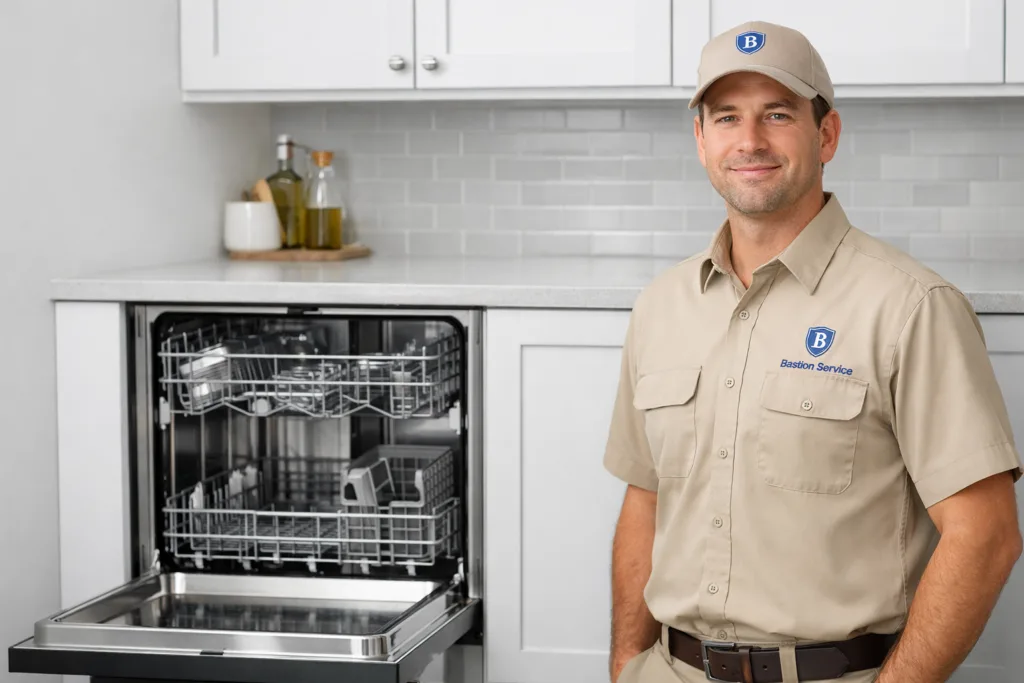
Dishwasher problems rarely stay limited to one inconvenience. A machine that starts leaving film on glasses, pooling water in the tub, or stopping before the final rinse can quickly affect daily cleanup, kitchen sanitation, and cabinet areas around the appliance. With Summit units, the visible symptom does not always point to a single cause, so it helps to look at how the problem shows up from cycle to cycle.
Symptoms That Often Point to Specific Summit Dishwasher Issues
Some service calls begin with a simple complaint such as “it is not cleaning well,” but wash performance can break down for several different reasons. If dishes come out gritty, cloudy, or still greasy, the issue may involve restricted spray arms, low water fill, weak circulation, filter blockage, or detergent not dissolving correctly. If only the top or bottom rack is affected, that can help narrow the problem further.
A Summit dishwasher that will not start at all may have a door latch problem, a control issue, a user interface failure, or an electrical supply interruption. If lights respond but the cycle does not begin, the machine may be detecting that the door is not secured or may be failing during the startup sequence.
When the dishwasher fills and then stops, or seems to pause far longer than normal, possible causes include heating problems, sensor faults, circulation issues, or control trouble. Intermittent behavior is especially important to note because it often means the failure is not fully constant yet.
Drain Problems and Standing Water
Water left in the bottom of the tub is one of the most common complaints. In many cases, the issue is not the drain pump alone. A clogged filter, blocked drain hose, obstruction at the sink connection, or debris in the pump area can all produce the same result. If the dishwasher drains partially but not fully, that pattern can suggest a restriction rather than a complete pump failure.
If the water smells bad or looks dirty after the cycle, the machine may be recirculating contaminated water or failing to clear the tub completely. That can also lead to residue on dishes and a lingering odor inside the appliance.
Leaks, Low Heat, and Poor Drying
Leaks can appear in different places for different reasons. Water under the door may point to a gasket issue, overfilling, heavy sudsing, or loading patterns that deflect spray toward the seal. Water under the unit can suggest a hose, pump seal, internal connection, or tub-related problem. If leaking only happens during certain parts of the cycle, that timing may help identify whether the fault occurs during fill, circulation, or drain.
Low rinse temperature and poor drying often show up as wet dishes, cool interior surfaces, or detergent residue left behind. In some Summit dishwashers, this can be related to a heating problem, a sensor issue, or cycle interruption before the machine reaches its normal final stages. Plastic items naturally hold water, but a full load of dishes that stays cold and wet usually points to more than loading alone.
What Unusual Noises Can Mean
Dishwashers are never silent, but new sounds are worth attention. Grinding may mean debris has reached the pump area. Buzzing can appear when a motor is under strain or a component is trying to engage without completing its movement. Repetitive clicking may come from relays, controls, or latch-related problems. Rattling is sometimes simple, such as a utensil contacting a spray arm, but if the sound continues with an empty machine, internal inspection is often needed.
Noise becomes more concerning when it appears together with weak cleaning, poor draining, or cycle failure. That combination often points to a part that is still operating, but not correctly.
Why a Symptom-Based Inspection Matters
Replacing parts based on guesswork can turn a manageable dishwasher repair into a longer and more expensive process. A no-drain complaint might be caused by a blockage instead of a failed pump. A no-start symptom might trace back to a latch switch rather than the main control. Poor cleaning could come from low fill, not just a weak wash motor.
The most useful approach is to compare the complaint with the machine’s actual behavior: whether it fills properly, whether the spray system is circulating water with force, whether it heats, whether it drains completely, and whether the controls respond consistently. That kind of practical repair guidance helps avoid unnecessary part changes and repeat breakdowns.
When to Stop Using the Dishwasher
Some issues are inconvenient but not urgent, while others can lead to additional damage if the unit keeps running. It is usually best to stop using the dishwasher if you notice:
- Water leaking onto the floor
- Burning smells or signs of overheating
- Repeated breaker trips or loss of power during operation
- Loud grinding that was not present before
- Standing water that keeps rising or backing up
- Cycle failures that leave detergent or dirty water inside
Leaks can affect flooring and nearby cabinetry. Repeated electrical interruptions can turn an intermittent problem into a full no-start condition. A pump or motor that is straining may fail completely if the machine continues to run under load.
What Hawthorne Homeowners Can Check Before Scheduling Service
There are a few observations that can help narrow the issue before an appointment. Check whether the dishwasher has power at the controls, whether the door closes firmly, and whether the filter area contains food debris or buildup. If water is left in the tub, note whether it is clear or dirty and whether it appears after every cycle or only sometimes.
If the machine leaks, try to identify where the water shows up first: directly below the door, at one side of the cabinet opening, or underneath the appliance. If the dishwasher runs but does not clean, look at whether the detergent pod opened, whether both racks were affected, and whether glasses appear cloudy, greasy, or gritty. Small details like these often make diagnosis faster and more accurate.
Repair or Replace a Summit Dishwasher?
For many households in Hawthorne, the decision comes down to the age of the dishwasher, the condition of the interior and racks, prior repair history, and the exact part that has failed. Repair often makes sense when the problem is isolated and the rest of the machine is in solid shape. That may include a drain issue, latch problem, fill component, or another serviceable failure that does not suggest wider wear.
Replacement becomes more likely when the dishwasher has multiple problems at once, shows significant rust or interior deterioration, has a history of repeated breakdowns, or needs a repair that approaches the value of the appliance. A realistic assessment should consider both the immediate fix and the overall condition of the unit.
How Dishwasher Problems Affect the Kitchen Beyond the Appliance
A malfunctioning dishwasher changes more than just cleanup time. Poor drainage can create odor and sanitation concerns. Low wash performance can leave residue on cookware and baby bottles. Slow leaks can affect toe kicks, flooring edges, and cabinet materials before the water is obvious from a standing position. In busy households, even intermittent cycle failures can disrupt meal prep and evening routines.
That is why it helps to address recurring symptoms early rather than waiting for a complete shutdown. A Summit dishwasher that is still operating, but doing so poorly, often gives warning signs before a major failure occurs.
Focused Summit Dishwasher Repair for Hawthorne Homes
Households in Hawthorne usually benefit most from service that matches the exact symptom pattern instead of assuming every no-start, leak, or wash complaint has the same cause. Careful troubleshooting can show whether the issue involves drainage, water fill, circulation, heating, sealing, or controls, and whether the appliance is a good candidate for repair.
When the problem is identified correctly, the next step is much easier: move forward with a targeted fix, address a maintenance-related issue, or decide that replacement is the better long-term choice.