





Summit appliance problems often begin as small performance changes
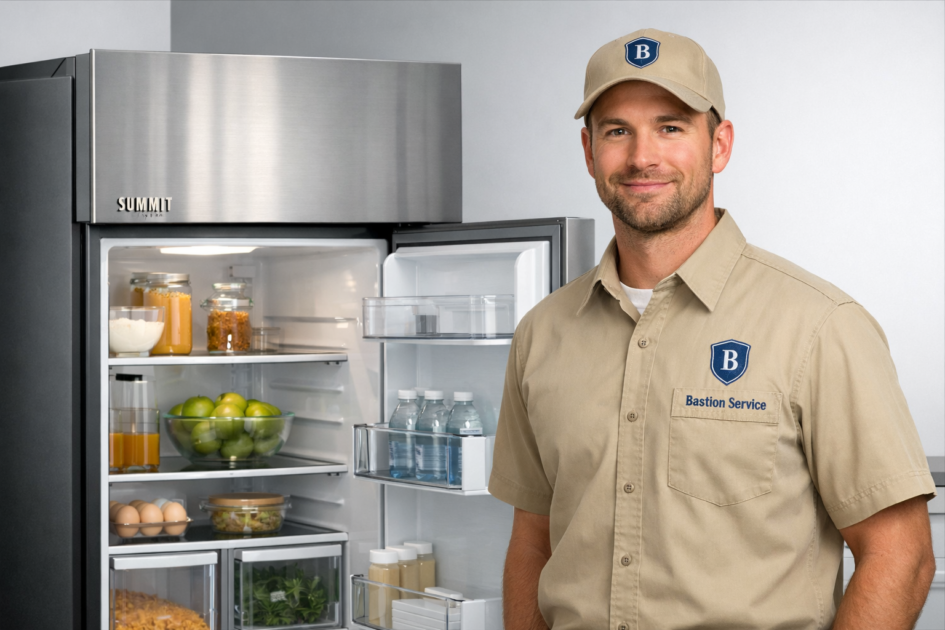
A refrigerator that runs longer than usual, a dishwasher that leaves a little water behind, or an oven that suddenly cooks unevenly can all seem minor at first. In many Hawthorne homes, those early changes are the first sign that a component is wearing out, airflow is restricted, drainage is slowing down, or a control is no longer responding correctly.
For specific Summit appliance paths in Hawthorne, review Summit Refrigerator Repair in Hawthorne, Summit Freezer Repair in Hawthorne, and Summit Ice Maker Repair in Hawthorne.
The challenge is that similar symptoms can come from very different causes. A warm refrigerator may involve a door seal, evaporator fan, defrost problem, or sealed-system issue. A range burner that will not heat properly may point to an igniter, switch, element, or supply problem. Looking at the symptom pattern as a whole usually says more than one isolated complaint.
What to watch for by appliance type
Refrigerators, freezers, and wine coolers
Cooling appliances usually make their problems known through temperature drift, frost buildup, condensation, unusual buzzing or clicking, or longer run times. If a Summit refrigerator in Hawthorne feels cool but not cold enough, or food spoils faster than expected, the issue may involve airflow, defrost components, sensors, controls, or compressor-related parts.
A useful clue is whether the problem affects one section or the entire unit. When the freezer stays cold but the fresh-food section warms up, air circulation or defrost failure becomes more likely. When both sections struggle, diagnosis often shifts toward start components, controls, or the cooling system itself.
Wine coolers tend to show trouble through unstable temperatures, moisture inside the cabinet, or cycles that seem too frequent or too short. Because these appliances are expected to maintain a narrower range, even moderate drift can signal a problem worth checking before it gets worse.
Ice maker issues
Low ice production, hollow cubes, leaking, clumping, or a complete stop in ice making do not always mean the ice maker assembly has failed. Water supply limitations, low freezer temperature, fill problems, or sensor and control faults can all affect output. If the appliance is also having broader cooling issues, the ice maker symptom may be secondary rather than the main failure.
Dishwashers
Dishwasher complaints often fall into a few familiar categories: poor cleaning, failure to drain, leaking, cycle interruptions, or dishes that come out wet and cloudy. A Summit dishwasher may be dealing with a blocked drain path, pump wear, a wash arm problem, a latch issue, or an electronic control fault.
Standing water at the end of the cycle should not be ignored, especially if it keeps returning. Door leaks also deserve prompt attention because repeated use can affect flooring, toe kicks, and nearby cabinetry. If the machine starts normally but stops mid-cycle, that pattern can point to sensors, controls, or heating-related interruptions.
Cooktops, ranges, ovens, and wall ovens
Cooking appliances usually show trouble through slow preheating, burners that do not ignite or heat evenly, inaccurate oven temperature, repeated clicking, error codes, or controls that work intermittently. On a Summit oven or wall oven, baking problems may come from a weak element, a failing temperature sensor, relays, or electronic control issues.
On a range or cooktop, one dead burner may suggest a localized part failure, while multiple heating problems can indicate a broader electrical or control issue. If ignition keeps clicking without lighting, or the appliance heats unpredictably, it is best not to treat that as a normal annoyance.
Symptoms that usually mean service should not wait
Some issues stay stable for a while. Others can quickly lead to food loss, water damage, or a complete shutdown. Service planning usually moves higher on the priority list when you notice:
- Refrigerator or freezer temperatures rising above normal food-safe levels
- Water leaking from a dishwasher, refrigerator, freezer, or ice maker
- The appliance shutting off mid-cycle or failing to start consistently
- Burners or oven heat becoming unreliable enough to affect normal cooking
- Grinding, scraping, or louder-than-usual mechanical noise
- Error codes that return after power cycling or basic reset attempts
Intermittent failures also matter. An appliance that works normally for a day and then slips back into the same problem can be more than a temporary glitch. Loose connections, heat-sensitive controls, failing sensors, and worn motors often behave that way before they stop working entirely.
How homeowners can describe the problem more clearly
Good symptom notes can make repair planning more efficient. Instead of saying the appliance is “not working,” it helps to identify exactly what changed. For example:
- Is the refrigerator warm all the time, or only in the afternoon?
- Does the dishwasher leave water every cycle, or only sometimes?
- Is the oven slow to preheat, or does it reach temperature and then drop?
- Does the range issue affect one burner or several?
- Did the problem begin after a power interruption, leak, unusual noise, or temperature swing?
Model information, any displayed error code, and whether the issue is constant or intermittent are especially helpful. In Hawthorne households, these details often make the difference between a broad guess and a focused repair direction.
Repair or replacement depends on the actual failure
Not every Summit appliance issue points to replacement. Many problems involve parts that can be identified and repaired without replacing the whole unit. A dishwasher with a drain fault, an oven with a failed sensor, or a refrigerator with a circulation issue may still be a reasonable repair candidate if the appliance is otherwise in solid condition.
Replacement becomes a stronger consideration when there are repeated breakdowns, multiple overlapping failures, heavy wear, or a major cooling-system problem in an older unit. The key is not to decide based only on frustration. A symptom-based diagnosis gives a better picture of whether the appliance has a good chance of returning to stable, everyday use.
Simple guidance on continued use
When it may be reasonable to pause and observe
If the appliance is still operating and the symptom is limited, there may be time to monitor it briefly. Examples include a refrigerator that is slightly noisier but still holding temperature, or a dishwasher that cleans less effectively without leaking. Even then, worsening symptoms should not be brushed aside.
When normal use should stop
Stop using the appliance when food temperatures are no longer safe, water is actively leaking, electrical behavior seems abnormal, or cooking performance becomes unpredictable enough to raise safety concerns. Repeated tripping, burning smells, visible sparking, or moisture around powered components are all signs to discontinue use until the problem is checked.
Why Summit appliances benefit from symptom-based diagnosis
Summit products used in residential kitchens and utility areas cover a wide range of appliance types, and they do not fail in the same way. A freezer, wine cooler, dishwasher, wall oven, and cooktop may all be described as “not working right,” but the likely causes are completely different. That is why a clear diagnosis and practical repair plan matters more than assuming one generic fix.
For homeowners in Hawthorne, the most useful next step is usually to match the symptom to the appliance category, note how the problem has changed over time, and avoid continued use when the unit is leaking, warming, or heating unpredictably. That approach helps narrow the fault and makes it easier to decide whether repair is the sensible path.


