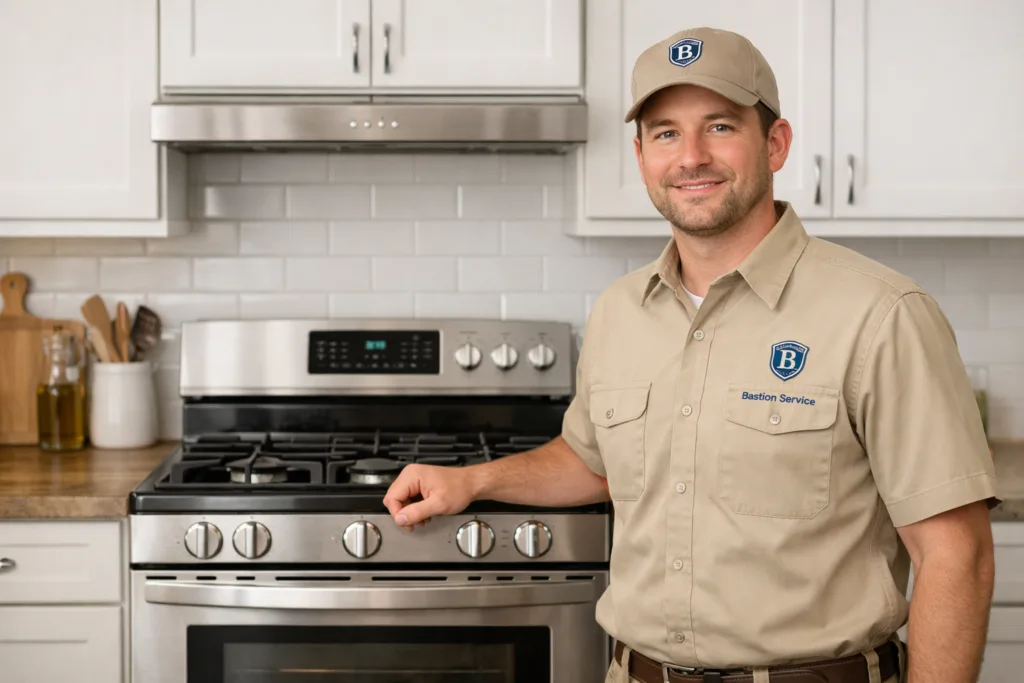
Common stove problems and what they may indicate

A stove can fail in several different ways, and the pattern usually matters as much as the symptom itself. If one burner will not heat or ignite while the others work normally, the problem is often isolated to that burner assembly, switch, igniter, or connection. If several burners stop working at once, the diagnosis often shifts toward shared wiring, controls, or a broader power or ignition issue.
Electric stoves may develop weak heat, inconsistent cycling, or a burner that only works at certain settings. In many cases, that points to a worn element, damaged receptacle, failing infinite switch, or heat-related wiring damage. Gas stoves more often show trouble through clicking, delayed ignition, uneven flame, or a burner that lights only after repeated attempts. Those symptoms can come from clogged burner ports, moisture, misalignment, ignition faults, or gas flow problems that need proper testing rather than guesswork.
Uneven cooking performance is another common complaint in West Los Angeles homes. A stove that runs hotter than expected on low settings or struggles to maintain heat on higher settings can make normal meal prep frustrating. When that happens, it helps to note whether the issue affects just the surface burner or the full cooking appliance, because if the symptom involves only the top burners, Cooktop Repair in West Los Angeles may be the better service path.
Signs the problem should not be ignored
Some issues stay relatively stable for a while, but others tend to worsen with continued use. A burner that works intermittently may stop functioning completely. A loose electrical connection can overheat and damage nearby parts. A gas burner with delayed ignition can become harder to light over time, and repeated misfiring can create a more disruptive and less predictable cooking experience.
Stop using the affected function if you notice sparking, breaker tripping, visible scorching, unusual heat around knobs or controls, or repeated ignition failure. On gas models, a persistent or strong gas smell should always be taken seriously. If that happens, leave the area if needed and contact the gas utility or emergency service before arranging appliance repair.
Clicking that continues after ignition, flames that look uneven, or burners that only light on one side are also worth addressing early. These are not always major failures, but they often signal wear or buildup that can lead to more difficult repairs if left alone.
How to tell whether the issue is really the stove
Many homeowners use the word stove to describe any cooking appliance, but the actual equipment type affects both diagnosis and repair. If the main complaint is poor baking results, failure to preheat, or an enclosed heating cavity that will not maintain temperature, Oven Repair in West Los Angeles may be more relevant than surface-burner service.
That distinction matters because a freestanding unit with both burners and an oven has different component layouts than a separate cooktop and wall-mounted oven. A problem that feels like a stove issue from the kitchen may actually belong to a more specific appliance category once the symptoms are narrowed down.
If burner performance and oven temperature are both acting up on the same freestanding appliance, Range Repair in West Los Angeles may be the better fit because the fault can involve systems shared across a combined cooking unit.
Repair or replace?
The right choice depends on the age of the appliance, the cost of the needed repair, and whether the problem is isolated or part of a larger pattern. A single failed igniter, surface element, switch, or wiring repair is often worth addressing. If the stove has recurring control failures, multiple nonworking burners, or signs of long-term electrical or ignition wear, replacement may make more sense.
A good diagnosis helps avoid both extremes: replacing an appliance that only needs a targeted fix or investing in repeated repairs on a unit that is no longer reliable for daily household use. The goal is to understand not just what failed, but whether the repair is likely to restore consistent cooking performance.
What a service visit should clarify
A useful service call should identify the failed part or system, explain whether the appliance is safe to use before repair, and outline the next step in plain terms. That is especially important when symptoms overlap. Weak heat, no ignition, erratic burner response, and control problems can sound similar from a homeowner’s perspective, but they point to different repairs.
It also helps to describe the pattern clearly when scheduling service. Note which burner is affected, whether the problem is constant or intermittent, whether it appears at one setting or all settings, and whether there are sounds, smells, or visible changes in flame or heat. Those details often shorten the diagnostic process and reduce unnecessary parts swapping.
In some kitchens, the concern turns out to involve a separate built-in unit rather than a standard stove configuration. If the heating problem is isolated to a built-in appliance installed in the wall, Wall Oven Repair in West Los Angeles may be the more accurate service category.
Practical guidance for West Los Angeles households
For homeowners in West Los Angeles, the most helpful next step is usually to treat recurring stove symptoms as a specific repair issue rather than a temporary annoyance. Burner faults, ignition trouble, weak heat, and control problems rarely improve on their own. Early attention can prevent added damage, reduce downtime in the kitchen, and make the repair decision more straightforward.
When the symptoms are documented clearly and the cause is identified correctly, it becomes much easier to decide whether a repair is simple, whether continued use is unwise, and whether the appliance is still worth keeping in service.