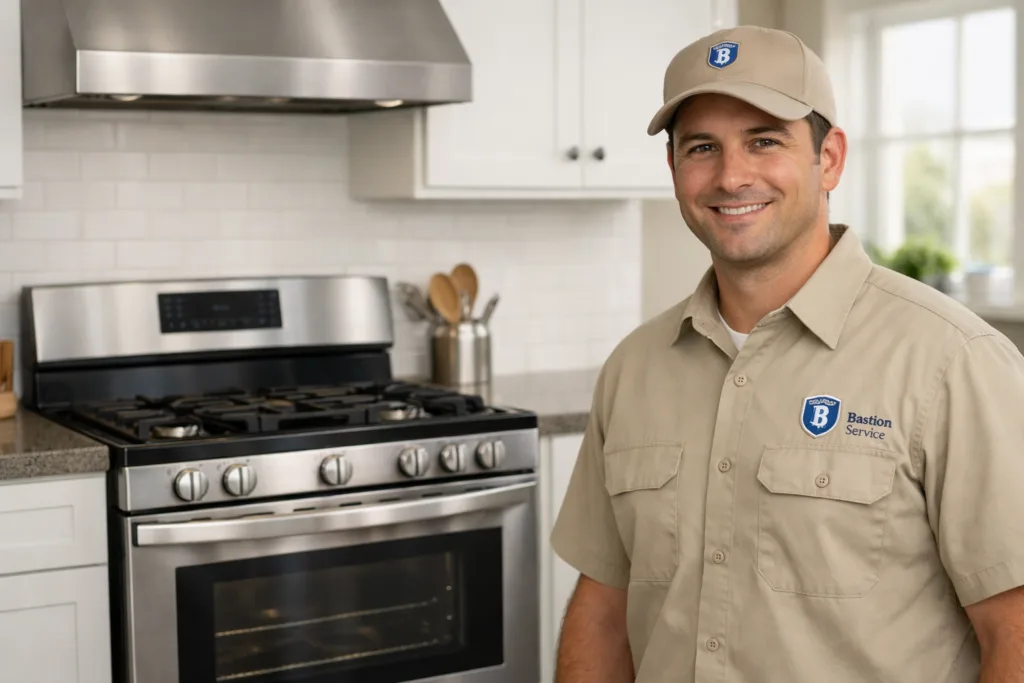
Stove problems often start small and then become part of every meal. A burner may click several times before lighting, heat may feel weaker than usual, or one control may stop responding the way it should. Those symptoms can point to very different failures, so it helps to look at how the appliance behaves as a whole instead of assuming a single bad part is to blame.
Common stove issues homeowners notice first
Most service calls begin with a practical complaint: a burner will not ignite, a flame looks uneven, an electric element stays cold, or the stove heats inconsistently during normal cooking. Some households also notice a burner that will not turn down properly, a knob that feels loose, or intermittent operation that comes and goes without warning.
Gas and electric stoves fail in different ways, but the effect at home is similar. Cooking takes longer, heat becomes less predictable, and using the appliance starts to feel less routine. In Torrance homes, that usually means breakfast, weeknight dinners, and basic meal prep all become harder than they should be.
What different symptoms can mean
Burner clicks but does not ignite
On a gas stove, repeated clicking with no flame may be caused by a dirty burner cap, moisture around the igniter, a faulty spark switch, or an ignition component that is no longer firing reliably. If the symptom is isolated to the surface burners and there is no oven-related performance issue, Cooktop Repair in Torrance may be the better fit for that repair path.
If you notice a strong gas odor, delayed ignition with a sudden flare, or any sign that gas is present without proper lighting, stop using the appliance and address the immediate safety concern first. Appliance repair should come after that risk has been ruled out.
Electric burner does not heat or heats unevenly
On electric models, a surface element that stays cool may be caused by a failed element, damaged receptacle, wiring issue, or bad control switch. Uneven heat can also come from a weakened element that still turns on but no longer cycles correctly. One burner behaving differently from the others is often a useful clue because it helps narrow the problem to a specific component rather than the entire unit.
Burner gets too hot or will not regulate
A burner that runs hotter than the setting suggests can point to a failing infinite switch, a control fault, or a sensor-related issue depending on the design of the appliance. This is not just inconvenient for cooking; it can also make the stove harder to use safely. If the heat output no longer matches the setting on the knob, service is usually better scheduled sooner rather than later.
Oven cavity is the real problem
Sometimes a homeowner describes the appliance as a stove problem, but the symptom is really about baking temperature, preheat delays, or food cooking unevenly inside the oven. When the trouble is centered on the baking compartment rather than the surface burners, Oven Repair in Torrance may be more relevant.
Built-in or separate wall unit issues
If your kitchen has a separate built-in cooking setup and the temperature complaint is tied to that dedicated oven unit, Wall Oven Repair in Torrance may be the more accurate service to schedule. That distinction matters because surface burner faults and built-in oven faults are diagnosed differently.
Combined appliance symptoms
When burner performance and oven performance are both affected on the same combined appliance, the issue may go beyond a single stove component. If the symptom involves surface heat and oven temperature at the same time, Range Repair in Torrance may be the better service path.
When waiting usually makes the problem worse
It is easy to put off service when the stove still works part of the time. The problem is that intermittent faults often become more disruptive, not less. Repeated ignition attempts can wear components further, overheating can stress switches and wiring, and unstable temperature control can turn a small repair into a broader one.
Scheduling service makes sense when a burner needs multiple tries to start, heat output is clearly off, a control no longer responds normally, or the appliance cannot be relied on for everyday cooking. A stove that only works “most of the time” is usually already telling you something is failing.
Repair or replace?
That decision depends on the age of the appliance, the condition of the main components, the cost of the repair, and whether more than one system is starting to fail. A single isolated issue often makes repair worthwhile. If the stove has several unrelated symptoms, recurring electrical or control problems, or visible wear that affects normal use, replacement may make more sense.
A proper diagnosis helps remove guesswork from that choice. Instead of replacing parts based on a symptom alone, you get a better picture of what failed, what condition the rest of the unit is in, and whether the repair is likely to restore reliable daily use.
What homeowners in Torrance can expect from service
A useful visit should identify whether the issue is tied to ignition, heat regulation, controls, elements, switches, or wiring. It should also clarify whether the appliance can be used safely while a repair is pending or whether it is better left off until the problem is corrected.
For households in Torrance, the goal is straightforward: get the stove back to predictable cooking performance without unnecessary guesswork. Whether the problem is a dead burner, unstable flame, weak heat, or a control that no longer behaves correctly, the best next step is a diagnosis based on the actual symptom pattern rather than trial and error.