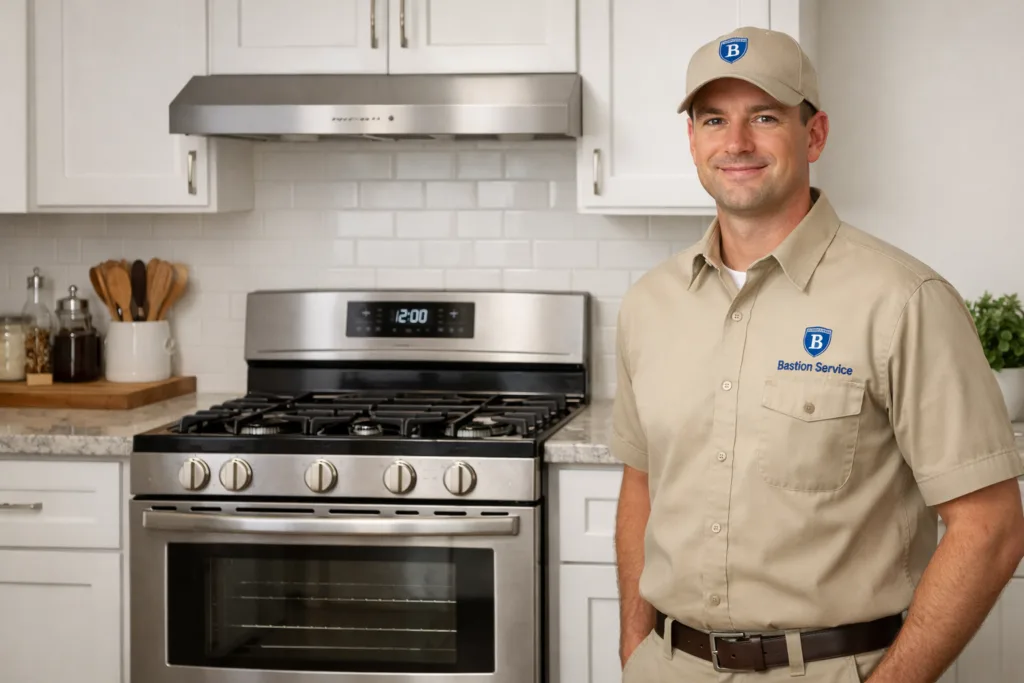
Range problems often show up as everyday annoyances before they become complete failures. A burner may click several times before lighting, the oven may take much longer to preheat, or temperatures may drift enough to affect baking and roasting. Because a range combines surface cooking, oven heating, controls, and either gas ignition or electric heat delivery, the same complaint can come from very different components.
Common range problems and what they can indicate
Surface burner trouble is one of the most common reasons homeowners schedule service. On gas models, repeated clicking, delayed ignition, uneven flames, or a burner that will not light at all can point to a dirty burner head, moisture around the igniter, a failing spark system, or switch and wiring issues. On electric models, a burner that does not heat, heats only on certain settings, or cycles unpredictably may involve the element, receptacle, switch, or control.
Oven-related complaints are just as common. Slow preheating, food that comes out undercooked, hot spots, or an oven that overheats can be tied to a weak igniter, failed bake or broil element, temperature sensor problems, or an electronic control issue. If the cooking problem is limited to the oven cavity and the surface burners are working normally, Oven Repair in Torrance may be the more relevant service path.
Some symptoms affect the entire appliance rather than one section. Intermittent power, unresponsive controls, tripped breakers, error codes, or burners and oven functions failing at the same time can suggest a broader electrical or control problem. In those cases, diagnosing the full range as one system is usually the most efficient approach.
Signs the problem is getting worse
Many households in Torrance notice a pattern before they call. Preheat times gradually get longer, burner performance becomes inconsistent, or temperatures vary from one use to the next. What starts as a minor inconvenience can become a bigger repair if worn components begin affecting surrounding parts.
Other warning signs include a door that no longer closes tightly, knobs that slip or crack, hinges that sag, or a control panel that only responds occasionally. These issues can reduce cooking performance and make the appliance harder to use safely, especially when heat escapes or settings cannot be adjusted reliably.
When to stop using the range
If the appliance is producing unusual electrical smells, sparking abnormally, heating uncontrollably, or tripping breakers, it is wise to stop using it until the cause is identified. For gas models, a strong or persistent gas odor should not be treated as a routine repair issue. Leave the area if needed and contact the gas utility or emergency service first.
Even without a gas odor, delayed ignition and nonstop clicking deserve attention. A burner that lights late can allow gas to build briefly before ignition, and a weak oven igniter may glow without reliably opening the gas valve. Those are not symptoms to ignore simply because the appliance still works some of the time.
Why early repair can prevent larger problems
Small component failures can create secondary damage when the range continues to be used. A loose electrical connection can overheat terminals and wiring. A weak igniter can strain the ignition cycle until the oven stops heating altogether. A failing control switch can cause inconsistent burner output and eventually damage adjacent parts.
Addressing the original fault sooner often keeps the repair simpler. It also helps avoid the frustration of replacing food, adjusting meal plans, or trying to compensate for an appliance that no longer cooks predictably.
Repair or replacement?
The answer usually depends on the age of the range, the condition of major components, parts availability, and whether the current problem is isolated or part of a larger pattern. A single failed igniter, sensor, burner switch, or heating element is often a reasonable repair. Replacement becomes more worth considering when the appliance has multiple active issues, repeated electronic failures, or significant structural wear.
That distinction matters because an older range is not automatically at the end of its useful life. Some units that seem unreliable only need one targeted repair to return to normal cooking. Others show a combination of heat inconsistency, control trouble, worn door parts, and burner problems that point to broader deterioration.
Choosing the right service for the symptom
Sometimes the issue is not the entire range but one cooking section. If all of the trouble is centered on the top cooking surface while the oven performs normally, Cooktop Repair in Torrance may be a better fit for the symptoms you are seeing.
In other homes, the appliance is described as a “stove” even though it is a full range with burners and an oven below. If the symptom involves burner heat and oven temperature at the same time, Stove Repair in Torrance may help confirm whether the problem matches that service category or a complete range diagnosis.
Built-in cooking layouts can create similar confusion. When the problem is isolated to a separate built-in oven unit rather than a freestanding or slide-in range, Wall Oven Repair in Torrance may be the more accurate service to consider.
What a service visit should help clarify
A useful appointment should do more than identify that the range is “not working.” It should narrow the failure to the component or system involved, explain whether continued use creates a safety or reliability concern, and outline whether repair is likely to restore normal daily use. That usually includes checking burner operation, ignition response, heating output, temperature behavior, control functions, and visible wear affecting performance.
For homeowners in Torrance, the goal is straightforward: understand why the appliance is acting up, what the repair is likely to involve, and whether fixing it makes practical sense for the household. That kind of diagnosis helps avoid guesswork, repeated part changes, and the uncertainty that comes with an unreliable kitchen appliance.